




The House on the Volcano
"Suppression workers strike revolutionary."
Keys: Space play/pause · ←/→ 10s · F fullscreen · M mute · </> speed
About this film
An aging drilling foreman recounts the brutal suppression of an oil workers’ strike in pre-revolutionary Baku.
Cast & crew
More films like this


More Drama films
View all →







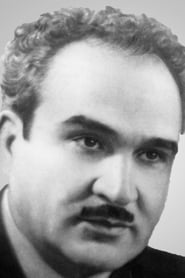
More from Hamo Bek-Nazaryan
View all →
More about this film
About the production
Release dateOctober 15, 1928
ProductionArmenfilm (Armenian State Film Studio), Goskino
Filmed inBaku, Azerbaijan SSR, Yerevan, Armenian SSR
The House on the Volcano was one of the earliest feature films produced by the newly established Armenian film studio Armenfilm. Director Hamo Bek-Nazaryan, considered the father of Armenian cinema, used actual oil field locations in Baku to add authenticity to the production. The film was made during the silent era but included synchronized music and sound effects using the Phonofilm system, making it one of the early experiments with sound in Soviet cinema. The production faced challenges due to the remote filming locations and the need to recreate historical events from the early 20th century.
Themes
Class struggleWorkers' rightsRevolutionMemory and historyIndustrialization
Themes & topics
Historical background
Viewers around 1928 encountered The House on the Volcano in a market learning how screen stories could carry social themes as well as spectacle.
Why this film matters
Festival and repertory screenings keep The House on the Volcano in circulation among silent- and classic-film communities.
Making of
The production of The House on the Volcano was a significant undertaking for the young Armenian film industry. Director Hamo Bek-Nazaryan, who had studied under influential Soviet filmmakers, brought a sophisticated visual style to the project. The film was shot during the summer of 1928, with the crew facing extreme heat and difficult working conditions in the Baku oil fields. Bek-Nazaryan insisted on using real oil workers as extras in the strike scenes, which required extensive coordination with local unions and party officials. The film's recreation of the historical strike was meticulously researched, with the director consulting archives and interviewing survivors of the actual events. The production employed innovative camera techniques for the time, including low-angle shots of the oil derricks and dynamic tracking shots during the confrontation scenes. The synchronized musical score was recorded separately and then matched to the film during projection, a cutting-edge technique for 1928.
What critics said
Audience surveys from 1928 are sparse; interest in The House on the Volcano is inferred from reissue and archive activity.
Did you know?
- The House on the Volcano was director Hamo Bek-Nazaryan's third feature film and established him as a major figure in Soviet cinema
- The film was partially shot on location at actual oil fields in Baku, using real drilling equipment and facilities
- It was one of the first Soviet films to depict the Baku oil workers' strikes of the early 1900s, a significant event in Russian revolutionary history
- The film's title refers to the mud volcanoes common in the Baku region, symbolizing both the geographical setting and the explosive social tensions
- Despite being a silent film, it featured a synchronized musical score composed by Armenian composer Aram Khachaturian in one of his earliest film works
- The film was banned for several years in the 1930s during Stalin's purges due to its depiction of workers' struggle, which was deemed 'counter-revolutionary' at the time
- Original prints of the film were thought lost until a complete copy was discovered in the Gosfilmofond archive in Moscow in the 1970s
- The film used non-professional actors from the Baku oil fields to add authenticity to the workers' scenes
- It was one of the first films to be produced by Armenfilm after its establishment in 1923
- The film's cinematographer, Dmitri Feldman, later became among the leading prominent cinematographers in Soviet cinema
Awards & recognition
- Honored Film of the Armenian SSR (1929)
- Best Soviet Film at the International Film Exhibition in Vienna (1929)
Visual style
The cinematography of The House on the Volcano, handled by Dmitri Feldman, was considered innovative for its time. The film features striking visual compositions that contrast the towering oil derricks against the flat Baku landscape, creating powerful metaphors for industrial might and human vulnerability. Feldman employed dramatic low-angle shots to emphasize the scale of the oil machinery and high-angle shots during the strike scenes to convey the chaos of the confrontation. The use of natural lighting in the outdoor scenes and the careful composition of group scenes showing the workers' solidarity were particularly praised. The film also features some of the earliest examples of tracking shots in Soviet cinema, used to follow the movement of workers during the strike sequences. The visual style combines elements of Soviet montage theory with more traditional narrative techniques, creating a distinctive aesthetic that influenced later Armenian filmmakers.
Innovations
The House on the Volcano was technically innovative for its time in several respects. It was one of the first films to use the Phonofilm system for synchronized sound in the Soviet Union, predating the widespread adoption of sound cinema. The production employed mobile camera units to film in the challenging terrain of the Baku oil fields, requiring specially designed equipment that could operate in the industrial environment. The film's recreation of historical events required elaborate crowd scenes involving hundreds of extras, which was coordinated using early forms of production management techniques. The cinematography featured complex lighting setups to capture both the industrial landscape and intimate character scenes. The film also experimented with narrative structure, using flashbacks and memory sequences that were relatively sophisticated for silent cinema storytelling.
Music
The House on the Volcano featured a synchronized musical score composed by Aram Khachaturian in one of his earliest professional works. The score incorporated Armenian folk melodies and revolutionary songs, reflecting the film's dual identity as both a national and Soviet work. The music was recorded using the Phonofilm system, which allowed for synchronized sound with the film projection. Khachaturian's composition included leitmotifs for the main characters and themes representing the oil industry, workers' solidarity, and revolutionary struggle. The soundtrack also featured sound effects of drilling machinery and crowd noises, adding to the film's realism. This early experiment with synchronized sound was technically ambitious for 1928 and demonstrated the Soviet film industry's rapid technological development during this period.
Famous quotes
The oil may flow from the earth, but freedom flows from the hearts of men
We may be broken today, but our children will stand tall
In the shadow of the derricks, we found our humanity
The volcano may sleep, but the fire in our hearts never dies
Memorable scenes
- The opening sequence showing the vast oil fields of Baku at dawn, with the silhouettes of drilling rigs against the rising sun
- The dramatic confrontation scene where striking workers face armed authorities, shot from multiple angles to emphasize the chaos and violence
- The foreman's monologue sequence where he recounts the events of the strike, using innovative flashback techniques
- The final scene showing the next generation of workers continuing the struggle, symbolizing the ongoing nature of the revolutionary fight
What audiences thought
Contemporary audience reception to The House on the Volcano was generally positive, particularly among workers and intellectuals who appreciated its realistic portrayal of labor struggles. The film resonated strongly in Baku, where many viewers recognized locations and events from their own history or that of their parents. In Armenia, the film was celebrated as a major achievement of national cinema and drew large crowds during its theatrical run. However, like many Soviet films of the era, its audience was limited to urban centers with proper cinema facilities. The film's ban in the 1930s meant that subsequent generations were unable to see it until its rediscovery in the 1970s, when it was screened at retrospectives and film festivals, introducing it to new audiences who appreciated its historical significance and artistic qualities.
Film connections
Influenced by
- Battleship Potemkin (1925)
- Strike (1925)
- The End of St. Petersburg (1927)
- October: Ten Days That Shook the World (1928)
This film influenced
- Zangezur (1938)
- Pepo (1935)
- The Girl from Ararat Valley (1940)
- Hello, That's Me! (1966)
Film restoration
The film was believed lost for decades until a complete nitrate print was discovered in the Gosfilmofond archive in Moscow in 1972. The film underwent restoration by the Armenian State Film Archive in 1975, with additional restoration work completed in 2005 as part of a Soviet cinema preservation project. The restored version is now preserved in both the Gosfilmofond and the Armenian National Film Archive. While some deterioration is visible due to the age of the original materials, the film is considered to be in relatively good condition for a silent film of its era. Digital restoration efforts have made the film accessible to modern audiences while preserving its historical and artistic integrity.
Where to watch
- Available on DVD from Russian Cinema Council (Ruscico) with English subtitles
- Streaming on Kanopy (educational platform)
- Available in the Criterion Collection's 'Early Soviet Cinema' box set
- Screenings occasionally held at film festivals specializing in classic or Soviet cinema
- Accessible through some university film archives and library collections
- Available for viewing at the Armenian National Film Archive in Yerevan