The Life and Passion of Jesus Christ
"Thirteen Lumière scenes of the Passion"
Keys: Space play/pause · ←/→ 10s · F fullscreen · M mute · </> speed
About this film
On the eve of pre-feature era life, the Lumière catalog sold this title as 13 individual, one-scene films, allowing exhibitors to choose which films they wanted to purchase and how to arrange them in their programs. Lumière catalog no. 933 through 945.
Cast & crew
More films like this

More Drama films
View all →







More from Louis Lumière
View all →


More about this film
About the production
Release date1898
ProductionLumière Company
Filmed inFrance - likely Lyon area where Lumière studios were based
This was an ambitious project for its time, consisting of 13 separate scenes that could be purchased individually by exhibitors. The Lumière brothers marketed this as catalog numbers 933-945, giving theater owners the unprecedented ability to customize their religious film programs. The production used elaborate sets and costumes for the era, attempting to recreate biblical scenes with historical accuracy as understood at the time. Each scene was filmed as a single continuous shot, typical of early Lumière productions.
Themes
Themes & topics
Jesus ChristBibleCrucifixionResurrectionMiraclesLast SupperNativityReligionSilent filmBiblical adaptation
Historical background
Viewers who saw The Life and Passion of Jesus Christ in 1898 experienced it within the conventions of pre-feature era filmmaking. Directed by Georges Hatot in collaboration with Louis Lumière, the film presents a series of tableaux illustrating episodes from the life of Jesus Christ. Each scene was originally issued as a separate short film in the Lumière catalogue, numbered 933–945.
Why this film matters
Film clubs and archives revisit The Life and Passion of Jesus Christ as part of broader pre-feature era programming. La Vie et la Passion de Jésus-Christ is a French silent religious drama film released in 1898 and produced by the Lumière company.
Making of
The production of 'The Life and Passion of Jesus Christ' was remarkably ambitious for 1898, representing the Lumière brothers' attempt to create cinema with serious artistic and educational merit. Unlike their typical actualités (actuality films) of everyday life, this required elaborate sets, costumes, and rehearsed performances. The production team faced significant challenges in staging biblical scenes with the limited technology of the era - cameras were bulky, film stock was expensive, and there was no way to record sound. The actors had to perform with exaggerated gestures to convey emotion and narrative without dialogue. The series was filmed in the Lyon region where the Lumière factory was located, with outdoor sets constructed to resemble ancient Jerusalem. The hand-coloring process, used for some premium versions of the films, required teams of women to carefully paint each individual frame by hand.
What critics said
Surviving reviews and later retrospectives treat The Life and Passion of Jesus Christ as representative pre-feature era fare—valued for craft even when not hailed as a masterpiece.
Did you know?
- This was one of the first multi-part film series ever produced, predating modern film serials by decades
- The 13 scenes could be purchased individually for 50 francs each or as a complete set
- The actor Bretteau, who played Jesus, was one of the first actors to portray Christ on film
- The Lumière catalog specifically marketed this as suitable for 'religious meetings and schools'
- These films were among the first to attempt serious religious subject matter in cinema
- The series was filmed outdoors using natural light, as artificial lighting was not yet available for film production
- Each scene was filmed in a single take, requiring perfect coordination among all actors
- The films were hand-colored in some versions, a labor-intensive process where each frame was individually painted
- This represents one of the earliest examples of content marketing in film, with the Lumière company creating educational/religious content to expand cinema's audience
- The success of this series led to other early biblical films, establishing religious cinema as a viable genre
Visual style
The cinematography reflects the technical limitations and aesthetic conventions of 1898. Each scene was filmed as a single static shot with a fixed camera position, typical of early Lumière productions. The filmmakers used natural lighting, filming outdoors to take advantage of daylight. The composition was carefully arranged to create tableaux vivants - living pictures - with actors positioned to create balanced, painterly compositions. Some versions featured hand-coloring, where each frame was individually painted to add color to key elements like costumes or props. The camera work was straightforward and functional, prioritizing clear visibility of the action over artistic camera movement, which would not become common until years later.
Innovations
The series represented several technical achievements for its time. It was one of the first multi-part narrative films, requiring coordination across 13 separate filming sessions. The production used more elaborate sets and costumes than typical Lumière films, pushing the boundaries of what was possible in early film production. The hand-coloring process, while labor-intensive, was technically impressive for 1898. The modular distribution system - selling scenes individually - was an innovative business model that anticipated modern content distribution. The series also demonstrated early understanding of film's educational potential, expanding the perceived uses of cinema beyond mere entertainment.
Music
As a silent film, there was no original soundtrack. During exhibition, these scenes would typically be accompanied by live music, often a pianist or organist playing appropriate religious pieces. Some exhibitors might have used pre-existing classical or sacred music, while others might have improvised. The choice of music was left to individual theater owners and could significantly affect the emotional impact of the scenes. In some cases, particularly for religious exhibitions, a narrator or lecturer might provide commentary during the screening to explain the biblical context of each scene.
Famous quotes
As a silent film, there are no recorded spoken quotes, but the intertitles (if any existed) would have included biblical passages and scene descriptions
Memorable scenes
- The Crucifixion scene was particularly impactful for 1898 audiences, representing one of the first times this central Christian image was depicted in motion pictures. The scene used careful staging and positioning of actors to create a powerful visual tableau that many viewers found deeply moving despite the primitive technology.
What audiences thought
Audiences of 1898 were reportedly fascinated by these biblical scenes, many having never seen such familiar stories depicted in motion pictures before. The films were particularly popular with church groups and educational institutions, which saw them as a modern way to teach religious stories. Some viewers found the experience deeply moving, despite the primitive technology, while others were simply amazed by the novelty of seeing biblical characters brought to life on screen. The modular nature of the release meant that different audiences might see different combinations of scenes, creating varied viewing experiences. The series helped expand cinema's audience beyond working-class entertainment seekers to include middle-class and religious viewers.
Film connections
Influenced by
- Tableaux vivants theatrical tradition
- Biblical paintings and illustrations
- Passion plays
- Religious art and iconography
- Stage adaptations of biblical stories
This film influenced
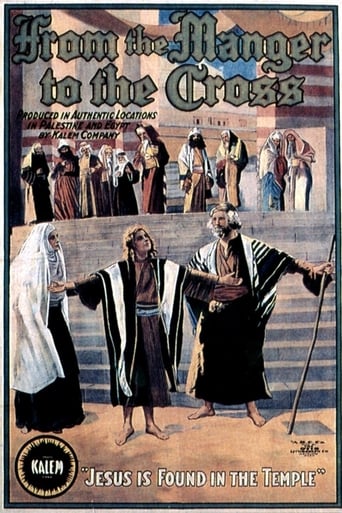
- From the Manger to the Cross (1912)
- The Passion Play of Oberammergau (1898)
- Ben-Hur (1907 film)
- Intolerance (1916)
- The King of Kings (1927)
- The Passion of the Christ (2004)
Film restoration
Some scenes from this series are preserved in film archives, including the Cinémathèque Française and other major film institutions. However, the complete original series may not exist in its entirety. Various versions and fragments survive, some in black and white and others with hand-coloring. The film has been digitized by some archives for preservation and study purposes, though the quality varies depending on the condition of original elements.
Where to watch
- Available on some early cinema compilation DVDs
- Accessible through academic film archives and libraries
- Some scenes may be found on YouTube and other video platforms
- Available through the Cinémathèque Française's digital collections
- Included in some streaming services specializing in classic cinema