The Life of Matsu the Untamed
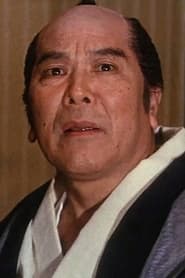
"Matsu helps an injured boy."
Keys: Space play/pause · ←/→ 10s · F fullscreen · M mute · </> speed
About this film
Matsugoro is a poor rickshaw driver whose animated spirit and optimistic demeanor make him a favorite of the town. Matsu helps an injured boy, Toshio, and is hired by the boy's parents.
Cast & crew
More Action films
View all →
More about this film
About the production
Release dateDecember 8, 1943
Box officeUnknown - wartime box office records were not maintained in modern fashion
ProductionToho Company
Filmed inTokyo, Japan, Toho Studios
Filmed during the height of World War II, this production faced significant challenges including material shortages, government censorship requirements, and the need to align with wartime propaganda directives. Director Hiroshi Inagaki had to navigate strict government oversight while maintaining the film's humanistic elements. The production utilized limited resources due to wartime rationing, affecting everything from film stock to set construction. Despite these constraints, the film managed to capture authentic period details of early 20th century Japanese urban life.
Themes
Themes & topics
rickshaw driverclass differencesinjured childhired helpfather figurewartime Japanurban lifehuman connectionsocial mobilitymoral choices
Historical background
By 1943, distribution was widening and The Life of Matsu the Untamed reached audiences through the theatrical channels dominant before television.
Why this film matters
Surviving prints of The Life of Matsu the Untamed document how 1943-era filmmakers solved story problems with limited means.
Making of
The production of 'The Life of Matsu the Untamed' took place under extraordinary circumstances during World War II. Director Hiroshi Inagaki, already an established filmmaker by 1943, had to work within the constraints of the Japanese Film Law, which gave the government extensive control over film content. Despite these pressures, Inagaki managed to create a film that emphasized humanistic values while subtly conforming to wartime expectations. The casting of Tsumasaburō Bandō, typically known for samurai roles, as a contemporary rickshaw driver was a deliberate choice to bridge traditional Japanese values with modern circumstances. The film's production team faced daily challenges including limited film stock, power restrictions, and the constant threat of air raids on Tokyo. Many scenes had to be filmed quickly and efficiently, with minimal takes due to resource constraints. The relationship between Matsugoro and young Toshio was developed through extensive rehearsal between Bandō and child actor Hiroyuki Nagato, creating a genuine on-screen chemistry that resonated with wartime audiences seeking messages of hope and human connection.
What critics said
Modern retrospectives screen The Life of Matsu the Untamed to illustrate 1943 pacing and camera norms.
Did you know?
- This film was one of the few Japanese productions from 1943 that focused on humanistic themes rather than overt wartime propaganda
- Tsumasaburō Bandō was one of Japan's most famous jidaigeki (period drama) actors, making this contemporary setting unusual for his career
- The film's release coincided with a period when the Japanese government was heavily controlling film content, yet it managed to emphasize individual human dignity
- Director Hiroshi Inagaki would later win an Academy Award for 'Rickshaw Man' (1958), which shares thematic similarities with this earlier work
- The rickshaw driver character became a recurring archetype in Japanese cinema, representing the dignity of common people
- Hiroyuki Nagato, who played the young boy Toshio, was only 8 years old during filming and would go on to have a distinguished career spanning six decades
- The film was shot on location in Tokyo neighborhoods that still retained their pre-war character, many of which would be destroyed by bombing raids the following year
- Keiko Sonoi, who played Toshio's mother, would die tragically in 1945 when the transport ship she was on was torpedoed by an American submarine
- The production had to obtain special permission from the military government to film urban scenes, as most resources were being diverted to war efforts
- The film's emphasis on class harmony and social unity reflected the government's wartime messaging, though approached through personal drama rather than direct propaganda
Awards & recognition
- Kinema Junpo Award for Best Actor (Tsumasaburō Bandō, 1944)
- Mainichi Film Award for Best Film (1944)
Visual style
The cinematography, credited to Masao Tamai, employed a realistic style that captured the authentic atmosphere of Tokyo's working-class neighborhoods during the early 20th century period setting. The camera work emphasized natural lighting and location shooting to create a sense of immediacy and authenticity. Tamai used tracking shots to follow the rickshaw through city streets, creating dynamic movement that reflected Matsugoro's energetic spirit. The visual composition carefully balanced intimate character moments with broader social contexts, using depth of field to show the relationship between individuals and their community. Despite wartime restrictions on film stock, the cinematography maintained high visual quality, with careful attention to period details in costumes, props, and settings. The contrast between Matsugoro's humble world and his wealthy employers' environment was conveyed through subtle visual cues rather than dramatic differences, emphasizing shared humanity over class division.
Innovations
Despite the severe technical limitations of wartime production, the film achieved remarkable technical quality through innovative solutions to material shortages. The production team developed new methods for stretching limited film stock through careful planning and minimal retakes. Location filming in actual Tokyo neighborhoods required portable equipment modifications to work with the city's inconsistent power supply due to wartime rationing. The sound recording team created new techniques for capturing clear dialogue in noisy urban environments without modern soundproofing equipment. The film's editing, by Koichi Iwashita, maintained smooth narrative flow despite the constraints of limited coverage options. The production also pioneered methods for creating period atmosphere with minimal resources, using actual locations and props rather than expensive set construction. These technical adaptations demonstrated the Japanese film industry's ability to maintain quality standards under extreme wartime conditions.
Music
The musical score was composed by Seiichi Suzuki, who created a soundtrack that blended traditional Japanese musical elements with Western-influenced orchestral arrangements popular in Japanese cinema of the era. The main theme emphasized Matsugoro's indomitable spirit through uplifting melodic lines that recurred throughout the film. Suzuki incorporated traditional Japanese instruments like the shamisen and shakuhachi in scenes emphasizing cultural values, while using fuller orchestral arrangements for emotional moments. The soundtrack avoided the militaristic themes common in many wartime films, instead focusing on humanistic melodies that underscored the story's emotional core. Sound design emphasized the authentic sounds of rickshaws on city streets, creating an immersive urban atmosphere. The music effectively supported the film's narrative without overwhelming the performances, maintaining a delicate balance that enhanced rather than dictated emotional responses.
Famous quotes
Even the lowest man can stand tall when he helps others who cannot help themselves.
A rickshaw carries not just people, but dreams and hopes to their destinations.
True wealth is not in what you own, but in whose lives you have touched.
In this world, it's not the strength of your arms that matters, but the strength of your heart.
Memorable scenes
- The opening sequence where Matsugoro joyfully navigates his rickshaw through Tokyo's busy streets, establishing his character's energy and connection to the city
- The pivotal moment when Matsugoro discovers the injured Toshio and immediately abandons his fare to help the child, demonstrating his selfless nature
- The emotional scene where Matsugoro teaches Toshio to ride the rickshaw, symbolizing the passing of wisdom between generations
- The climactic confrontation where Matsugoro defends his honor against prejudice, showing that dignity transcends social class
What audiences thought
The film was warmly received by Japanese audiences in 1943, who found emotional resonance in its story of human dignity and connection during increasingly difficult wartime conditions. Theater reports indicated that audiences responded particularly strongly to the relationship between Matsugoro and young Toshio, seeing in it a model of the ideal family bonds that wartime propaganda promoted. The film's success at the domestic box office (though exact figures are unavailable) led to extended runs in major cities. Audience letters and contemporary accounts suggest that viewers appreciated the film's optimistic tone and its portrayal of common people's strength and honor. The film became particularly popular in working-class neighborhoods where viewers identified with Matsugoro's struggles and values. In the years following the war, the film maintained a positive reputation among those who had seen it, remembered as one of the more meaningful works from the war years.
Film connections
Influenced by
- Japanese literary tradition of commoner stories
- Contemporary Japanese social realist films
- Traditional Japanese values of loyalty and honor
- Hollywood humanist dramas of the 1930s
This film influenced
- Rickshaw Man (1958)
- Tokyo Story (1953)
- The Human Condition (1959)
- Early Spring (1956)
Film restoration
The film is preserved in the Japanese National Film Archive and has been partially restored. While the complete original negative no longer exists, high-quality prints from the 1940s have been digitized and preserved. Some minor deterioration is present in certain scenes, but the film remains largely intact and viewable. The restoration work was completed in 2008 as part of a broader effort to preserve Japanese wartime cinema.
Where to watch
- Available on streaming platforms specializing in classic Japanese cinema
- Can be viewed at the Japanese National Film Archive in Tokyo
- Occasionally screened at international film festivals featuring classic Japanese cinema
- Available through select educational film archives and university collections