The Little Girl and Her Cat
"Suddenly there's a flash of movement: a tortoiseshell cat, with long hair and a very furry."
Keys: Space play/pause · ←/→ 10s · F fullscreen · M mute · </> speed
About this film
A little girl sits at a table, holding a container of what appears to be some sort of food. Suddenly there's a flash of movement: a tortoiseshell cat, with long hair and a very furry tail, has leapt onto the table.
Cast & crew
More films like this
More Documentary films
View all →
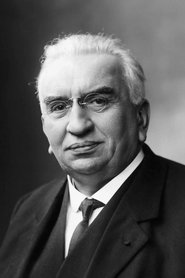
More from Louis Lumière
View all →

More about this film
About the production
Release date1900
ProductionLumière Company
Filmed inLyon, France
Was shot using the Lumière Cinématographe, which served as both camera and projector. The single-take approach was typical of Lumière productions, capturing real moments without editing or manipulation. Madeleine Koehler was likely the daughter of Lumière company associates, as the brothers frequently used family members and company employees in their films. The tortoiseshell cat was a domestic pet, emphasizing the authenticity of the scene.
Themes
Childhood innocenceHuman-animal relationshipsDomestic lifeSpontaneity and natural behaviorThe beauty of ordinary moments
Themes & topics
Historical background
Made in 1900, in France, under Louis Lumière, The Little Girl and Her Cat belongs to documentary filmmaking during early cinema when shorts dominated nickelodeon programs.
Why this film matters
Within documentary history, Louis Lumière's name attaches to the work; surviving prints help researchers study silent-era craft; archival value lies in recorded reality rather than fiction.
Making of
The filming of 'The Little Girl and Her Cat' exemplifies the Lumière brothers' documentary approach to early cinema. Unlike their contemporary Georges Méliès, who created elaborate fantasy films with special effects, the Lumières focused on capturing authentic moments from everyday life. The scene was likely filmed in one of the Lumière family homes or the homes of their associates in Lyon. Louis Lumière personally operated the Cinématographe, using natural light from windows to illuminate the scene. The cat's leap was completely unscripted - the filmmakers simply set up the camera and waited for natural action to occur. This patience and observational approach became a hallmark of the Lumière style. The film required no special equipment beyond their standard Cinématographe, which was revolutionary for its time as it combined camera, developer, and projector in one device.
What critics said
Contemporary reviews of The Little Girl and Her Cat are sparse in open sources; later catalog entries chiefly summarize plot and credits.
Did you know?
- Is one of the earliest examples of animal behavior captured on film, predating dedicated nature documentaries by decades.
- The tortoiseshell cat in the film was likely owned by the Lumière family or one of their associates, as casting animals for films was not yet an established practice.
- Madeleine Koehler was approximately 5-6 years old when this film was made, representing the Lumière brothers' interest in capturing childhood innocence.
- The Lumière brothers' philosophy that 'cinema is an invention without a future' - they believed it was primarily for scientific documentation rather than entertainment.
- Actualité was part of a series of domestic scenes the Lumières filmed to showcase the Cinématographe's ability to capture everyday moments.
- The jump of the cat onto the table was completely spontaneous, showcasing the Lumière brothers' talent for capturing unscripted reality.
- Hand-colored in some versions, a common practice where artists would paint directly onto the film strip to add color to specific elements.
- At 42 seconds, this was considered a relatively long film for the period, as most Lumière productions were under 30 seconds.
- Shown alongside other Lumière shorts in the first traveling cinema exhibitions throughout Europe and America.
- Film was used in early cinema demonstrations to show the camera's ability to capture rapid movement clearly.
Visual style
The cinematography in this film exemplifies the Lumière brothers' straightforward observational style. Shot with a fixed camera position, the composition is simple yet effective, capturing the entire table and surrounding area in a single frame. The lighting is natural, likely coming from a window, creating soft illumination that reveals the textures of the cat's fur and the girl's clothing. The depth of field allows both the foreground and background to remain in focus, a technical achievement for the period. The camera's shutter speed was carefully calibrated to capture the rapid movement of the cat's leap without motion blur, demonstrating the technical sophistication of the Cinématographe. The framing follows classical compositional principles, with the subjects positioned according to the rule of thirds, creating a balanced and aesthetically pleasing image.
Innovations
Several technical achievements that were remarkable for 1900. The Cinématograthe's ability to capture rapid motion without blur was particularly impressive, as demonstrated by the clear rendering of the cat's leap. The film's exposure was perfectly balanced to capture both the lighter tones of the girl's dress and the darker patterns of the tortoiseshell cat. The 42-second runtime required precise film handling, as early cameras could only capture limited amounts of footage before needing to be reloaded. The film's preservation over 120+ years is itself a technical achievement, demonstrating the quality of the original celluloid and the care taken in archival storage. The clarity of the image, when viewed today, shows the sophistication of the Lumière brothers' lens design and mechanical engineering.
Music
As a silent film from 1900, 'The Little Girl and Her Cat' had no synchronized soundtrack. During its original exhibition periods, the film would have been accompanied by live music, typically a piano player or small orchestra who would improvise appropriate music to match the on-screen action. The music would likely have been light and playful during the cat's entrance, perhaps using popular melodies of the Belle Époque era. In modern screenings, the film is often accompanied by period-appropriate music or newly composed scores that respect the film's historical context while enhancing its emotional impact for contemporary audiences.
Memorable scenes
- The moment when the tortoiseshell cat suddenly leaps onto the table, captured in perfect clarity and creating a moment of delightful surprise that exemplifies the magic of early cinema's ability to preserve fleeting moments of reality.
What audiences thought
Early audiences in 1900 were reportedly enchanted by the film's simple charm and the lifelike quality of the cat's movement. The film was part of traveling cinema programs that amazed viewers who had never seen moving images before. Many audience members reportedly believed the cat might jump out of the screen, such was the realism of the projection. The film's domestic subject matter made it particularly accessible and relatable to viewers of all social classes. In modern times, the film continues to fascinate cinema enthusiasts and historians who appreciate its historical significance and technical achievements. The film is often featured in retrospectives of early cinema and continues to draw interest from those studying the origins of documentary filmmaking.
Film connections
Influenced by
- The Lumière brothers' philosophy of documenting reality
- Early photography traditions of capturing everyday life
- 19th-century genre paintings depicting domestic scenes
- Scientific documentation methods of the period
This film influenced
- Later Lumière actualités featuring children and animals
- Early documentary films focusing on natural behavior
- Home movies and family films throughout the 20th century
- Modern cat videos and viral animal content
Film restoration
Preserved in the Lumière Institute archives in Lyon, France. Multiple copies exist in various film archives worldwide, including the Cinémathèque Française and the Library of Congress. The film has been digitally restored and is available in high-quality formats for study and exhibition. Some hand-colored versions have also been preserved, showing the early practice of film colorization.
Where to watch
- Lumière Institute Museum in Lyon, France
- YouTube (official uploads from film archives)
- The Criterion Channel (as part of early cinema collections)
- Kino Lorber's 'The Movies Begin' DVD/Blu-ray collection
- Museum of Modern Art's film collection screenings
- British Film Institute's online archive
- Europa Film Treasures website