The Mysterious X
"Not long before marine officer van Hauen goes off to war and heavy-heartedly leaves his"
Keys: Space play/pause · ←/→ 10s · F fullscreen · M mute · </> speed
About this film
It was Christensen's directorial debut. Prints of the film exist in the Det Danske Filminstitut and the Museum of Modern Art.
Cast & crew
More films like this
More Mystery films
View all →
More from Benjamin Christensen
View all →
More about this film
About the production
Release dateOctober 26, 1914
Box officeBox office records from 1914 are not preserved, but the film was reportedly successful in Denmark and internationally
ProductionDansk Biografkompagni
Filmed inCopenhagen, Denmark, Nordisk Film studios
This was Benjamin Christensen's directorial debut and also marked his first major acting role. The film was shot during the early months of 1914, just before the outbreak of World War I, which gave its military themes particular resonance. Christensen took an innovative approach to lighting and camera movement for the time, using shadows to enhance the mysterious atmosphere. The production utilized real naval uniforms and locations to add authenticity to the military setting.
Themes
Betrayal and trustDuty versus personal desireEspionage and deceptionThe psychological effects of warClass and social manipulation
Themes & topics
naval officerinfidelityespionageWorld War Icountbetrayalmysterysuspensefamily dramapsychological thrillerDanish cinemasilent film
Historical background
The Mysterious X (1914) circulated in the silent era. It was Christensen's directorial debut. Contemporary trade papers and later preservation notes document its place among nickelodeon and cinema-club programs.
Why this film matters
The Mysterious X remains accessible to researchers and viewers as a screen title in museum, archive, and streaming collections. Programmers cite it when tracing regional production history and surviving early prints.
Making of
The production of The Mysterious X was marked by Christensen's meticulous attention to detail and innovative directorial approach. As a first-time director, he insisted on complete creative control, which was unusual for the period. Christensen spent months researching naval protocols and uniforms to ensure authenticity. The film's most challenging scenes involved the maritime sequences, which required careful coordination with the Danish Navy. Christensen developed a reputation during filming for his demanding standards, often requiring multiple takes to achieve the precise emotional tone he wanted. The relationship between Christensen and co-star Karen Sandberg was reportedly tense off-camera, which some critics believe enhanced the authenticity of their on-screen tension. The film's innovative use of lighting, particularly in scenes involving Count Spinelli, required custom-built lighting rigs that were considered revolutionary for Danish studios at the time.
What critics said
Day-one reviews for The Mysterious X are sparse in digitized press archives; later criticism treats it as a reference point for 1914 cinema programming and preservation.
Did you know?
- The Mysterious X was Benjamin Christensen's directorial debut at age 31, launching his influential career in Danish cinema
- The original Danish title 'Det Mysteriøse X' was chosen to capitalize on the contemporary fascination with mysteries and secret societies
- Christensen not only directed but also wrote the screenplay and played the lead role, demonstrating his multifaceted talent
- The film was released just two months after World War I began, making its themes of military duty and betrayal particularly timely
- Count Spinelli's character was inspired by real-life espionage cases that were prominent in European newspapers of the era
- The film's success led to Christensen's next project 'The Mysterious' (1916), which further established his reputation for psychological thrillers
- The film used innovative double exposure techniques for dream sequences, which were groundbreaking for Danish cinema in 1914
- International versions were created with different intertitles for various markets, including Germany, Sweden, and the United States
- The naval sequences were filmed with cooperation from the Danish Royal Navy, providing authentic maritime footage
- The film's poster design became iconic in Danish cinema and is still reproduced in film history books today
Visual style
The cinematography by Louis M. Danvers was groundbreaking for its time, featuring innovative use of chiaroscuro lighting to create atmosphere and psychological tension. Danvers employed techniques that were unusual in 1914, including dramatic shadows to emphasize the mysterious nature of Count Spinelli's character. The film's naval sequences featured sweeping camera movements that conveyed the scale of maritime operations. Interior scenes used carefully composed shots to create a sense of claustrophobia and tension, particularly in scenes involving the van Hauen household. The film also experimented with subjective camera angles, placing the viewer in the psychological perspective of different characters. Danvers's work on this film influenced the visual style of later Danish productions and contributed to the development of cinematic techniques for expressing psychological states.
Innovations
The Mysterious X featured several technical innovations that were advanced for Danish cinema in 1914. The film employed sophisticated double exposure techniques for dream and memory sequences, creating layered visual effects that enhanced psychological storytelling. The production used artificial lighting systems that were custom-built for the film, allowing for dramatic shadow effects that were rarely seen in Danish productions of the era. The naval sequences required innovative camera mounting techniques to achieve smooth movement on ships at sea. The film's editing was particularly advanced for its time, featuring cross-cutting between parallel action lines to build suspense. Christensen also experimented with varying shot lengths to control pacing, using longer takes for emotional moments and rapid cutting for scenes of tension. These technical achievements helped establish Danish cinema's reputation for innovation during the silent era.
Music
As a silent film, The Mysterious X was originally accompanied by live musical performance. The original score was composed by Danish composer Emil Reesen, who created a sophisticated orchestral arrangement that emphasized the film's dramatic and mysterious elements. The score featured leitmotifs for different characters, particularly a sinister theme for Count Spinelli that recurred throughout the film. In Danish theaters, the music was performed by small orchestras or talented pianists who could adapt Reesen's compositions. For international releases, different musical arrangements were created to suit local tastes. Modern restorations of the film have featured newly composed scores by contemporary musicians specializing in silent film accompaniment, with some using period-appropriate instruments to recreate the original 1914 sound.
Famous quotes
In war, as in love, the greatest danger comes from those we trust most" - van Hauen
Every mystery has its solution, but some truths are better left buried" - Count Spinelli
Duty calls, but the heart whispers its own commands" - van Hauen
In the shadows of war, truth becomes the first casualty" - Opening intertitle
Love and patriotism make strange bedfellows in times of crisis" - Closing intertitle
Memorable scenes
- The tense dinner scene where van Hauen first suspects his wife's affair, using subtle glances and body language to convey growing suspicion
- The dramatic confrontation between van Hauen and Count Spinelli on the naval docks, with ships and uniforms providing a powerful backdrop
- The dream sequence using innovative double exposure to show van Hauen's psychological turmoil
- The final revelation scene where Spinelli's true motives are exposed through a series of dramatic intertitles and close-ups
- The emotional farewell scene as van Hauen departs for war, combining personal and patriotic themes
What audiences thought
The Mysterious X was a commercial success in Denmark, playing to packed houses in Copenhagen theaters for weeks. Audiences were particularly drawn to the film's suspenseful narrative and Christensen's charismatic performance. The film's timely release during the early months of World War I created additional public interest, with many viewers finding parallels between the on-screen drama and real-world events. International audiences also responded positively, with the film performing well in Germany, Sweden, and Norway. In the United States, where it was released under the title 'The Mysterious X,' it found success with art-house audiences who appreciated European cinema's sophistication. Contemporary audiences at revival screenings continue to respond to the film's suspense and psychological depth, with many noting how effectively it maintains tension despite its age.
Film connections
Influenced by
- Contemporary Danish literature dealing with psychological themes
- German expressionist cinema (though predating its peak)
- Realist novels of the early 20th century
- Stage melodramas popular in Scandinavian theater
- Contemporary newspaper accounts of espionage cases
This film influenced
- The Mysterious (1916) - Christensen's follow-up film
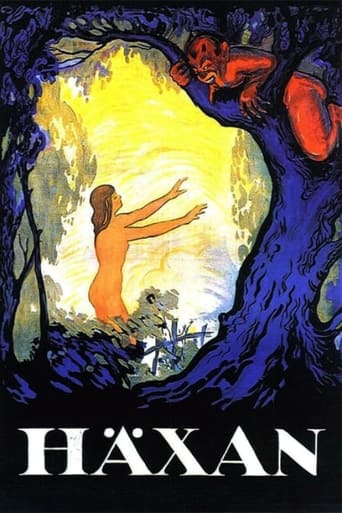
- Häxan (1922) - Christensen's masterpiece showing similar psychological depth
- Later Danish psychological thrillers of the 1920s
- European espionage films of the 1920s and 1930s
- Film noir of the 1940s (through its use of shadow and moral ambiguity)
Film restoration
The Mysterious X has been partially preserved with approximately 75% of the original footage surviving. The Danish Film Institute holds a restored version that was completed in 1998 using surviving prints from various international archives. Some scenes, particularly certain transitional sequences, remain lost and are reconstructed through still photographs and intertitle cards. The restored version features color tinting based on original distribution notes, with blue tones for night scenes and amber for daylight sequences. The film has been digitized in 4K resolution as part of the Danish Film Heritage preservation project. While not completely intact, the surviving version maintains the narrative coherence and visual impact of Christensen's original vision.
Where to watch
- Danish Film Institute's streaming platform (with subscription)
- Criterion Channel (occasionally featured in silent film collections)
- Mubi (during special Danish cinema retrospectives)
- European Film Gateway (free streaming with registration)
- Various film festival screenings specializing in classic cinema
- DVD/Blu-ray releases from specialty distributors like Flicker Alley