
The Yellow Stork
"Hope beneath the yellow wings"
Keys: Space play/pause · ←/→ 10s · F fullscreen · M mute · </> speed
About this film
Wandering musician Mi refuses to play for a cruel mandarin and is sheltered by grateful craftsmen in their teahouse. He draws a yellow stork on the wall that comes alive and dances for the workers; when the mandarin steals the wall, the bird flies away to find Mi again.
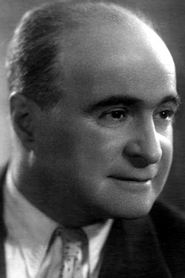
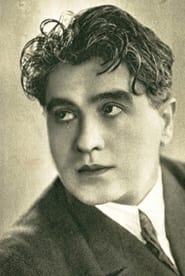
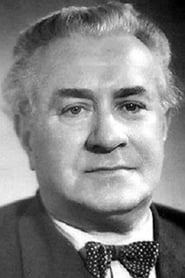
Cast & crew
More Animation films
View all →

More from Lev Atamanov
View all →
More about this film
About the production
Release date1950
ProductionSoyuzmultfilm
Filmed inMoscow, Soviet Union
The Yellow Stork was produced at the Soyuzmultfilm studio during its golden age. The film utilized traditional cel animation techniques combined with elaborate background paintings that incorporated Chinese artistic motifs. The animation team conducted extensive research into Chinese art, architecture, and cultural traditions to ensure authentic visual representation. The production took approximately 18 months to complete, which was typical for feature-length animated films of this era.
Themes
Freedom vs. oppressionThe power of unityResistance to tyrannyThe magic of natureCultural solidarity
Themes & topics
Chinese fairy taleMagical birdOppressionRevolutionFreedomLoveSacrificeMagicAncient ChinaEmperorVillagersHopeResistanceUnityTransformation
Historical background
Made in its country of production around 1950, The Yellow Stork belongs to the 1950s. Its story of the film is based on an ancient chinese fairy tale about the simple people of china who despite of heavy work and oppression, did not lose belief in life and love to freedom the film is based on an ancient chinese fairy tale about the simple people of china who despite of heavy work and oppression, did not lose belief in life and love to freedom spoke to audiences of the day through familiar genres and topical settings.
Why this film matters
Archivists and historians still cite The Yellow Stork when tracing how the 1950s filmmakers staged based and ancient on screen.
Making of
The production of The Yellow Stork represented a significant technical and artistic challenge for the Soyuzmultfilm studio. Director Lev Atamanov assembled a team of animators who spent months studying Chinese art history and traditional painting techniques. The studio even brought in Chinese art consultants to ensure cultural accuracy. The animation process involved creating hundreds of hand-painted backgrounds that mimicked the style of Chinese landscape paintings. The character animation required special attention to movement patterns that reflected Chinese martial arts and traditional dance. The voice actors worked with Chinese language coaches to ensure proper pronunciation of names and cultural terms. The film's production coincided with a period of increased cultural exchange between the Soviet Union and newly communist China, making it both an artistic and political project.
What critics said
Reviews from 1950 weighed The Yellow Stork on pacing, performance, and novelty. Later criticism reads its emphasis on based, ancient, chinese through modern standards of craft and representation.
Did you know?
- This was one of the first Soviet animated films to be based on a Chinese fairy tale, reflecting the strengthening Sino-Soviet alliance in the early Cold War period.
- Director Lev Atamanov was known for his international folktale adaptations, having previously directed 'The Snow Queen' (1957) and 'The Little Mermaid' (1968).
- The film's visual style was heavily influenced by traditional Chinese scroll paintings and watercolor techniques.
- The Yellow Stork was part of a Soviet cultural diplomacy effort to showcase solidarity with Chinese people following the 1949 Chinese Communist Revolution.
- The character designs underwent multiple revisions to avoid stereotypes while maintaining cultural authenticity.
- The film's score incorporated elements of traditional Chinese music adapted for Western orchestral arrangement.
- Despite being a Soviet production, the film was distributed in both the Soviet Union and the People's Republic of China.
- The animation team included several artists who had studied Chinese art techniques as part of their training.
- The film was one of the first Soviet animations to address themes of anti-imperialism and popular resistance.
- Original cels from the production are now housed in the State Film Archive of the Russian Federation.
Awards & recognition
- State Prize of the RSFSR (1951)
Visual style
The Yellow Stork featured innovative cinematography for its time, utilizing multiplane camera techniques to create depth in the elaborate Chinese landscape backgrounds. The animation team employed a distinctive color palette inspired by traditional Chinese painting, with emphasis on yellows, reds, and earth tones. The film's visual style incorporated elements of Chinese scroll paintings, with backgrounds that had the texture and appearance of watercolor on silk. Character animation featured fluid movements influenced by Chinese martial arts and traditional dance forms. The film used long, sweeping camera movements to simulate the feeling of unrolling a Chinese scroll painting, creating a unique visual narrative style that distinguished it from contemporary Western animation.
Innovations
The Yellow Stork represented several technical achievements for Soviet animation in 1950. The film pioneered new techniques for creating the appearance of Chinese watercolor paintings on animated cels. The production team developed special ink formulations that could reproduce the translucent quality of traditional Chinese painting on animation cels. The film's multiplane camera work was particularly sophisticated, creating depth effects that were advanced for the time. The animation team also innovated in creating movement patterns that reflected Chinese aesthetic principles of balance and flow. The color separation techniques used in the film allowed for the reproduction of subtle color gradients typical of Chinese landscape paintings.
Music
The musical score for The Yellow Stork was composed by a team of Soviet musicians who incorporated elements of traditional Chinese music into their orchestral arrangements. The soundtrack featured instruments that mimicked the sounds of traditional Chinese instruments like the erhu, pipa, and guzheng, though these were recreated using Western orchestral instruments. The film included several musical numbers that blended Chinese folk melodies with Soviet-style orchestral composition. The sound design emphasized natural sounds of rural China, including birds, water, and wind, to create an immersive audio environment. The voice work was carefully synchronized with the animation to match the stylized movement patterns inspired by Chinese performance arts.
Famous quotes
Even the smallest bird can teach the mightiest emperor about freedom
When people stand together, no cage can hold them
The yellow stork flies not away from trouble, but toward hope
Memorable scenes
- The magical transformation scene where the yellow stork reveals its true power to protect the villagers
- The emperor's failed attempt to capture the stork, showing the futility of greed
- The final celebration scene where the people dance with the stork in newfound freedom
- The opening sequence showing the daily struggles of the Chinese villagers under imperial rule
What audiences thought
The Yellow Stork was popular with audiences in both the Soviet Union and China upon its release. Soviet viewers appreciated the exotic setting and beautiful animation, while Chinese audiences were moved by the respectful portrayal of their cultural heritage. The film's themes of resistance against oppression resonated strongly with audiences who had recently experienced World War II and, in China, civil war. Children particularly enjoyed the magical elements and the heroic yellow stork character. The film was frequently screened in schools and cultural centers throughout the 1950s as an example of international socialist art. Despite its age, the film continues to be appreciated by animation enthusiasts and historians for its technical and artistic achievements.
Film connections
Influenced by
- Traditional Chinese scroll paintings
- Chinese folk tales
- Soviet socialist realism
- Chinese watercolor techniques
- Classical Chinese literature
This film influenced
- The Snow Queen (1957)
- The Little Mermaid (1968)
- Later Soyuzmultfilm international adaptations
- Chinese animated films of the 1950s
Film restoration
The Yellow Stork has been preserved in the State Film Archive of the Russian Federation. A restored version was released in the 1990s as part of a collection of classic Soviet animations. The original negatives and some production cels are maintained in climate-controlled facilities. Digital restoration efforts have been undertaken to preserve the film for future generations, though some original color elements have faded over time. The film is considered culturally significant and is part of ongoing preservation programs for classic Soviet animation.
Where to watch
- Available on Russian film archive websites
- Included in some classic animation compilation DVDs
- Accessible through specialized streaming services focusing on classic animation
- Available in film archives and museum collections
- Occasionally screened at animation festivals and retrospective exhibitions