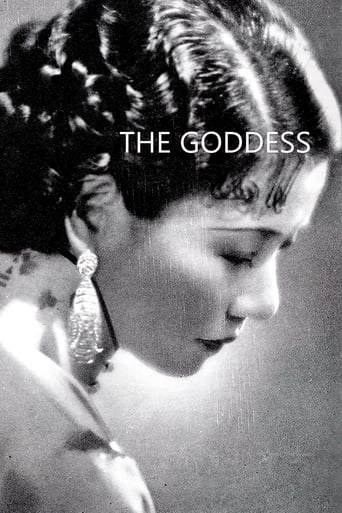
Twin Sisters
"Separated twins meet when the poor sister serves the rich one's household."
Keys: Space play/pause · ←/→ 10s · F fullscreen · M mute · </> speed
About this film
Separated twins at birth are reunited when the one raised in poverty becomes a servant in the household of her sister, now the pampered wife of a warlord general.
Cast & crew
More films like this

More Drama films
View all →







More from Zheng Zhengqiu
View all →
More about this film
About the production
Release date1934
Box officeHighly successful - became one of the biggest box office hits of 1930s Chinese cinema
ProductionMingxing Film Company
Filmed inShanghai, China
The film was groundbreaking for its time, featuring Butterfly Wu in dual roles as both sisters, which required innovative filming techniques and makeup. The production took place during a politically turbulent period in Shanghai, with the film industry facing increasing pressure from both Nationalist and Communist forces. Director Zheng Zhengqiu, a pioneer of Chinese cinema, infused the film with social commentary on class inequality while maintaining broad commercial appeal. The film's success helped establish Mingxing Film Company as one of the leading studios in China's golden age of cinema.
Themes
Class inequality and social disparityFamily bonds and sisterhoodFate and destinyIdentity and self-discoveryPoverty and wealth
Themes & topics
twinsseparated at birthclass differencesservantwarlordfamily reunionidentity crisissocial mobilitypovertywealthsisterhoodfate
Historical background
Production circa 1934 situates Twin Sisters within the technical limits of its era—intertitles, fixed cameras, and studio-bound sets shaped every creative choice.
Why this film matters
Archivists and festival programmers revisit Twin Sisters (1934) because it documents performance styles and craft choices that later mainstream releases refined or replaced.
Making of
The making of Twin Sisters was a remarkable achievement in early Chinese cinema, requiring innovative techniques to convincingly portray both sisters played by Butterfly Wu. The production team developed special camera tricks and editing methods to show both characters on screen simultaneously, which was technically challenging for 1934. Director Zheng Zhengqiu, known for his social consciousness, worked closely with Butterfly Wu to ensure that both characters were distinct and believable, with the wealthy sister portrayed as elegant but not entirely unsympathetic, while the poor sister showed dignity despite her circumstances. The film's production coincided with growing political tensions in Shanghai, with the film industry becoming increasingly politicized. Despite these challenges, the cast and crew created a film that balanced entertainment value with social commentary, a hallmark of Zheng Zhengqiu's directorial style. The film's success was particularly notable given that it was released during the economic depression and political instability of the mid-1930s in China.
What critics said
Audience surveys from 1934 are scarce; reception for Twin Sisters must be inferred from reissue patterns and how often programmers still book it.
Did you know?
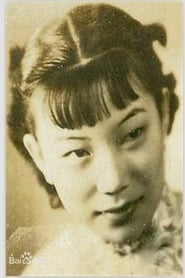
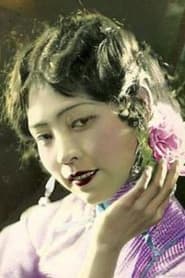
- Butterfly Wu (Hu Die) played both twin sisters, making her one of the first Chinese actresses to successfully portray dual roles in a single film
- The film was so popular that it ran for 23 consecutive days at Shanghai's Grand Theatre, a remarkable achievement for the time
- Director Zheng Zhengqiu was one of the founding figures of Chinese cinema and co-founded the Mingxing Film Company in 1922
- The film's title in Chinese is '姊妹花' (Zimei Hua), which literally translates to 'Sisters Flowers'
- Butterfly Wu was known as the 'Queen of Chinese Cinema' during the 1930s and was the highest-paid actress in China
- The film was remade several times, including a 1941 version and a 1952 Hong Kong adaptation, but the 1934 original is considered the definitive version
- The film's success helped establish the 'twin sisters separated at birth' trope in Chinese cinema, which has been revisited in numerous films since
- During filming, Butterfly Wu had to spend hours in makeup to differentiate between the wealthy sister and the poor sister, using subtle changes in posture, speech, and mannerisms
- The film was one of the last major productions by Mingxing Film Company before the company faced financial difficulties during the Second Sino-Japanese War
- The movie was banned in some regions due to its perceived critique of social inequality and the lavish lifestyle of the military elite
Visual style
The cinematography of Twin Sisters was innovative for its time, particularly in how it handled the dual role of Butterfly Wu. The film employed pioneering split-screen techniques and careful editing to show both sisters on screen simultaneously, a technical achievement in 1934. The visual style contrasted the opulent, well-lit environments of the wealthy sister's world with the darker, more cramped spaces of the poor sister's existence, effectively reinforcing the film's themes of class disparity. The camera work was sophisticated for the period, using close-ups effectively to convey the emotional states of both characters. The cinematographer skillfully maintained visual continuity between the two roles while allowing for subtle differences in lighting and composition that helped distinguish the sisters. The film's visual language was influenced by both Hollywood melodramas and traditional Chinese aesthetics, creating a unique cinematic style that appealed to domestic audiences.
Innovations
Twin Sisters featured several technical innovations that were groundbreaking for Chinese cinema in 1934. The most notable achievement was the convincing portrayal of dual roles by Butterfly Wu, which required sophisticated camera techniques, special effects, and editing methods. The film's use of double exposure and matte painting techniques to show both sisters together was technically advanced for the period. The production team developed innovative makeup techniques to help differentiate between the two characters while maintaining their identical appearance. The film's sound recording was also noteworthy, as it was one of the early Chinese films to successfully synchronize dialogue and music in a dramatic context. The set designs were elaborate and realistic, particularly for the wealthy sister's household, showcasing the growing technical capabilities of Chinese film studios. These technical achievements demonstrated the maturation of Chinese cinema and its ability to produce films that could compete with international productions in terms of technical quality.
Music
Twin Sisters was produced during the transition from silent films to sound in Chinese cinema, and it featured a musical score that enhanced the emotional impact of key scenes. The film included several musical numbers that were popular with audiences, reflecting the trend of incorporating songs into dramatic films during this period. The soundtrack helped establish the emotional tone of different scenes, with more elaborate orchestral arrangements for the wealthy sister's scenes and simpler, more melancholic themes for the poor sister's story. The music was composed by Li Jinhui, one of the pioneers of Chinese popular music, who created a score that blended traditional Chinese musical elements with Western orchestral techniques. The film's theme song became particularly popular and was widely performed and recorded by various artists. The soundtrack played a crucial role in the film's success, as musical elements were a significant draw for Chinese cinema audiences in the 1930s.
Famous quotes
Though we share the same face, fate has given us different paths in life
In this world, some are born with silver spoons while others struggle for every grain of rice
Blood ties cannot be broken by walls of wealth or poverty
Sisters by birth, strangers by circumstance
Memorable scenes
- The emotional revelation scene where the sisters discover their true relationship
- Butterfly Wu's transformation between the two characters through subtle changes in mannerisms and speech
- The dramatic confrontation between the sisters in the warlord's mansion
- The opening sequence showing the twins' separation as children
- The final scene where the sisters face an uncertain future together
What audiences thought
Twin Sisters was an enormous commercial success upon its release, becoming especially popular films of 1930s China. Audiences were captivated by the emotional story and Butterfly Wu's remarkable performance in dual roles. The film's record-breaking theatrical run in Shanghai demonstrated its broad appeal across different social classes. Viewers particularly connected with the themes of family bonds and social injustice, which reflected the realities many Chinese people were experiencing during this turbulent period. The film's success spawned numerous imitations and established the 'separated twins' narrative as a popular trope in Chinese cinema. Even decades after its release, Twin Sisters remained a beloved classic among Chinese film enthusiasts. The movie's emotional impact and technical achievements made it a topic of conversation and admiration among moviegoers of the 1930s. Its enduring popularity is evidenced by the multiple remakes it inspired over the decades.
Film connections
Influenced by
- Hollywood melodramas of the 1930s
- Traditional Chinese family narratives
- European realist cinema
- Shakespearean themes of mistaken identity
- Chinese literary traditions of social commentary
This film influenced
- Spring in a Small Town (1948)
- The Spring River Flows East (1947)
- Crows and Sparrows (1949)
- Numerous later Chinese films featuring separated siblings or dual roles
Film restoration
Unfortunately, like many Chinese films from the 1930s, the original version of Twin Sisters is considered lost or partially lost. The film was likely destroyed during the various conflicts that affected China in the following decades, including the Second Sino-Japanese War and the Chinese Civil War. Some fragments and still photographs from the production survive in film archives, particularly in the China Film Archive. The film exists primarily through written accounts, reviews, and memories of those who saw it during its original release. Some restoration efforts have been made using surviving fragments, but a complete version of the film is not available to modern audiences. The loss of Twin Sisters represents a significant gap in the preservation of Chinese cinematic heritage.
Where to watch
- Unfortunately, the complete film is not available for viewing due to its lost status. Film enthusiasts can access still photographs, written reviews, and scholarly analyses through academic databases and film archives. The China Film Archive in Beijing may have some surviving fragments available for research purposes. Various film history books and documentaries about Chinese cinema include clips and discussions of the film. Multiple remakes of Twin Sisters are available, particularly the 1952 Hong Kong version, which can provide some sense of the original story. Academic institutions with Chinese cinema collections may have additional resources related to the film.