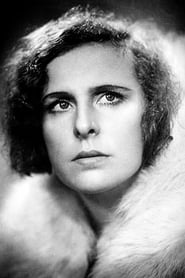
Leni Riefenstahl
Actor
- Born
- August 22, 1902, Berlin, German Empire
- Died
- September 8, 2003
- Active
- 1925-2002
- Birth name
- Helene Bertha Amalie Riefenstahl
Films 1
About Leni Riefenstahl
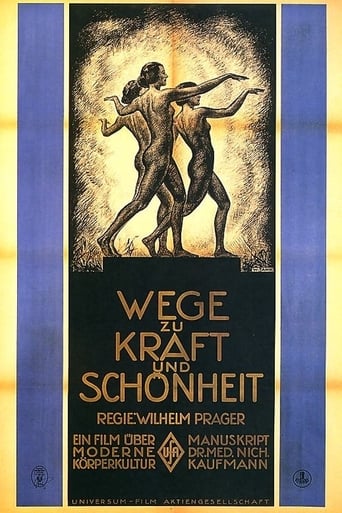
Leni Riefenstahl was a German filmmaker, photographer, and former dancer who briefly appeared as an actor in the silent era before becoming one of the most controversial directors and visual stylists of the 20th century. Born Helene Bertha Amalie Riefenstahl in Berlin, she first trained in dance and performance, then moved into acting in mountain films, where her athletic screen presence and physical discipline brought her attention in the 1920s and early 1930s. Her single credited acting appearance as a primary cast member in Ways to Strength and Beauty (1925) reflects the early phase of her screen career before she became associated with director Arnold Fanck's Alpine adventures. Riefenstahl transitioned behind the camera and gained international fame for directing The Blue Light, Triumph of the Will, and Olympia, works admired for technical innovation and visual power but forever shadowed by their service to Nazi propaganda. After World War II she was repeatedly scrutinized for her role in producing images that glorified the Nazi regime, and despite her claims of artistic independence, her career never recovered its prewar stature. She later reinvented herself as a photographer, including underwater and African work, and remained a polarizing figure in cinema history until her death at the age of 101. Her importance to film history lies both in her formal innovations and in the ethical debates her career continues to provoke.
More about Leni Riefenstahl
On screen
As an actor, Riefenstahl was best known for a physically expressive, athletic presence rather than for delicate psychological realism. Her screen persona in mountain films emphasized stamina, movement, endurance, and a romantic connection to nature and danger. She often projected determination and purity, qualities that aligned with the heroic, elemental world of the German Bergfilm. Because her acting career was relatively brief, her style is most associated with silent-era visual expressiveness and bodily precision rather than dialogue-based technique.
In film history
Riefenstahl had an enormous and divisive cultural impact because her films demonstrated how cinema could shape mass perception with extraordinary force. Triumph of the Will and Olympia became reference points for discussions of propaganda, spectacle, political aesthetics, and the power of moving images to mobilize emotion. At the same time, her mountain films and later photography contributed to modern ideas of the body, nature, athleticism, and visual composition. Her name has become inseparable from debates about whether artistic innovation can or should be separated from political responsibility. She occupies a unique place in cultural history as both a pioneer of film form and a symbol of cinema's capacity to serve authoritarian imagery.
Later reputation
Her legacy is one of the most complex in film history: she is studied for formal innovation, but also condemned for the ideological purpose her art served. Film scholars continue to analyze her work for advances in editing, camera movement, mass choreography, and visual rhetoric, especially in the documentaries of the 1930s. At the same time, her career is used as a case study in the ethics of representation, propaganda, and the responsibilities of artists under oppressive regimes. Her later photographic work expanded her legacy beyond cinema, proving her lasting interest in composition, the human body, and spectacle. Few classic-era figures remain so central to both aesthetic admiration and moral controversy.
Influence
Riefenstahl influenced generations of filmmakers, cinematographers, editors, and advertising designers through her mastery of visual scale, crowd staging, and cinematic rhythm. Techniques associated with her work, including dynamic camera placement, monumental framing, and the transformation of real events into emotionally charged spectacle, can be seen in later documentaries, sports coverage, political media, and commercial filmmaking. Her films are still studied in film schools as examples of how formal brilliance can be harnessed to ideological ends. Many directors have borrowed aspects of her visual language while deliberately rejecting the political context that defined her legacy. Her influence is therefore both artistic and cautionary.
Off screen
Riefenstahl's personal life was closely entangled with her artistic and public persona. She studied dance in her youth, and that physical training shaped both her screen presence and later visual sensibility. She married Peter Jacob in 1968; the marriage ended in divorce in 1974. In later decades she lived a long life that included extensive travel, photography, and public discussion of her past, especially her association with the Nazi regime and her repeated insistence that she was an artist rather than a political collaborator. She had no children. Much of her private reputation was shaped by the tension between her self-presentation and the historical record surrounding her professional choices.
Education
She received dance training in Berlin and was prepared for a performance career rather than formal academic film education. Her early artistic background was centered on movement, stage performance, and physical expression, which later informed both her acting and directing. Detailed formal higher education in cinema is not generally associated with her career.
Credits
- Appeared in the silent film Ways to Strength and Beauty (1925), one of the early screen credits associated with her entry into cinema
- Became a celebrated performer in German mountain films associated with director Arnold Fanck in the late silent era
- Directed The Blue Light (1932), a visually distinctive film that established her as a filmmaker
- Created Triumph of the Will (1935), one of the most influential and controversial documentaries ever made
- Directed Olympia (1938), an acclaimed record of the 1936 Berlin Olympic Games noted for its innovative camera work and editing
- Rebuilt her public identity after World War II through photography and later publication projects
- Worked as a photographer in Africa, especially among the Nuba people of Sudan, producing widely exhibited books and images
- Remained a major subject of historical debate for the remainder of her life because of her relationship to Nazi propaganda and cinematic form
Roles
- The unnamed central figure in Ways to Strength and Beauty (1925)
- Young women and alpine heroines in German mountain films
- The lead role in The Blue Light (1932)
Films
- Ways to Strength and Beauty (1925)
- The Blue Light (1932)
- Triumph of the Will (1935)
- Olympia (1938)
Awards
- German Film Awards recognition for lifetime and historical significance, where applicable in later retrospective contexts
- Multiple festival and retrospective honors for photographic and documentary work during her later life
- International recognition as a major technical innovator in film history, though not chiefly through mainstream competitive awards
Nominations
- No major mainstream competitive award nominations are firmly associated with her in the classic Hollywood sense
- Retrospective honors and festival selections for her documentary and photographic work
Honors
- Recognition by film historians as one of the most visually influential filmmakers of the 20th century
- Subject of major museum exhibitions devoted to her photography and film work
- Persistent inclusion in lists and academic studies of the most controversial filmmakers in history
Collaborators
- Arnold Fanck
- Heinrich G. Ernst
- Hanns Schneeberger
- Luis Trenker
- Adolf Hitler
Studios
- Arnold Fanck's production circle
- Independent production work in Germany
Family
- Peter Jacob (1968-1974)
Notes
- Before becoming famous as a filmmaker, she was originally trained as a dancer and performer.
- Her acting career was relatively brief, but it helped launch her into German mountain films and ultimately directing.
- She lived to be 101 years old, becoming one of the longest-lived major figures in classic cinema history.
- Her film Triumph of the Will is frequently cited as one of the most technically accomplished propaganda films ever made.
- Olympia is renowned for its innovative coverage of the Olympic Games, especially its athletic imagery and camera movement.
- She repeatedly insisted after the war that she had not been politically committed to Nazism, a claim long disputed by historians.
- She later achieved fame again as a photographer, particularly for images of the Nuba people and underwater subjects.
- Her life and career continue to be the subject of documentaries, biographies, academic studies, and debates about art and morality.
Quotes
I wanted to see beauty and I wanted to make beauty.
I was fascinated by the visual possibilities of film and by the body in motion.
I never considered myself a politician; I was an artist.
Questions
Who was Leni Riefenstahl?
Leni Riefenstahl was a German filmmaker, photographer, and former actor who began her screen career in silent cinema before becoming one of the most technically admired and morally controversial directors of the 20th century. She is especially known for her association with Nazi-era filmmaking and for the enduring debate over whether artistic innovation can be separated from propaganda.
What films is Leni Riefenstahl best known for?
She is best known for Ways to Strength and Beauty, The Blue Light, Triumph of the Will, and Olympia. These works span her early acting period and her later directing career, with Triumph of the Will and Olympia remaining the most frequently discussed in film history.
When was Leni Riefenstahl born and when did she die?
She was born on August 22, 1902, in Berlin, German Empire. She died on September 8, 2003, at the age of 101.
What awards did Leni Riefenstahl win?
She did not have a mainstream awards profile like a Hollywood studio star, but she received significant retrospective recognition, museum attention, and historical acknowledgment for her photography and filmmaking. Her career remains more associated with controversy and scholarly debate than with conventional competitive awards.
What was Leni Riefenstahl's acting and directing style?
As an actor, she projected athleticism, physical grace, and silent-era expressiveness, especially in mountain films. As a director, she became known for highly controlled compositions, dynamic camera movement, monumental imagery, and a strong emphasis on bodies, spectacle, and visual rhythm.
Why is Leni Riefenstahl controversial?
She is controversial because her most famous films were created in close association with Nazi power and were used to glorify the regime. Although she later argued that she was only an artist, historians continue to debate the extent of her responsibility for the political meanings of her work.