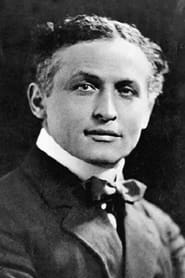
Harry Houdini
Actor & Director
Born: March 24, 1874 in Budapest, Austria-Hungary (now Hungary) Died: October 31, 1926 Active: 1919-1923 Birth Name: Erik Weisz (later Ehrich Weiss)
Films
4 films
About Harry Houdini
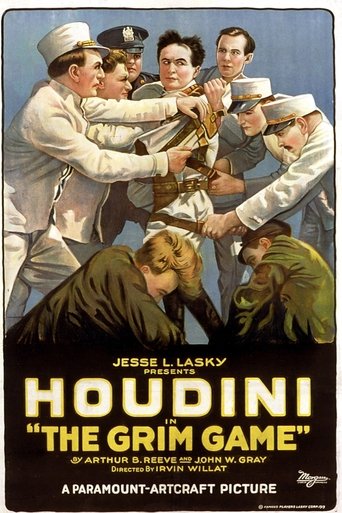
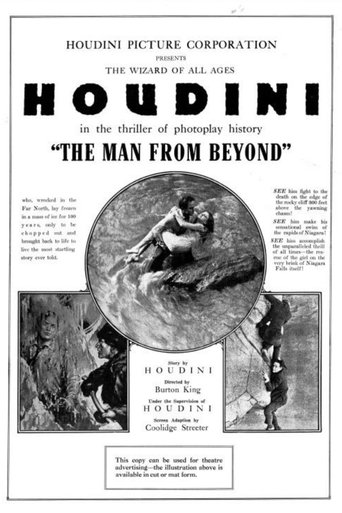
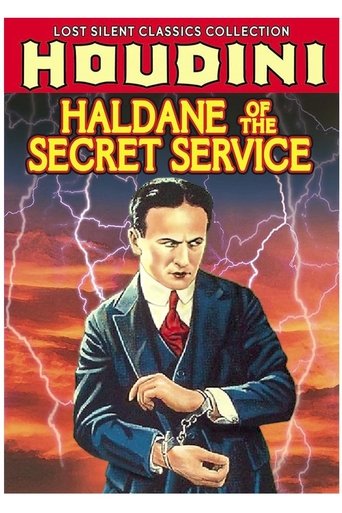
Harry Houdini, born Erik Weisz, was primarily renowned as the world's greatest escape artist and magician before transitioning to silent films in the late 1910s. His film career, though brief (1919-1923), showcased his physical prowess and death-defying stunts, bringing his real-life escape artistry to the silver screen. Houdini formed his own production company, the Houdini Picture Corporation, to maintain creative control over his film projects, which often featured him performing his own dangerous stunts. His first major film, 'The Grim Game' (1919), featured a spectacular mid-air plane collision that was actually an unplanned accident but was incorporated into the film. In 'The Man from Beyond' (1922), he played a character frozen in Arctic ice for 100 years, a role that capitalized on his reputation for supernatural abilities. His final film, 'Haldane of the Secret Service' (1923), which he also directed, marked the end of his cinematic ambitions as he returned to focus on his live performances. Despite his relatively short filmography, Houdini's movies were significant for their authentic stunt work and for bringing his escape artistry to a wider audience through the emerging medium of cinema.
The Craft
On Screen
Houdini's acting style was characterized by his physical prowess and authentic performance of dangerous stunts, often eschewing elaborate acting techniques in favor of showcasing his legendary escape abilities. His screen presence was commanding and intense, reflecting years of stage performance and showmanship. Rather than relying on traditional theatrical acting methods of the silent era, Houdini brought a raw, visceral energy to his performances, often performing escapes and stunts that were genuinely dangerous rather than simulated. His approach emphasized spectacle and realism over nuanced character development, making him a precursor to modern action stars.
Behind the Camera
Houdini's directing style, as evidenced in 'Haldane of the Secret Service,' was straightforward and focused on showcasing his physical abilities and escape sequences. He prioritized practical effects and real stunts over camera tricks or elaborate editing techniques, believing that authenticity was key to audience engagement. His direction often featured long takes that allowed viewers to witness his escape techniques in their entirety, maintaining the suspense and wonder that defined his live performances. While not technically innovative in terms of cinematography, his directing approach emphasized clarity and spectacle, ensuring that audiences could fully appreciate the death-defying nature of his work.
Milestones
- Founded the Houdini Picture Corporation in 1919
- Performed his own dangerous stunts in all his films
- Incorporated real plane crash footage into 'The Grim Game'
- Wrote, produced, and starred in 'The Man from Beyond'
- Directed and starred in his final film 'Haldane of the Secret Service'
- First magician to successfully transition to silent film stardom
- Pioneered the action-adventure genre with authentic stunt work
Best Known For
Iconic Roles
Must-See Films
Accolades
Special Recognition
- Hollywood Walk of Fame star (1975, posthumous)
- International Magic Hall of Fame inductee
- St. Louis Walk of Fame inductee
- American Society of Magicians Hall of Fame
Working Relationships
Worked Often With
Studios
Why They Matter
Impact on Culture
Harry Houdini's film career, though brief, significantly influenced the development of the action-adventure genre and stunt work in cinema. By insisting on performing his own dangerous stunts, he established a precedent for authenticity in action filmmaking that would influence generations of performers. His films helped bridge the gap between vaudeville stage magic and cinematic special effects, demonstrating how live performance skills could translate to the new medium. Houdini's celebrity status and box office appeal helped validate the commercial viability of genre films centered around extraordinary physical feats. His work also contributed to the early development of the suspense thriller genre, with his escape sequences serving as templates for future action set pieces.
Lasting Legacy
Houdini's legacy in cinema extends far beyond his three silent films, as he established the template for the action hero who performs his own stunts. His approach to filmmaking, emphasizing real danger over simulated effects, influenced later performers like Buster Keaton and eventually modern action stars. The Houdini Picture Corporation was among the early examples of artist-owned production companies, predating similar ventures by Charlie Chaplin and Mary Pickford. His films, while largely forgotten by mainstream audiences, remain important artifacts of silent cinema and are studied by film historians for their authentic stunt work and their role in the development of action cinema. The name 'Houdini' has become synonymous with escape and impossible feats, ensuring his cultural immortality extends beyond his film career to become a permanent part of popular culture.
Who They Inspired
Houdini influenced future filmmakers and performers by demonstrating the power of authentic spectacle in cinema. His insistence on performing real escapes and dangerous stunts set a standard that would be emulated by silent comedy stars like Harold Lloyd and Buster Keaton. The suspense techniques he developed in his escape sequences influenced the thriller and horror genres, particularly in scenes involving confinement and escape. Modern escape artists and magicians continue to cite Houdini as their primary inspiration, and his approach to showmanship has influenced performers across multiple entertainment mediums. His films also helped establish the commercial viability of films centered around a single charismatic performer's extraordinary abilities, paving the way for future star-driven action franchises.
Off Screen
Houdini was deeply devoted to his wife Bess, who served as his stage assistant and closest confidant throughout his career. He maintained a rigorous physical fitness regimen and was known for his intense dedication to debunking spiritualists and fake mediums, which became a crusade in his later years. Despite his public persona as an escape artist who could overcome any confinement, he was privately haunted by the death of his mother and maintained a lifelong correspondence with Sir Arthur Conan Doyle, though they clashed over spiritualism. Houdini was also an avid aviation enthusiast and one of the first people to successfully fly a plane in Australia.
Education
Limited formal education; largely self-taught through extensive reading and practical experience in magic and performance
Family
- Wilhelmina Beatrice 'Bess' Rahner (1894-1926)
Did You Know?
- During filming of 'The Grim Game,' two planes actually collided mid-air, and the footage was so spectacular it was incorporated into the final film
- Houdini was one of the first movie stars to form his own production company to maintain creative control
- He performed all his own stunts, including being suspended upside-down in a straightjacket from a crane
- His films were often used to promote his live performances and vice versa
- The Man from Beyond' was inspired by Houdini's interest in cryonics and suspended animation
- He was the highest-paid film star of 1919, earning $1 million for his three-picture deal
- Houdini's films were among the first to feature authentic aviation sequences
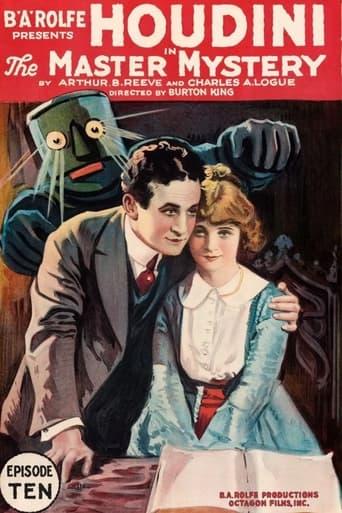
- He destroyed all copies of his first film 'The Master Mystery' (1918) because he was unhappy with the final product
- His film career ended when he realized he could make more money from live performances
- The Houdini Picture Corporation was headquartered in the same building as Famous Players-Lasky Corporation
In Their Own Words
No prison can hold me; no hand or leg irons or steel locks can shackle me. No ropes or chains can cut through my flesh.
My brain is the key that sets me free.
Magic is the sole science not accepted by scientists, because they can't understand it.
What the eyes see and the ears hear, the mind believes.
Escapes are merely illusions of the mind, exploited to their fullest extent.
Frequently Asked Questions
Who was Harry Houdini?
World-famous magician and escape artist who transitioned to silent films from 1919-1923, starring in and directing several action-adventure films that showcased his legendary escape abilities and death-defying stunts.
What films is Harry Houdini best known for?
Titles linked here include The Grim Game (1919), The Man from Beyond (1922).
When was Harry Houdini born and when did he die?
Born March 24, 1874; died October 31, 1926.
What awards did Harry Houdini win?
While Houdini did not receive major film awards during his lifetime, he has been posthumously honored with a star on the Hollywood Walk of Fame (1975) and inducted into the International Magic Hall of Fame and American Society of Magicians Hall of Fame.
What was Harry Houdini's acting and directing style?
Houdini's acting style emphasized physical prowess and authentic stunt performance over traditional theatrical techniques. His directing approach was straightforward and focused on showcasing his escape abilities with long takes and practical effects, prioritizing realism and spectacle over cinematic innovation.