

Films
2 films
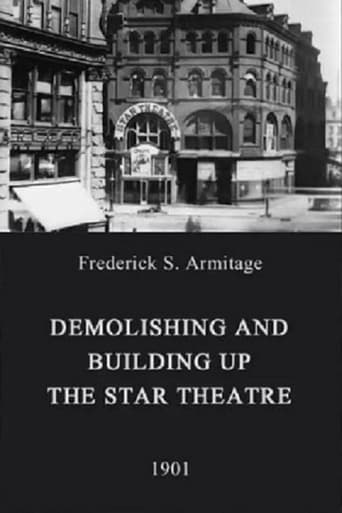
About Frederick S. Armitage
American filmmaker and cinematographer who worked during the days of cinema at the turn of the 20th century. He was primarily associated with the American Mutoscope and Biograph Company, one of the earliest and most significant film production companies in the United States. Armitage specialized in creating innovative short films that showcased early cinematic techniques and visual effects. His most famous works, 'A Nymph of the Waves' (1900) and 'Demolishing and Building Up the Star Theatre' (1901), demonstrated his mastery of early special effects and time-lapse photography. These films were created during a period when cinema was still establishing itself as both an art form and a commercial enterprise. Armitage's career was relatively brief but impactful, spanning roughly from 1899 to 1902, during which he contributed to the development of early film language and techniques. His work represents the experimental spirit of early cinema pioneers who were discovering the possibilities of the moving image medium.
The Craft
Behind the Camera
Armitage's directing style was characterized by technical innovation and experimental approaches to filmmaking. He was particularly interested in visual effects and time manipulation techniques that were revolutionary for the period. His films often featured trick photography, multiple exposures, and time-lapse sequences that pushed the boundaries of what was possible with early film technology. Armitage approached filmmaking as a technical challenge, constantly exploring new ways to manipulate the moving image for dramatic and artistic effect.
Milestones
- Directed 'A Nymph of the Waves' (1900) featuring innovative special effects
- Created 'Demolishing and Building Up the Star Theatre' (1901) showcasing early time-lapse photography
- Worked as cinematographer for American Mutoscope and Biograph Company
- Pioneered early special effects techniques in silent films
- Contributed to the development of cinematic language during cinema's infancy
Best Known For
Must-See Films
Accolades
Special Recognition
- Recognized as an important early cinema pioneer by film historians
- Works preserved in the Library of Congress collection
- Films featured in museum retrospectives on early cinema
Working Relationships
Worked Often With
Studios
Why They Matter
Impact on Culture
Frederick S. Armitage's work represents a crucial period in the development of American cinema, particularly in the realm of special effects and technical innovation. His film 'Demolishing and Building Up the Star Theatre' is considered an early masterpiece of time-lapse photography, demonstrating an understanding of cinematic time that would influence filmmakers for decades. 'A Nymph of the Waves' showcased early special effects techniques that would become fundamental to fantasy and science fiction filmmaking. Armitage's contributions helped establish the visual vocabulary of cinema during its formative years, proving that the moving image could manipulate time and space in ways impossible in other art forms. His work is studied by film historians as an example of the technical experimentation that characterized early American cinema and laid the groundwork for future cinematic innovations.
Lasting Legacy
Frederick S. Armitage's legacy lies in his work in early special effects and time-lapse photography, techniques that would become staples of cinematic language. Though his career was brief, his films are preserved and studied as important examples of early American cinema innovation. 'Demolishing and Building Up the Star Theatre' is frequently cited in film history texts as one of the earliest and most successful examples of time-lapse cinematography, influencing countless filmmakers who would later use similar techniques. Armitage represents the unsung technicians and innovators of early cinema who, despite working in relative obscurity, made fundamental contributions to the art and craft of filmmaking. His work serves as a reminder of the experimental spirit that drove the early pioneers of cinema.
Who They Inspired
Armitage's innovative techniques in time-lapse photography and special effects influenced subsequent generations of filmmakers working in documentary, experimental, and narrative cinema. His approach to manipulating time through cinematography prefigured the work of later documentary filmmakers and experimental artists. The visual effects techniques he pioneered in films like 'A Nymph of the Waves' laid groundwork for the fantasy and science fiction genres that would flourish in later decades. Early filmmakers and cinematographers at Biograph and other studios would have been exposed to his work, contributing to the diffusion of these techniques throughout the growing American film industry.
Off Screen
Very little is known about Frederick S. Armitage's personal life, which was common for many early film technicians and directors who worked behind the scenes. He emerged during the experimental phase of American cinema when filmmakers were often more focused on technical innovation than personal celebrity. His brief but significant career coincided with the transition from novelty films to more sophisticated storytelling in early cinema.
Did You Know?
- His film 'Demolishing and Building Up the Star Theatre' was created by taking one frame per day over a month-long period
- The Star Theatre in his famous time-lapse film was located at 13th Street and Broadway in New York City
- Armitage worked during the era when films were typically only 1-2 minutes long
- His films were shot on 68mm film stock, which was used by Biograph for superior image quality
- The American Mutoscope and Biograph Company was one of the first film studios in America, founded in 1895
- Armitage's work predates the establishment of Hollywood as the center of American film production
- His films were originally shown on Mutoscope devices, which were early hand-cranked viewing machines
- The technical innovations in his films were achieved without modern editing equipment or digital effects
- Armitage was part of a generation of filmmakers who were essentially inventing the language of cinema as they worked
- His films are now considered valuable historical artifacts documenting both early cinema techniques and New York City at the turn of the century
Frequently Asked Questions
Who was Frederick S. Armitage?
American filmmaker and cinematographer who worked during the days of cinema around 1900. He was associated with the American Mutoscope and Biograph Company and created innovative short films that demonstrated early special effects and time-lapse photography techniques.
What films is Frederick S. Armitage best known for?
Titles linked here include A Nymph of the Waves (1900), Demolishing and Building Up the Star Theatre (1901).
When was Frederick S. Armitage born and when did he die?
Born 1874; died death date not listed.
What awards did Frederick S. Armitage win?
Frederick S. Armitage did not receive formal awards during his lifetime, as the film industry had not yet established award systems in the early 1900s. However, he is recognized by film historians as an important pioneer of early cinema techniques.
What was Frederick S. Armitage's directing style?
Armitage's directing style was characterized by technical innovation and experimentation with early special effects. He focused on manipulating time and space through techniques like time-lapse photography and multiple exposures, pushing the boundaries of what was possible with early film technology.