
Eduard Ioganson
Actor & Director
Born: 1894 in Saint Petersburg, Russian Empire Died: 1942 Active: 1926-1934 Birth Name: Eduard Karlovich Ioganson (Эдуард Карлович Иогансон)
Films
2 films
About Eduard Ioganson
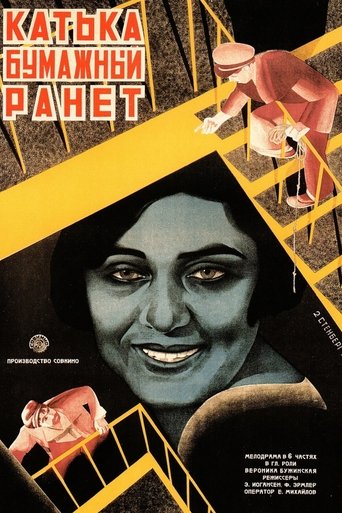
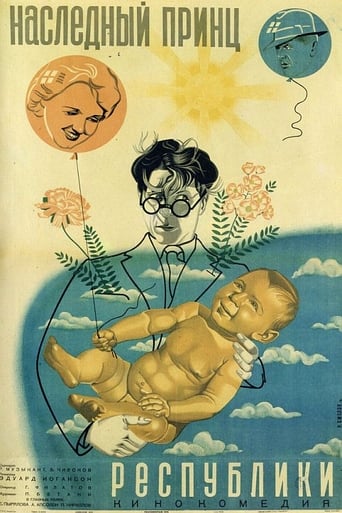
Soviet actor and director who emerged during the pivotal transitional period from silent cinema to sound in the 1920s and 1930s. His career, though brief, was marked by significant contributions to early Soviet cinema, both in front of and behind the camera. He first gained recognition as an actor, notably starring in the 1926 silent film 'Katka's Reinette Apples,' a classic of the Soviet avant-garde that showcased his ability to convey deep emotion within the constraints of silent performance. Transitioning to directing, Ioganson helmed 'Crown Prince of the Republic' in 1934, a film that reflected the ideological and artistic shifts occurring in the Soviet film industry during the Stalinist era. His work as a director demonstrated a keen understanding of cinematic language, blending narrative clarity with the propagandistic elements required by the state. Unfortunately, like many artists of his generation, his career was likely curtailed by the political purges and restrictive cultural policies of the late 1930s, resulting in a relatively small but historically significant filmography. His legacy endures through the surviving prints of his films, which serve as valuable artifacts of a complex and transformative era in Russian film history.
The Craft
On Screen
As a silent film actor, Ioganson employed a naturalistic and understated style that was somewhat ahead of its time, avoiding the broad, theatrical gestures common in the era. His performance in 'Katka's Reinette Apples' was noted for its subtlety and psychological depth, conveying the inner turmoil and resilience of his character through nuanced expressions and body language. He favored a more grounded, humanistic approach that helped audiences connect emotionally with his characters, aligning with the broader Soviet movement towards realism in the arts.
Behind the Camera
Ioganson's directing style, as evidenced in 'Crown Prince of the Republic,' was characterized by a blend of classical Soviet montage techniques with a focus on clear, linear storytelling. He demonstrated a strong command of visual composition, using dynamic camera movements and framing to enhance the narrative and ideological themes of his films. While adhering to the socialist realist doctrine that was becoming mandatory, he still managed to infuse his work with a sense of individuality and cinematic flair, focusing on character-driven drama within the larger propagandistic framework.
Milestones
- Starred in the acclaimed silent film 'Katka's Reinette Apples' (1926)
- Directed the feature film 'Crown Prince of the Republic' (1934)
- Worked with prominent Soviet filmmaker Fridrikh Ermler
- Became a key figure at the Lenfilm studio in Leningrad
Best Known For
Iconic Roles
Must-See Films
Working Relationships
Worked Often With
Studios
Why They Matter
Impact on Culture
Eduard Ioganson's cultural impact lies in his contribution to two distinct and crucial phases of early Soviet cinema. As an actor in 'Katka's Reinette Apples,' he helped create a work that is now considered a masterpiece of Soviet silent film, representing the era's blend of avant-garde aesthetics and humanist storytelling. The film itself remains a vital historical document, offering a poignant look at life in the early Soviet Union and showcasing the artistic possibilities of cinema before the imposition of socialist realism. His subsequent work as a director, though less celebrated, illustrates the difficult transition many artists had to make as the political landscape hardened, adapting their creative voices to serve the state's ideological goals while striving to maintain artistic integrity.
Lasting Legacy
Eduard Ioganson's legacy is that of a talented but tragic figure whose potential was ultimately circumscribed by the historical forces of his time. He is remembered primarily for his role in 'Katka's Reinette Apples,' a film that continues to be studied and admired by film historians and cinephiles for its powerful narrative and emotional resonance. His career serves as a microcosm of the fate of many Soviet artists who flourished briefly during a period of relative creative freedom before being silenced by political repression, war, or both. While his name is not widely known outside of academic circles, his work endures as proof of the rich, complex, and often heartbreaking history of 20th-century Russian art.
Who They Inspired
Ioganson's influence is most palpable through the lasting power of 'Katka's Reinette Apples,' which has influenced subsequent generations of filmmakers interested in realist storytelling and the social dimensions of cinema. His naturalistic acting style offered a counterpoint to more theatrical performances of the silent era, contributing to a broader movement towards cinematic realism. As a director, his work represents the practical application of Soviet film theory in a narrative context, providing a case study for how filmmakers navigated the demands of art and politics. His career trajectory, from innovative actor to state-compliant director, also serves as a cautionary tale about the pressures faced by artists under authoritarian regimes, influencing scholarly discussions about the relationship between art and power.
Off Screen
Details about Eduard Ioganson's personal life are scarce, as is common for many Soviet artists whose biographies were often suppressed or lost during the tumultuous political upheavals of the 20th century. He was active in the vibrant cultural scene of Leningrad (now Saint Petersburg) during the 1920s and early 1930s, a period known for its artistic experimentation before the imposition of strict state control. His life was ultimately cut short during World War II, with records indicating he died in 1942, a time when Leningrad was enduring the brutal Siege of Leningrad, suggesting he may have been a victim of the conflict or its related hardships.
Education
Ioganson was part of the first generation of Soviet filmmakers who received their training and experience in the state-sponsored film schools and collectives that emerged after the 1917 revolution. While specific details about his formal education are not widely documented, his close collaboration with director Fridrikh Ermler suggests he was deeply involved with the experimental and collective workshop environments that were central to the development of Soviet cinema in the 1920s. He honed his craft through practical experience within the burgeoning Soviet film industry, particularly at the Lenfilm studio in Leningrad.
Did You Know?
- His name is sometimes transliterated as 'Eduard Johanson' in Western sources.
- 'Katka's Reinette Apples' was co-directed by Fridrikh Ermler, a major figure in Soviet cinema, with whom Ioganson had a close working relationship.
- The film 'Crown Prince of the Republic' (1934) is considered a key example of the early Soviet sound film, a medium that presented both technical and artistic challenges for filmmakers of the era.
- He worked primarily out of Lenfilm, one of the two major Soviet film production centers, alongside Moscow's Mosfilm.
- His death in 1942 coincides with the height of the Siege of Leningrad, one of the deadliest and most tragic episodes of World War II.
- Despite his contributions, very little personal information about Ioganson survives, a common fate for figures who were not officially celebrated as 'heroes of socialist labor.'
- His filmography is extremely small, consisting of only a handful of credited roles and one directorial effort, making his surviving work all the more precious to historians.
Frequently Asked Questions
Who was Eduard Ioganson?
He is best known for starring in the silent classic 'Katka's Reinette Apples' and for directing the early sound film 'Crown Prince of the Republic'.
What films is Eduard Ioganson best known for?
Titles linked here include Katka's Reinette Apples (1926), Crown Prince of the Republic (1934).
When was Eduard Ioganson born and when did he die?
Born 1894; died 1942.
What awards did Eduard Ioganson win?
There are no records of Eduard Ioganson receiving any major official awards or honors. Like many artists from his era, his contributions have been recognized more through the historical and academic study of his films rather than through formal accolades.
What was Eduard Ioganson's acting and directing style?
As an actor, Ioganson was known for a naturalistic and understated style in silent film, avoiding broad gestures for more nuanced, psychologically deep performances. As a director, his style blended Soviet montage techniques with clear, character-driven narratives, adapting to the socialist realist aesthetic required by the state in the 1930s.