
Valentina Kibardina
Actor
Born: May 27, 1907 in Saint Petersburg, Russian Empire Died: October 20, 1988 Active: 1934-1965 Birth Name: Valentina Ivanovna Kibardina
Films
3 films


About Valentina Kibardina
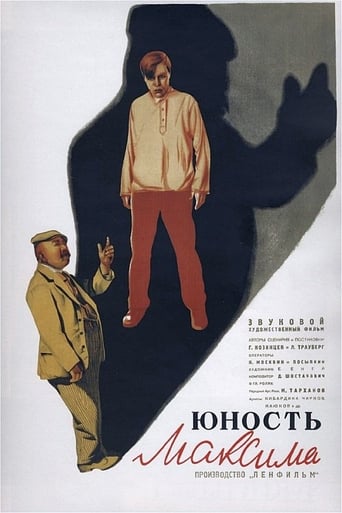
Prominent Soviet actress: from the early 1930s through the 1960s, though she achieved her greatest recognition during the Stalinist era. She rose to international fame through her role as Natasha in the acclaimed Maxim trilogy directed by Grigori Kozintsev and Leonid Trauberg, which included The Youth of Maxim (1935), The Return of Maxim (1937), and The Vyborg Side (1939). Her portrayal of the revolutionary heroine exemplified the ideal Soviet woman of the era - strong, dedicated, and politically conscious. Beyond the Maxim trilogy, Kibardina continued to work steadily in Soviet cinema, often playing roles that embodied socialist realist ideals. She trained at the Leningrad Institute of Performing Arts and became associated with the Leningrad Film Studio. Her career continued through World War II and into the post-war period, though she never again achieved the same level of prominence as in her early career. Kibardina remained active in the film industry until her retirement in the 1960s, leaving behind a legacy as one of the defining actresses of Soviet cinema's golden age.
The Craft
On Screen
Kibardina's acting style embodied the principles of socialist realism, characterized by strong emotional expressiveness, clear ideological conviction, and a powerful screen presence. Her performances were marked by a sincere dedication to her revolutionary characters, combining naturalistic emotion with the heroic idealism demanded by Soviet cinema of the 1930s. She had a particular talent for portraying strong, politically conscious women who were central to the revolutionary narrative.
Milestones
- Breakthrough role as Natasha in The Youth of Maxim (1935)
- Starring role in The Return of Maxim (1937)
- Completion of Maxim trilogy with The Vyborg Side (1939)
- Recognition as Honored Artist of the RSFSR (1935)
- Awarded the Order of the Red Banner of Labour (1939)
Best Known For
Iconic Roles
Must-See Films
Accolades
Won
- Honored Artist of the RSFSR (1935)
- Order of the Red Banner of Labour (1939)
- Stalin Prize (1941)
Special Recognition
- Honored Artist of the RSFSR
- Order of the Red Banner of Labour
- Stalin Prize second degree
Working Relationships
Worked Often With
Studios
Why They Matter
Impact on Culture
Valentina Kibardina's portrayal of Natasha in the Maxim trilogy helped define the archetype of the Soviet revolutionary woman in cinema. Her performances contributed significantly to the development of socialist realism in film, creating an idealized vision of the Soviet woman that would influence generations of actresses. The Maxim trilogy itself became a cornerstone of Soviet cinema education, with Kibardina's performance studied as an example of perfect ideological casting. Her work represented the pinnacle of Stalin-era cultural production, blending artistic merit with political messaging in a way that resonated with Soviet audiences and helped shape national identity during a crucial period of Soviet history.
Lasting Legacy
Valentina Kibardina remains an important figure in the history of Soviet cinema, particularly for her contributions to the development of the socialist realist style in film acting. Her performances in the Maxim trilogy continue to be studied by film scholars and students as exemplary examples of 1930s Soviet cinema. The character of Natasha, as portrayed by Kibardina, became an enduring symbol of the revolutionary woman in Soviet culture. Despite the political controversies surrounding many films of this era, Kibardina's artistic merit and screen presence have been recognized by later generations of film historians. Her transition from performer to educator also ensured her influence extended beyond her own acting career into the training of subsequent generations of Soviet actors.
Who They Inspired
Kibardina's natural yet ideologically charged acting style influenced numerous Soviet actresses who followed, particularly in their approach to portraying strong female characters in historical and revolutionary films. Her work with directors Kozintsev and Trauberg helped establish a collaborative approach to character development that became influential in Soviet film production. As a teacher at the Leningrad Institute, she directly mentored many future stars of Soviet cinema, passing on her techniques for combining emotional authenticity with ideological commitment. Her performances also served as a reference point for international scholars studying the role of women in Soviet propaganda cinema.
Off Screen
Valentina Kibardina led a relatively private life away from the spotlight, though her career was deeply intertwined with the Soviet cultural establishment. She was married to fellow actor and director Boris Zhukovsky, with whom she occasionally collaborated on film projects. The couple had one daughter, Elena, who also pursued a career in the arts. During World War II, Kibardina was actively involved in entertaining Soviet troops and participated in wartime propaganda efforts. Her later years were spent teaching acting at the Leningrad Institute of Theatre, Music and Cinematography, where she influenced a new generation of Soviet performers.
Education
Leningrad Institute of Performing Arts (graduated 1934)
Family
- Boris Zhukovsky (1936-1972)
Did You Know?
- The Maxim trilogy was
- Kibardina was only 28 when she starred in The Youth of Maxim
- She was awarded the Stalin Prize for her contribution to Soviet cinema
- During WWII, she performed for soldiers at the front lines
- Her character Natasha was based on real revolutionary women of the 1910s
- The Maxim trilogy was shown internationally and helped introduce Soviet cinema to Western audiences
- Kibardina was one of the few actresses to maintain her popularity throughout the Stalin era
- She was known for her meticulous preparation for roles, often spending months researching historical characters
- The Maxim trilogy was restored and re-released in the 1970s, introducing Kibardina to a new generation
- Despite her success, she remained humble and often gave credit to her directors for her performances
In Their Own Words
The actor must serve the people and the revolution through their art
Playing Natasha taught me what it means to be a Soviet woman
Cinema is the most powerful weapon we have for building our socialist future
Every role is an opportunity to show the beauty of our Soviet life
Frequently Asked Questions
Who was Valentina Kibardina?
Prominent Soviet actress best known for her role as Natasha in the Maxim trilogy during the 1930s. She was an important figure in Soviet cinema who exemplified the socialist realist acting style and received several state honors for her contributions to film.
What films is Valentina Kibardina best known for?
Titles linked here include The Youth of Maxim (1935), The Return of Maxim (1937).
When was Valentina Kibardina born and when did she die?
Born May 27, 1907; died October 20, 1988.
What awards did Valentina Kibardina win?
Kibardina received several prestigious Soviet honors including being named an Honored Artist of the RSFSR in 1935, the Order of the Red Banner of Labour in 1939, and the Stalin Prize in 1941 for her contributions to Soviet cinema.
What was Valentina Kibardina's acting style?
Kibardina's acting style embodied socialist realism, characterized by strong emotional expressiveness and clear ideological conviction. She was particularly adept at portraying strong, politically conscious women who exemplified Soviet revolutionary ideals, combining naturalistic emotion with heroic idealism.