

The Return of Maxim
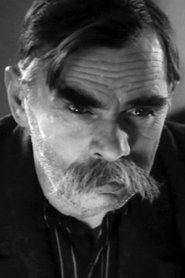
"Maxim before the war"
Keys: Space play/pause · ←/→ 10s · F fullscreen · M mute · </> speed
About this film
Maxim returns from exile as Bolsheviks and Mensheviks battle for worker representation before 1914 war. The second part of trilogy about the life of a young factory worker, Maxim. In July 1914, the Bolsheviks and Mensehviks compete for representation of the working-class in the Duma. Maksim, who just returned from exile, calls the workers to strike as a protest against the firing o.
Cast & crew
More Drama films
View all →






More from Grigori Kozintsev
View all →


More about this film
About the production
Release dateApril 27, 1937
Box officeUnknown - Soviet films did not track box office in the Western sense
ProductionLenfilm (Leningrad Film Studio)
Filmed inLeningrad (now St. Petersburg), Soviet Union
The film was shot during Stalin's Great Purge, which created a tense atmosphere for filmmakers. Kozintsev and Trauberg had to carefully navigate the political requirements of Socialist Realism while maintaining artistic integrity. The production faced challenges in depicting pre-revolutionary Russia authentically while conforming to contemporary Soviet ideological requirements. The strike sequences were filmed with hundreds of extras, creating impressive crowd scenes that showcased the scale of workers' movements.
Themes
Revolutionary consciousness and political awakeningThe power of collective action and worker solidarityIndividual sacrifice for the greater goodThe tension between personal and political commitmentsClass struggle and the fight against oppression
Themes & topics
revolutionstrikefactory workersBolsheviksWorld War Ipolitical awakeningworking classexilebetrayalsolidaritydraftprotestpolitical struggleclass conflictindustrial revolution
Historical background
1937 placed The Return of Maxim within Soviet Union cinema as Lenfilm (Leningrad Film Studio) navigated wartime markets, immigration audiences, and the shift from intertitles to sound.
Why this film matters
Archivists revisit The Return of Maxim (1937) for Grigori Kozintsev style, genre norms at Lenfilm (Leningrad Film Studio), and the exhibition context of 95 minutes programming.
Making of
The production of 'The Return of Maxim' took place during among the leading dangerous periods in Soviet cultural history. Directors Kozintsev and Trauberg, who had previously been known for their experimental and avant-garde work with the FEKS group, had adapted to the demands of Socialist Realism. The casting of Boris Chirkov as Maxim was a stroke of genius - his naturalistic acting style and everyman quality made the revolutionary hero relatable to Soviet audiences. The filmmakers worked closely with historical consultants to ensure accuracy in depicting the political tensions between Bolsheviks and Mensheviks, though they had to simplify complex historical debates for narrative clarity. The massive strike sequences required extensive coordination with factory workers who served as extras, many of whom had participated in actual strikes before the revolution. The film's editing style, particularly in the crowd scenes, drew inspiration from both Soviet montage theory and more conventional continuity editing to create emotionally powerful yet accessible sequences.
What critics said
Retrospective writing on The Return of Maxim stresses craft by Grigori Kozintsev, print survival, and repertory value rather than opening-week gross alone.
Did you know?
- This is the second film in the Maxim trilogy, following 'The Youth of Maxim' (1935) and preceding 'The Vyborg Side' (1939)
- Boris Chirkov's portrayal of Maxim became defining characters in Soviet cinema, earning him the title 'People's Artist of the USSR'
- The film was partially censored during production to ensure it aligned with Stalin's current political line regarding the Bolshevik-Menshevik split
- Director Grigori Kozintsev and Leonid Trauberg were part of the avant-garde FEKS (Factory of the Eccentric Actor) group before transitioning to more conventional Socialist Realist filmmaking
- The character of Maxim was based on composite figures from the revolutionary movement, not a single historical person
- The film's release coincided with the height of Stalin's purges, making its themes of political struggle particularly resonant and dangerous
- Despite being a Soviet production, the trilogy was screened internationally and received recognition at film festivals in Venice and other Western cities
- The strike scenes were choreographed with input from actual factory workers to ensure authenticity
- The film's cinematographer, Andrei Moskvin, was considered one of the masters of Soviet cinema and worked on many classic films
- The Maxim trilogy was one of the first Soviet film series to follow a single character's development over multiple films
Awards & recognition
- Stalin Prize (1941) - For the complete Maxim trilogy
- Venice Film Festival - Special Recommendation (1937)
Visual style
The cinematography by Andrei Moskvin represents some of the finest camera work of 1930s Soviet cinema. Moskvin employed a sophisticated visual style that balanced the requirements of Socialist Realism with artistic innovation. The film uses deep focus photography to create complex compositions that show both individual characters and their relationship to the collective. The strike sequences feature sweeping camera movements that convey the scale and energy of the workers' demonstrations. Lighting techniques create dramatic contrasts between the dark, oppressive spaces of the factories and the hopeful brightness of revolutionary gatherings. The visual language draws on both Soviet montage traditions and more classical Hollywood continuity editing, creating a style that is both dynamic and accessible. Particular attention is paid to facial expressions, with close-ups of Maxim capturing his psychological development. The cinematography also effectively contrasts the cramped, industrial settings with the open spaces of revolutionary possibility.
Innovations
The film pioneered several technical innovations in Soviet cinema, particularly in its handling of large-scale crowd scenes. The production developed new techniques for coordinating hundreds of extras in complex choreographed sequences that appeared spontaneous while maintaining visual clarity. The filmmakers employed innovative camera mounting systems to achieve dynamic movement through factory spaces and during street demonstrations. The film's editing style, particularly in the montage sequences showing the spread of the strike, influenced subsequent Soviet films depicting mass movements. The production team created detailed miniature models of factory districts for certain establishing shots, allowing for camera movements that would have been impossible to achieve on location. The film also featured advanced sound recording techniques for capturing both individual dialogue and the roar of crowds with equal clarity. The makeup and costume departments developed new methods for showing the physical deterioration of characters during the strike, particularly in depicting Maxim's wounds and recovery.
Music
The film's score was composed by Dmitri Shostakovich collaborator Gavriil Popov, who created music that balanced revolutionary fervor with intimate character moments. The soundtrack incorporates both original compositions and revolutionary songs of the period, creating an authentic historical atmosphere. The music swells during the strike sequences, using powerful orchestral arrangements to emphasize the collective strength of the workers. Quieter, more introspective themes accompany Maxim's personal development, particularly in scenes showing his recovery from injury. The sound design effectively uses industrial noises - factory whistles, machinery, and crowds - to create an immersive auditory environment. The film makes innovative use of sound bridges to connect scenes and maintain narrative momentum. Political speeches and slogans are integrated naturally into the soundtrack, avoiding the heavy-handed propaganda tone of some contemporary Soviet films.
Famous quotes
A single worker is weak, but together we are stronger than any factory owner!
They can fire six of us, but they cannot fire the revolution that lives in our hearts!
When injustice becomes law, resistance becomes duty!
Your wound will heal, Maxim, but the wound of our people will only close when we are free!
Today we strike for six comrades, tomorrow we strike for all workers across Russia!
The war they want us to fight is not the war we need to win - our war is here, in these factories!
Memorable scenes
- The powerful opening sequence where Maxim returns from exile, walking through the industrial landscape with determination etched on his face
- The tense factory meeting where Maxim calls for the strike, his voice rising above the machinery noise as workers gradually join his cause
- The brutal assault scene where Platon Dymba attacks Maxim, filmed with stark shadows and sudden violence that shocked audiences
- The massive strike sequence with thousands of workers marching through the streets, their banners and chants creating an overwhelming spectacle of collective power
- The dramatic moment when news of World War I's outbreak interrupts the strike, showing how international events can derail revolutionary momentum
- The final scene where Maxim receives his draft papers, his expression showing both resignation and determination to continue the fight in new circumstances
What audiences thought
The Maxim trilogy was enormously popular with Soviet audiences, with Boris Chirkov becoming especially beloved actors of his generation. Maxim was seen as a relatable hero who embodied the ideal Soviet citizen - humble, dedicated, and committed to the revolutionary cause. The films were screened repeatedly in theaters across the Soviet Union for decades, becoming part of the cultural education of several generations. Audience letters to film studios and newspapers frequently praised Maxim's character development and the films' emotional power. The trilogy's popularity extended beyond the Soviet Union, with the films finding appreciative audiences in other socialist countries and even in some Western nations where they were shown in art house cinemas. Veterans of the revolutionary movement often commented on the authenticity of the depicted struggles, though some noted the simplification of complex political debates. The films' enduring popularity was demonstrated by their continued presence in Soviet television schedules through the 1970s and 1980s.
Film connections
Influenced by
- Sergei Eisenstein's 'Strike' (1925) - for crowd scene techniques
- Vsevolod Pudovkin's 'The End of St. Petersburg' (1927) - for historical narrative structure
- D.W. Griffith's 'Intolerance' (1916) - for parallel editing techniques
- Classical Russian literature - particularly Tolstoy's 'War and Peace' for historical scope
- FEKS theatrical techniques - from the directors' early experimental work
- German Expressionist cinema - for dramatic lighting and visual style
This film influenced
- The Vyborg Side (1939) - final film in the Maxim trilogy
- Lenin in 1918 (1939) - for revolutionary leader portrayal
- The Fall of Berlin (1949) - for historical epic scale
- The Communist (1957) - for revolutionary biography format
- Boris Godunov (1986) - Kozintsev's later historical epic
- Later Soviet films about revolutionary heroes
Film restoration
The film is preserved in the Gosfilmofond Russian State Archive, with restored versions available for viewing. The Maxim trilogy underwent a major digital restoration in the early 2000s, with funding from Russian cultural institutions. The restored versions have been screened at international film festivals and are available on home media. Original film elements remain in good condition due to careful Soviet archival practices. The complete trilogy was included in the UNESCO Memory of the World Register in 2019 as significant cultural heritage. Multiple language versions exist, including the original Russian and several international dub versions from the 1930s.
Where to watch
- Available on streaming platforms specializing in classic cinema such as Criterion Channel
- DVD and Blu-ray releases from The Criterion Collection and other specialty distributors
- Screenings at film museums and cinematheques, particularly those specializing in Soviet cinema
- Digital archives of Russian cinema available through academic institutions
- Occasional broadcasts on classic film channels such as Turner Classic Movies
- Available through online platforms that specialize in world cinema such as MUBI