Films
2 films
About Giulio Antamoro
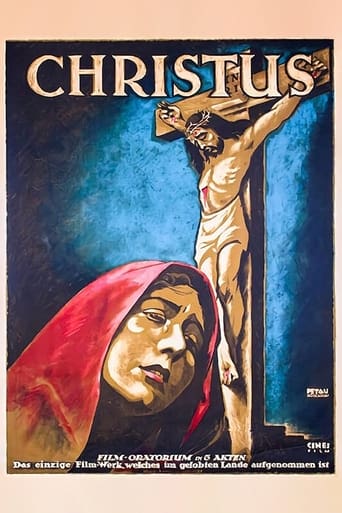
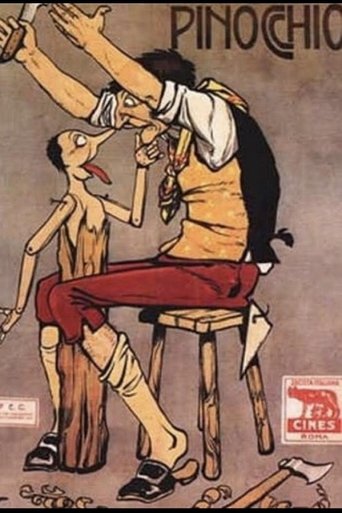
Italian film director who emerged during the golden age of Italian silent cinema in the early 1910s. He is best remembered for his ambitious adaptations of literary and religious works, most notably the 1911 adaptation of Carlo Collodi's 'Pinocchio,' which was among the first cinematic versions of this beloved tale. Antamoro demonstrated exceptional artistic vision in his 1916 epic 'Christus,' a monumental religious spectacle that showcased the grand scale and technical sophistication of Italian cinema during this period. His directing style emphasized visual storytelling and elaborate set designs, characteristic of the Italian diva film tradition. Though his active period was relatively brief, spanning roughly from 1911 to 1916, Antamoro's contributions helped establish Italy as a major force in early international cinema. His work reflected the cultural and artistic ambitions of the Italian film industry during its peak before World War I. Antamoro's films, particularly 'Christus,' were notable for their international distribution and influence on religious filmmaking in subsequent decades.
The Craft
Behind the Camera
Antamoro's directing style was characterized by grand visual spectacles, elaborate set designs, and a focus on theatrical tableaux. He employed large crowds and intricate mise-en-scène to create epic narratives, particularly in religious subjects. His approach emphasized visual storytelling over dialogue, using gesture and composition to convey emotion and narrative. Antamoro demonstrated a particular talent for adapting literary works to the silent medium, maintaining narrative clarity while exploiting cinema's visual potential.
Best Known For
Must-See Films
Accolades
Special Recognition
- Recognized as a pioneer of Italian silent cinema
- Noted for contributions to religious filmmaking
Working Relationships
Studios
Why They Matter
Impact on Culture
Giulio Antamoro played a significant role in establishing Italy's reputation for producing grand cinematic spectacles during the silent era. His adaptation of 'Pinocchio' in 1911 was groundbreaking as one of the first major film versions of this classic literary work, setting precedents for future adaptations. 'Christus' (1916) represented the pinnacle of Italian religious filmmaking, influencing how biblical stories would be presented in cinema for decades. His work demonstrated the technical and artistic capabilities of Italian cinema during its golden age, helping establish the country as a major force in international film production before World War I. Antamoro's films were distributed internationally, contributing to the global spread of Italian cinematic culture and techniques.
Lasting Legacy
Antamoro's legacy lies primarily in his contributions to early Italian epic cinema and religious filmmaking. His 'Pinocchio' adaptation remains historically significant as an early example of literary adaptation in cinema, while 'Christus' stands as proof of the ambition and scale of Italian silent film production. Though his career was relatively brief, his work exemplifies the artistic and technical achievements of Italian cinema during its peak period. Modern film historians recognize Antamoro as an important figure in the development of cinematic language, particularly in the use of visual spectacle and narrative adaptation techniques.
Who They Inspired
Antamoro influenced subsequent generations of filmmakers, particularly those working in the religious epic genre. His approach to large-scale productions and visual storytelling techniques provided a template for later directors of biblical and historical epics. His work demonstrated the potential of cinema as a medium for adapting classic literature, paving the way for future literary adaptations. Italian directors of subsequent decades, including those working during the fascist era's emphasis on historical epics, built upon the foundation laid by pioneers like Antamoro.
Off Screen
Limited information is available about Antamoro's personal life, as was common for many early film directors whose private details were not extensively documented. He worked during a transformative period in Italian cinema when the industry was establishing itself as a major cultural force. His career coincided with the peak of Italian film production before the disruptions of World War I.
Did You Know?
- Pinocchio (1911) was one of the earliest feature-length adaptations of Collodi's famous tale
- Christus (1916) was an ambitious religious epic that required massive sets and thousands of extras
- His films were among the first Italian productions to achieve significant international distribution
- Antamoro worked during the peak of Italian cinema's golden age (1914-1915)
- His directing style reflected the influence of Italian theatrical traditions
- Christus was filmed in multiple episodes, a common practice for long films of the era
- Pinocchio (1911) featured elaborate special effects for the transformation sequences
- Antamoro's career coincided with the emergence of cinema as a respected art form in Italy
- His religious films were noted for their historical accuracy and attention to detail
- The scale of his productions helped establish Italy's reputation for cinematic spectacles
Frequently Asked Questions
Who was Giulio Antamoro?
Italian on YTB.my. He was a pioneer of Italian cinema during its golden age in the early 1910s.
What films is Giulio Antamoro best known for?
When was Giulio Antamoro born and when did he die?
Born 1877; died 1945.
What was Giulio Antamoro's directing style?
Antamoro's directing style emphasized grand visual spectacles, elaborate set designs, and theatrical tableaux. He specialized in large-scale productions with extensive use of extras and intricate mise-en-scène, particularly in his religious and literary adaptations.
What was the significance of Antamoro's Pinocchio (1911)?
Pinocchio (1911) was historically significant as one of the first major feature-length adaptations of Collodi's beloved story, setting precedents for how literary works could be adapted to the silent film medium.
How did Antamoro contribute to Italian cinema?
Antamoro helped establish Italy's reputation for producing grand cinematic spectacles during the silent era, particularly in the religious epic genre. His films achieved international distribution, spreading Italian cinematic culture globally.
What happened to Antamoro's career after 1916?
Antamoro's directing career appears to have ended around 1916, coinciding with the disruptions caused by World War I, which significantly impacted the Italian film industry and marked the end of its golden age.