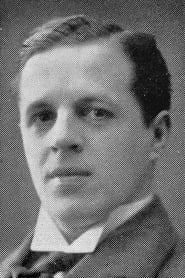
Paul Hagman
Actor
- Active
- 1912-1916
Films 2
About Paul Hagman
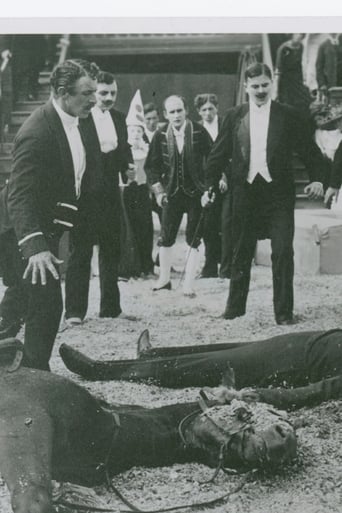
Paul Hagman is a little-documented silent-era screen actor whose surviving film credits place him briefly in American cinema during the 1910s. He is currently identifiable through filmographies that associate him with The Last Performance (1912) and Love and Journalism (1916), suggesting a career that unfolded during the formative years of the feature film and the transition from short subjects to more elaborate dramatic production. Because he worked in an era when screen credit was often inconsistent and studio record-keeping was incomplete, very little biographical information about his personal life, training, or later career has survived in widely accessible reference sources. The available evidence indicates that he was active at least between 1912 and 1916, a period in which many performers moved between stage, early motion pictures, and stock-company style film production. No reliable published source in common reference collections provides a confirmed birth date, birth place, or death date for him. As a result, his historical significance lies less in celebrity than in his presence as one of the many working actors who helped populate and professionalize silent cinema in its earliest years. His filmography makes him a small but authentic part of the industry’s foundational era, even though much of his individual biography remains lost to history.
More about Paul Hagman
On screen
No detailed contemporary reviews or surviving analysis of Paul Hagman's screen technique are widely documented in accessible reference sources. Based on the period in which he worked, his acting would almost certainly have relied on silent-era expressive performance, including clear physical gesture, facial articulation, and highly legible emotional emphasis suited to intertitle-driven storytelling. Any precise statement about his individuality as a performer would be speculative, but his career fits the broader style of early 1910s screen acting before naturalistic understatement became more common.
In film history
Paul Hagman’s cultural impact is primarily archival and historical rather than celebrity-driven. He belongs to the long list of early screen performers whose work helped establish the commercial and artistic viability of American silent cinema, even if they did not become marquee names. Performers like Hagman are important because they filled the casts of early productions that shaped narrative film conventions, acting styles, and audience expectations in the 1910s. His surviving credits provide evidence of the labor structure of early film production, where many actors contributed to an expanding industry but left only a faint biographical trace.
Later reputation
Hagman’s legacy is that of a documented participant in cinema’s foundational years, preserved mainly through film listings rather than a substantial personal archive. For film historians, his name serves as a reminder that silent-era cinema was built not only by major stars and directors, but also by countless working performers whose contributions are easy to overlook. His appearance in early titles from 1912 and 1916 gives researchers a small but valuable anchor point for reconstructing cast histories and production networks. In that sense, his enduring legacy is the survival of his name in filmography records, which keeps him visible within the broader history of early Hollywood and American silent film.
Influence
There is no clear evidence that Paul Hagman directly influenced later actors or directors in a documented, traceable way. His broader influence is indirect: as part of the silent-era acting workforce, he participated in the performance traditions that later screen actors inherited and refined. The early film industry depended on such performers to standardize screen storytelling, and even undocumented careers contributed to the medium’s evolution. His name remains useful to historians studying casting patterns, silent-era production practices, and the many semi-anonymous artists who shaped early cinema.
Off screen
No reliable, widely accessible biographical sources currently provide confirmed details about Paul Hagman’s personal life, family background, marriages, or later years. He appears to be one of the many silent-era performers whose public footprint survives mainly through scattered film credits rather than preserved interviews, studio publicity, or obituary coverage. Because of that limited documentation, it is not possible to responsibly reconstruct his private life without risking confusion with similarly named individuals.
Credits
- Appeared in The Last Performance (1912), placing him among early silent-era screen performers at a time when film acting was still developing its vocabulary.
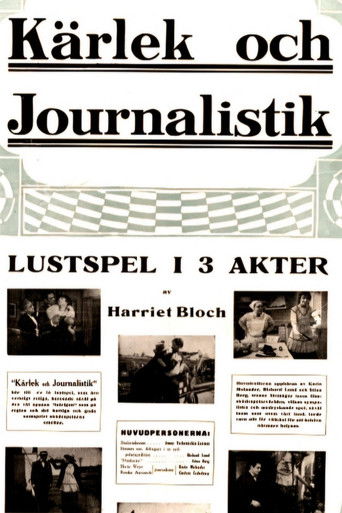
- Appeared in Love and Journalism (1916), demonstrating activity across the mid-1910s and suggesting continued work through the rapid expansion of the American film industry.
- Represents one of the many lesser-documented working actors whose careers helped support the growth of silent-era narrative cinema.
- His known filmography spans a formative period in motion-picture history when screen credits and archival documentation were often incomplete or inconsistently preserved.
Films
- The Last Performance (1912)
- Love and Journalism (1916)
Notes
- Paul Hagman is known primarily from film credits rather than from surviving biographical profiles.
- His known screen work falls entirely within the silent-film era.
- The surviving record places him in films at least four years apart, indicating that his career extended beyond a single isolated appearance.
- He is an example of a performer whose biography has largely been lost due to incomplete archival preservation from the 1910s.
- Because his name appears in early filmographies, researchers must be careful not to confuse him with similarly named individuals from later periods.
- His filmography helps illustrate how many early screen actors remain obscure despite participating in historically important productions.
Questions
Who was Paul Hagman?
Paul Hagman was a silent-era American film actor known from a small number of surviving screen credits. He is documented in early productions such as The Last Performance (1912) and Love and Journalism (1916), but little else about his life has survived in widely accessible reference sources.
What films is Paul Hagman best known for?
He is best known for The Last Performance (1912) and Love and Journalism (1916). These are the principal titles that appear in surviving filmography references and are the basis for identifying his career.
When was Paul Hagman born and when did he die?
At present, no reliably confirmed birth or death dates are widely available for Paul Hagman. The historical record for him is sparse, and accessible sources do not provide enough verified information to state those details with confidence.
What awards did Paul Hagman win?
No awards or nominations are currently documented for Paul Hagman in the accessible historical record. This is common for many early silent-era performers whose careers were only partially preserved.
What was Paul Hagman's acting style?
There is no surviving detailed critical profile of his performance style, but as a silent-era actor he would have worked within the expressive conventions of early film acting. That typically meant clear physical movement, facial expression, and emotionally legible gestures suited to silent storytelling.
What is Paul Hagman's legacy in film history?
His legacy is as one of the many early screen actors whose names survive in film records even when personal details do not. He represents the large, often anonymous workforce that helped build silent cinema into a mature art form.