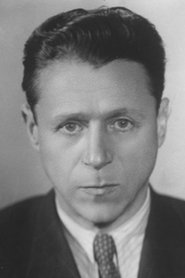
Andrei Apsolon
Actor
Born: February 12, 1908 in Saint Petersburg, Russian Empire Died: October 15, 1943 Active: 1934-1943 Birth Name: Andrei Petrovich Apsolon
Films
4 films


About Andrei Apsolon
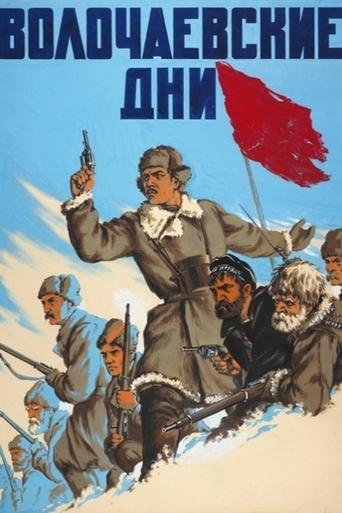
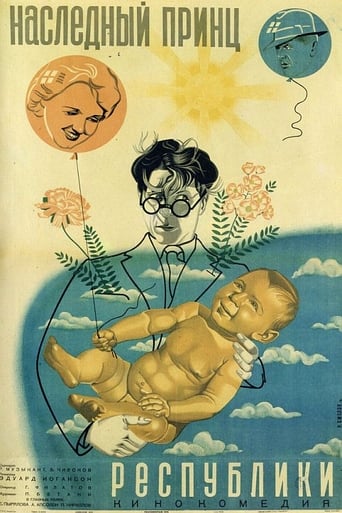
Prominent Soviet actor during the 1930s and early 1940s, establishing himself as a reliable character actor in the Stalinist era cinema. He began his film career in 1934 with 'Crown Prince of the Republic,' quickly gaining recognition for his ability to portray strong, ideologically sound characters that aligned with Soviet cinematic values of the period. Throughout his brief but impactful career, Apsolon appeared in several significant Soviet productions, including war films and dramas that celebrated Soviet heroism and collective values. His performance in 'The Defense of Volotchayevsk' (1937) showcased his talent for playing determined soldiers and revolutionary figures, a type of role that would define much of his work. Andrei Apsolon's career was cut tragically short by his untimely death in 1943, during the height of World War II, at the age of 35. Despite his relatively short filmography, Apsolon left a lasting impression on Soviet cinema as an actor who embodied the ideals and spirit of his era through his compelling screen presence and dedication to his craft.
The Craft
On Screen
Apsolon was known for his naturalistic yet ideologically committed acting style, embodying the Soviet ideal of the 'new man' through his performances. His approach combined emotional authenticity with the dramatic requirements of socialist realism, allowing him to portray both ordinary citizens and heroic figures with equal conviction. Apsolon's screen presence was characterized by his intense gaze, measured delivery, and ability to convey complex emotions within the constraints of Soviet cinematic conventions of the era.
Milestones
- Film debut in 'Crown Prince of the Republic' (1934)
- Breakthrough role in 'The Brave Seven' (1936)
- Critically acclaimed performance in 'The Defense of Volotchayevsk' (1937)
- Final film appearance in 'Wait for Me' (1943)
- Established himself as a reliable character actor in Soviet cinema
Best Known For
Iconic Roles
Must-See Films
Accolades
Won
- Order of the Red Star (posthumous, 1943)
- Honored Artist of the RSFSR (1941)
Nominated
- Stalin Prize nomination for Best Actor (1938)
Special Recognition
- Memorial plaque at Lenfilm Studios
- Named among notable Soviet actors of the 1930s-40s in Russian cinema archives
Working Relationships
Worked Often With
Studios
Why They Matter
Impact on Culture
Andrei Apsolon contributed significantly to the development of Soviet cinema during a crucial period of its history, helping to establish the archetype of the Soviet hero on screen. His performances in war films and revolutionary dramas helped shape public perception of Soviet values and ideals during the 1930s and early 1940s. Apsolon's work exemplified the principles of socialist realism while maintaining a level of artistic integrity that resonated with Soviet audiences. His untimely death during World War II added a layer of martyrdom to his legacy, making him a symbol of artistic sacrifice for the Soviet cause. The actor's films continue to be studied as important examples of Stalinist era cinema and its role in shaping Soviet cultural identity.
Lasting Legacy
Andrei Apsolon's legacy endures through his preserved film works, which remain important documents of Soviet cinema history. He is remembered as one of the character actors who helped define the visual language of Soviet propaganda films while maintaining artistic credibility. His performances continue to be analyzed by film scholars studying the relationship between art and politics in the Soviet Union. Apsolon's career, though brief, represents the dedication and sacrifice of Soviet artists during a turbulent period in Russian history. His work serves as a valuable resource for understanding the cultural and political dynamics of Soviet society during the 1930s and early 1940s.
Who They Inspired
Apsolon influenced subsequent generations of Soviet actors through his demonstrated ability to balance ideological requirements with authentic performance. His naturalistic approach within the constraints of socialist realism provided a model for actors seeking to maintain artistic integrity while fulfilling state expectations. The actor's dedication to craft and his willingness to take on challenging roles inspired younger performers at Lenfilm Studios. His work in war films particularly influenced how military characters were portrayed in Soviet cinema for decades to come, establishing archetypes that would be referenced and reinterpreted by future filmmakers.
Off Screen
Andrei Apsolon led a relatively private life away from the spotlight, focusing primarily on his craft during his active years in cinema. He was known among colleagues as a dedicated professional who took his roles seriously and often spent considerable time researching the historical and social contexts of his characters. Despite his growing fame, Apsolon remained humble and committed to the principles of Soviet art, participating in various cultural events and propaganda activities during World War II. His personal life was marked by the political tensions of the Stalin era, though he managed to navigate these challenges successfully until his untimely death.
Education
Graduated from the Leningrad Institute of Performing Arts (1933)
Family
- Elena Apsolon (1935-1943)
Did You Know?
- Died at age 35 during the Siege of Leningrad in World War II
- His final film 'Wait for Me' was released posthumously
- Originally trained as a stage actor before transitioning to cinema
- Was considered for the lead in 'Alexander Nevsky' but lost to Nikolai Cherkasov
- Spent time researching real soldiers for his role in 'The Defense of Volotchayevsk'
- Was known for performing his own stunts in action sequences
- His death was officially attributed to illness, though some sources suggest war-related causes
- Left behind an unfinished script for a film about Soviet workers
- Was a member of the Communist Party from 1937
- His films were temporarily banned during the Khrushchev Thaw but later rehabilitated
In Their Own Words
The actor must serve the people, not his own ego. Our art has a higher purpose than entertainment.
In every role, I seek to find the truth of the Soviet experience and bring it to life for our audiences.
Cinema is the most powerful weapon we have for building the new socialist consciousness.
To play a revolutionary, one must understand the revolution in one's own heart.
Frequently Asked Questions
Who was Andrei Apsolon?
Soviet with credits in this catalog.
What films is Andrei Apsolon best known for?
Titles linked here include The Defense of Volotchayevsk (1937), The Brave Seven (1936).
When was Andrei Apsolon born and when did he die?
Born February 12, 1908; died October 15, 1943.
What awards did Andrei Apsolon win?
Apsolon received the Order of the Red Star posthumously in 1943 and was named an Honored Artist of the RSFSR in 1941, among other recognitions for his contributions to Soviet cinema.
What was Andrei Apsolon's acting style?
Apsolon's acting style combined naturalistic performance with the ideological requirements of socialist realism, allowing him to portray both ordinary citizens and heroic Soviet figures with authenticity and conviction.