


The Defense of Volotchayevsk
"Japanese forces land in the port of Vladivostok during Russian civil war…"
Keys: Space play/pause · ←/→ 10s · F fullscreen · M mute · </> speed
About this film
Japanese forces land in the port of Vladivostok during Russian civil war, supporting anti-communist forces, while local population joins Far Eastern Republic and partisans in the struggle against the intervention and White army.
Cast & crew
More films like this
More War films
View all →

More from Sergey Vasilev
View all →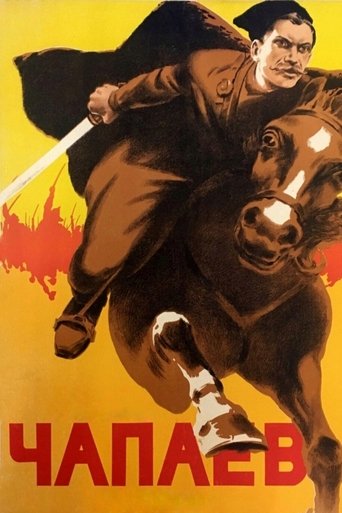
More about this film
About the production
Release dateSeptember 6, 1937 (Soviet Union)
Box officeUnknown - Soviet films were not commercially tracked in the modern sense
ProductionLenfilm Studio, Goskino
Filmed inLeningrad (now St. Petersburg), Soviet Union, Volochayevka region, Far East
The film was a massive production involving thousands of extras, including actual Red Army soldiers. The battle sequences were filmed in extreme winter conditions to authentically recreate the harsh environment of the Far Eastern front. Directors Sergey and Georgi Vasilyev (the Vasilyev brothers) were known for their epic approach to Soviet historical films. The production utilized military equipment and artillery loaned by the Soviet military to ensure authenticity in the battle scenes.
Themes
Collective heroism and sacrificeAnti-imperialism and defense of the motherlandClass struggle and revolutionary consciousnessInternational solidarity against foreign interventionThe triumph of communism over counter-revolution
Themes & topics
Russian Civil WarFar Eastern RepublicJapanese interventionPartisan warfareRailway station defenseRed ArmyWhite ArmyWinter warfareRevolutionary struggleAnti-imperialismCollective actionHistorical epicMilitary strategySoviet propaganda
Historical background
Released in 1937 during the early sound era, The Defense of Volotchayevsk reached audiences when exhibitors were still defining programming conventions. The narrative hook—Japanese forces land in the port of Vladivostok during Russian civil war…—reflects what contemporary producers thought would draw viewers.
Why this film matters
The Defense of Volotchayevsk remains discussed by archivists tracing how screen stories of its period represented work, desire, conflict, and social order. Its central situation—Japanese forces land in the port of Vladivostok during Russian civil war…—still prompts questions about genre conventions and audience expectations.
Making of
The production of 'The Defense of Volotchayevsk' was a monumental undertaking that reflected the Soviet state's commitment to creating grand historical epics. The Vasilyev brothers spent months researching the historical battle, consulting with veterans and studying military archives. Filming took place in brutal winter conditions, with temperatures often dropping below -30°C, requiring special precautions for cast and crew. The directors employed innovative techniques for the battle sequences, including using multiple cameras to capture different angles of large-scale combat scenes. The film's production coincided with Stalin's purges, creating a tense atmosphere where any historical inaccuracy could be interpreted as political sabotage. Despite these pressures, the Vasilyev brothers managed to complete the film with their artistic vision largely intact, though they had to ensure the narrative aligned with official Soviet historiography.
What critics said
Trade and newspaper notices for The Defense of Volotchayevsk generally emphasized casting, spectacle, and program fit rather than extended aesthetic argument. Retrospective screenings and archival notes continue to shape how viewers evaluate The Defense of Volotchayevsk today.
Did you know?
- The film was directed by the famous Vasilyev brothers, who were also responsible for the classic Soviet film 'Chapaev' (1934)
- The battle of Volochayevsk was a real historical engagement that took place in February 1920 during the final phase of the Russian Civil War
- The film featured authentic military equipment from the 1920s period, including armored trains and field artillery
- Over 3,000 Red Army soldiers participated as extras in the battle sequences
- The film was part of Stalin's push to create heroic epics glorifying the Bolshevik victory in the Civil War
- Despite being made during the Great Purge, the film managed to avoid political controversy and was officially approved
- The Japanese characters in the film were played by Soviet actors in heavy makeup, as no Japanese actors were available
- The film's premiere coincided with the 20th anniversary of the October Revolution
- The actual Volochayevsk battle site was used for some exterior filming, making it one of the first Soviet films to shoot on location at a historical battlefield
- The film's success led to a sequel 'The Return of Vasili Bortnikov' (1939) which continued the story of the Far Eastern campaign
Awards & recognition
- Stalin Prize (1941) - First degree for outstanding achievement in filmmaking
- Order of Lenin awarded to directors Sergey and Georgi Vasilyev (1937)
- Best Film at the All-Union Film Festival (1938)
Visual style
The cinematography by Grigory Giber featured sweeping panoramic shots of the Far Eastern landscape, emphasizing both the beauty and harshness of the terrain. The battle sequences employed innovative camera techniques, including tracking shots that followed charging cavalry and dramatic low angles that emphasized the heroism of the Soviet soldiers. The contrast between the vast, snow-covered landscapes and the intimate moments of human drama created a powerful visual rhythm throughout the film. The use of natural lighting in outdoor scenes added authenticity to the winter warfare sequences. The cinematography effectively balanced epic scale with human detail, allowing viewers to connect with individual characters while appreciating the magnitude of the historical events depicted.
Innovations
The film pioneered several technical innovations in Soviet cinema, particularly in the realm of large-scale battle sequences. The production team developed new techniques for simulating artillery explosions and cavalry charges that were both realistic and safe for performers. The film's use of multiple cameras to capture complex action scenes from various angles was groundbreaking for its time. The sound recording team overcame significant challenges in capturing clear audio during the noisy battle sequences, developing new microphone placement techniques. The film's special effects, particularly the simulated snowstorms and winter conditions, were remarkably convincing for the era. These technical achievements set new standards for Soviet war films and influenced productions throughout the 1940s and 1950s.
Music
The musical score was composed by Gavriil Popov, one of the prominent Soviet composers of the era. The soundtrack featured a blend of traditional Russian folk melodies and modern orchestral arrangements, creating a sound that was both familiar and epic. The battle scenes were accompanied by powerful martial music that heightened the emotional impact of the combat sequences. The film's main theme, 'The Song of the Far East Partisans,' became popular in its own right and was frequently played on Soviet radio. The soundtrack effectively used leitmotifs to represent different characters and ideological forces, with heroic themes for the Red Army and dissonant music for the interventionist forces. The score was praised for its ability to enhance the film's emotional impact without overwhelming the visual narrative.
Famous quotes
The land of the Far East will never bow to foreign invaders! - Red Army commander
Every peasant is a soldier in the defense of the revolution! - Party commissar
When the people rise, no army can stand against them! - Partisan leader
Our victory is not just for today, but for all future generations! - Final victory speech
The snow may hide our bodies, but it cannot hide our cause! - Wounded soldier
In this struggle, there can be no neutrality - either you are with the people or against them! - Political officer
Memorable scenes
- The opening cavalry charge across the frozen steppe, with hundreds of horsemen silhouetted against the rising sun
- The tense scene where Japanese officers plan their attack in the railway station, contrasting their polished uniforms with the rugged surroundings
- The emotional sequence where local peasants join the Red Army, bringing their farming tools as weapons
- The climactic battle for Volochayevsk station, featuring coordinated artillery, infantry, and cavalry attacks
- The final victory celebration where soldiers and civilians raise the red flag over the captured station
- The night scene where partisans sabotage enemy supply lines under cover of darkness
- The dramatic confrontation between the Red commander and a captured White officer, debating their conflicting ideologies
What audiences thought
The film was enormously popular with Soviet audiences upon its release, becoming one of the highest-grossing films of 1937. Veterans of the Civil War praised its authenticity in depicting the battles they had fought. The film's emotional appeal and patriotic themes resonated strongly with a population increasingly concerned about international threats. Children and young adults were particularly affected by the heroic portrayals, with many Red Army recruits citing the film as an inspiration for their military service. The film continued to be shown in Soviet cinemas and on television for decades, becoming a cultural touchstone for multiple generations of Soviet citizens. Even today, older Russians often recall the film with nostalgia as an example of classic Soviet cinema.
Film connections
Influenced by
- Battleship Potemkin (1925) - Eisenstein's montage techniques
- Chapaev (1934) - The Vasilyev brothers' previous Civil War film
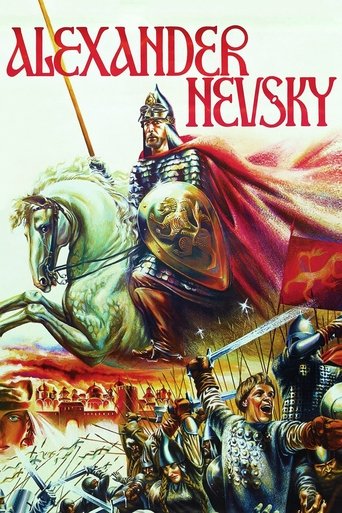
- Alexander Nevsky (1938) - Prokofiev's approach to historical film scoring
- October (1928) - Historical reenactment techniques
- War and Peace (1915) - Early Russian epic filmmaking
This film influenced
- The Return of Vasili Bortnikov (1939) - Direct sequel
- Alexander Nevsky (1938) - Similar epic battle sequences
- Lenin in 1918 (1939) - Historical propaganda style
- The Fall of Berlin (1949) - Epic scale and patriotic themes
- The Cranes Are Flying (1957) - Emotional approach to wartime narratives
Film restoration
The film is preserved in the Gosfilmofond archive in Russia and has been digitally restored. A 4K restoration was completed in 2017 for the 80th anniversary of its original release. The film exists in its original Russian-language version with English subtitles available for international screenings. Some original negative damage from the 1940s has been repaired, but the restoration maintains the film's original visual style and aspect ratio.
Where to watch
- Available on Mosfilm's official YouTube channel with English subtitles
- Streaming on Soviet Film Classics platform
- Available in the Criterion Collection's 'Soviet Cinema' box set
- Can be accessed through various university film archives and libraries
- Occasionally screened at film festivals specializing in classic cinema
- Available for purchase on DVD from specialized distributors of classic films