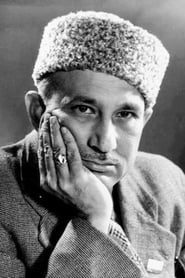
Khwaja Ahmad Abbas
Director
Born: June 7, 1914 in Panipat, Punjab (now Haryana), India Died: June 1, 1987 Active: 1935-1987
Films
2 films

About Khwaja Ahmad Abbas
Indian filmmaker, journalist, novelist, and screenwriter who revolutionized Indian cinema with his socially conscious storytelling. Born into a literary family in 1914, Abbas began his career as a journalist before transitioning to filmmaking, bringing his keen observational skills and social awareness to the silver screen. He founded Naya Sansar, his production company, through which he created films that addressed pressing social issues, class struggles, and political themes. Abbas was instrumental in launching the careers of several prominent actors and was a key figure in the Indian parallel cinema movement. His collaboration with actor Raj Kapoor produced some of Indian cinema's most memorable films. Beyond filmmaking, Abbas — prolific writer, authoring numerous novels, short stories, and screenplays that reflected his progressive worldview. His films often featured strong social messages and challenged conventional norms, making him both critically acclaimed and sometimes controversial. Abbas's over four decades, during which he directed more than 40 films and wrote countless scripts, leaving an indelible mark on Indian cinema and literature.
The Craft
Behind the Camera
Abbas was known for his socially realistic directing style, often focusing on themes of class struggle, social injustice, and political issues. His films featured naturalistic performances and documentary-like realism, breaking away from the melodramatic traditions of mainstream Indian cinema. He employed location shooting and non-professional actors to achieve authenticity, and his narrative style often incorporated elements of journalism, presenting stories with a strong sense of social responsibility.
Milestones
- Founded Naya Sansar production company
- Directed 'Dharti Ke Lal' (1946), India's first socialist realist film
- Collaborated with Raj Kapoor on multiple successful films
- Pioneered parallel cinema in India
- Wrote over 70 books including novels and short stories
- Directed 'Awaara' (1951) as screenwriter
- Made films addressing social issues and political themes
- Worked as foreign correspondent for Indian newspapers
Best Known For
Must-See Films
Accolades
Won
- National Film Award for Best Feature Film for 'Dharti Ke Lal' (1946)
- Padma Shri (1969) - India's fourth highest civilian award
- National Film Award for Best Film on Social Issues for 'Saat Hindustani' (1969)
- International Film Festival of Karlovy Vary Award
- Moscow International Film Festival Awards
Nominated
- Palme d'Or nomination at Cannes Film Festival for 'Awaara' (1951)
- Golden Bear nomination at Berlin International Film Festival
- Multiple Filmfare Award nominations
Special Recognition
- Khwaja Ahmad Abbas Sarovar named after him in Panipat
- Multiple retrospective film festivals dedicated to his work
- Recognized as pioneer of Indian parallel cinema
- Honored at various international film festivals posthumously
Working Relationships
Worked Often With
Studios
Why They Matter
Impact on Culture
Khwaja Ahmad Abbas profoundly influenced Indian cinema by introducing social realism and political consciousness into mainstream filmmaking. His films challenged the escapist nature of commercial cinema by addressing real social issues like poverty, class discrimination, and political oppression. Abbas's work inspired a generation of filmmakers to use cinema as a medium for social change, contributing to the parallel cinema movement in India. His collaborative approach with international filmmakers helped bridge Indian cinema with global cinema movements. Abbas's journalistic background brought a unique documentary aesthetic to Indian films, influencing visual storytelling techniques. His writings and films contributed to post-independence Indian cultural discourse, shaping public opinion on various social and political issues.
Lasting Legacy
Khwaja Ahmad Abbas's legacy endures through his vast body of work that continues to inspire socially conscious filmmaking in India and beyond. He is remembered as a pioneer who successfully merged art with activism, using cinema as a tool for social transformation. His production company Naya Sansar became a model for independent filmmaking in India. Abbas's films are studied in film schools worldwide for their innovative narrative techniques and social relevance. His literary works remain important documents of mid-20th century Indian intellectual history. The Abbas Film Society continues to preserve and promote his cinematic legacy through retrospectives and film festivals. Many contemporary Indian filmmakers cite Abbas as a major influence on their work, particularly in addressing social issues through cinema.
Who They Inspired
Abbas influenced generations of Indian filmmakers by demonstrating that commercial cinema could be both entertaining and socially relevant. His realistic approach to storytelling inspired the Indian New Wave movement of the 1970s. Filmmakers like Satyajit Ray, Mrinal Sen, and Shyam Benegal acknowledged Abbas's influence on their work. His technique of blending documentary elements with fictional narratives became a hallmark of parallel cinema. Abbas's success in international film festivals paved the way for Indian art cinema's global recognition. His screenwriting style, which emphasized social themes without sacrificing entertainment value, became a template for socially conscious commercial cinema. The Abbas model of independent production influenced the emergence of numerous parallel cinema production houses in India.
Off Screen
Khwaja Ahmad Abbas came from a literary family; his grandfather was Khwaja Altaf Hussain Hali, a renowned Urdu poet. Abbas married three times during his lifetime and had three children. He maintained strong connections with the literary and intellectual circles of India throughout his life. Abbas was known for his progressive political views and was associated with left-wing movements in India. His personal experiences as a journalist deeply influenced his filmmaking, giving his works a distinctive documentary-like quality. He was multilingual, fluent in Urdu, Hindi, English, and Persian, which contributed to his versatility as a writer and filmmaker.
Education
Aligarh Muslim University (B.A. In English Literature), University of Delhi (LL.B.)
Family
- Aliya Sultana (1933-1945)
- Hajra (1945-1960)
- Amina (1960-1987)
Did You Know?
- Was the first Indian filmmaker to win an award at the Karlovy Vary International Film Festival
- Worked as a war correspondent during World War II
- His grandfather was the famous Urdu poet Khwaja Altaf Hussain Hali
- Wrote the first Indian film to be shot abroad ('Awaara' scenes in London)
- Was a founding member of the Indian People's Theatre Association
- His film 'Dharti Ke Lal' was co-written with Bijon Bhattacharya of IPTA
- Introduced the concept of location shooting in Indian cinema
- Was fluent in six languages including Russian and French
- His autobiography 'I Am Not an Island' was published posthumously
- Mentored Amitabh Bachchan in his debut film 'Saat Hindustani'
- His films were banned in Pakistan for their political content
- Corresponded with Charlie Chaplin and was influenced by his work
In Their Own Words
Cinema is not just entertainment, it's a weapon of social change
A filmmaker must be a chronicler of his times
I make films not for the box office but for my conscience
The camera is mightier than the sword when used honestly
Art without social consciousness is mere entertainment
Every frame should tell a truth, even if it's uncomfortable
I am a journalist who happens to make films
Cinema should hold a mirror to society, not a painted window
Frequently Asked Questions
Who was Khwaja Ahmad Abbas?
Indian filmmaker, journalist, novelist, and screenwriter who revolutionized Indian cinema with his socially conscious storytelling. He was a key figure in the Indian parallel cinema movement and directed over 40 films addressing social issues and political themes.
What films is Khwaja Ahmad Abbas best known for?
Titles linked here include Dharti Ke Lal (1946), Awaara (1951) - as screenwriter.
When was Khwaja Ahmad Abbas born and when did he die?
Born June 7, 1914; died June 1, 1987.
What awards did Khwaja Ahmad Abbas win?
Abbas won the National Film Award for Best Feature Film for 'Dharti Ke Lal' (1946), received the Padma Shri in 1969, and won the National Film Award for Best Film on Social Issues for 'Saat Hindustani' (1969). He also received numerous international film festival awards and nominations.
What was Khwaja Ahmad Abbas's directing style?
Abbas was known for his socially realistic directing style, focusing on themes of class struggle and social injustice. He employed naturalistic performances, location shooting, and documentary-like realism, breaking away from melodramatic traditions to create films with strong social messages.
How did Khwaja Ahmad Abbas influence Indian cinema?
Abbas pioneered parallel cinema in India by introducing social realism and political consciousness into mainstream filmmaking. His work inspired generations of filmmakers to use cinema as a medium for social change and helped bridge Indian cinema with global cinema movements.
What was Khwaja Ahmad Abbas's background before filmmaking?
Before becoming a filmmaker, Abbas — journalist and foreign correspondent for Indian newspapers. He was also a prolific writer, having authored over 70 books including novels and short stories. His journalistic background deeply influenced his realistic approach to filmmaking.