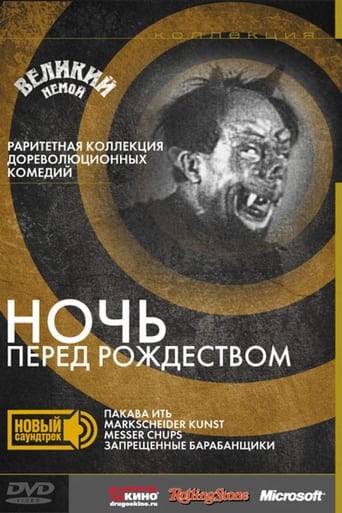
Films
2 films

About Praskovya Maksimova
Actress in the early Russian film industry during the silent era. Her brief but significant career in 1913 coincided with the formative years of Russian cinema, when filmmakers were beginning to adapt the nation's rich literary heritage for the screen. Praskovya appears in two notable literary adaptations that year, demonstrating the early Russian film industry's focus on bringing classic literature to cinema audiences. Her performance in 'The Little House in Kolomna' (1913), based on Alexander Pushkin's work, and 'The Night Before Christmas' (1913), adapted from Nikolai Gogol's tale, placed her among the first generation of Russian film actors. Unfortunately, like many actors from this very early period of Russian cinema, detailed records of her life and career are scarce due to the historical upheavals that would soon follow in Russia. Her work represents an important though largely undocumented chapter in the history of Russian silent film, capturing a moment when Russian cinema was finding its artistic voice through literary adaptations.
The Craft
Milestones
- Appeared in 'The Night Before Christmas' (1913)
- Starred in 'The Little House in Kolomna' (1913)
- Participated in early Russian literary adaptations
- Member of the first generation of Russian film actors
Best Known For
Iconic Roles
Must-See Films
Why They Matter
Impact on Culture
Praskovya Maksimova's cultural impact, while limited by her brief career, lies in her participation in the foundational period of Russian cinema. Her work in literary adaptations during 1913 contributed to the early Russian film industry's practice of bringing the nation's celebrated literary works to the screen, establishing a tradition that would continue throughout Russian film history. The films she appeared in represented the cultural bridge between Russia's rich literary heritage and the emerging medium of cinema, helping to legitimize film as an art form worthy of adapting classic Russian literature.
Lasting Legacy
Praskovya Maksimova's legacy is primarily historical, representing one of the early actors in Russian cinema's nascent stage. While her individual performances may not have survived in popular memory, her participation in two significant 1913 literary adaptations places her among the pioneers who helped establish Russian film as a cultural force. Her work exemplifies the early 20th century Russian approach to cinema, which heavily favored adaptations of national literary classics, a practice that would influence Russian filmmaking for decades to come.
Who They Inspired
Due to the brief duration of her career and the limited documentation from this early period of Russian cinema, specific details about Praskovya Maksimova's influence on other actors or filmmakers remain unclear. However, like other actors from this era, she contributed to establishing acting conventions in early Russian film that would influence subsequent generations of performers in the Russian cinema tradition.
Off Screen
Very little is known about Praskovya Maksimova's personal life, which is typical for actors from the very early Russian silent film period. Historical records from this era are often incomplete or lost due to the political upheavals that followed in Russian history, including the 1917 Revolution and subsequent events that disrupted documentation of early cinema figures.
Did You Know?
- Active only during the year 1913
- Appeared in adaptations of works by two of Russia's greatest writers - Pushkin and Gogol
- Part of the first generation of Russian film actors
- Her career coincided with the very beginning of Russian feature filmmaking
- Both films she appeared in were literary adaptations, reflecting early Russian cinema's focus on classic literature
- The period she worked in was just before World War I, which would dramatically change European cinema
- Records from this early Russian cinema period are extremely scarce due to historical upheavals
Frequently Asked Questions
Who was Praskovya Maksimova?
Russian silent film actress who was active only in 1913. She appeared in two early Russian films that were adaptations of classic Russian literature, making her one of the actors in the early Russian film industry.
What films is Praskovya Maksimova best known for?
Titles linked here include The Night Before Christmas (1913), The Little House in Kolomna (1913).
When was Praskovya Maksimova born and when did she die?
Specific birth and death dates for Praskovya Maksimova are not documented in available historical records, which is common for actors from the very early Russian silent film period. She was active in the Russian Empire during 1913.
What awards did Praskovya Maksimova win?
No awards or nominations are documented for Praskovya Maksimova, which is typical for actors from this very early period of cinema when formal award systems had not yet been established in the film industry.
What was Praskovya Maksimova's acting style?
Specific details about her acting style are not documented in available sources. However, like actors in early silent cinema, she would have used exaggerated gestures and facial expressions to convey emotions, as was typical of the theatrical acting style prevalent in early film.
Why is so little known about Praskovya Maksimova?
The scarcity of information about Praskovya Maksimova is typical for actors from the very early Russian cinema period. Many records were lost due to the Russian Revolution, subsequent political upheavals, and the passage of over a century since her brief career in 1913.