

The Night Before Christmas
"A silent era story of based"
Keys: Space play/pause · ←/→ 10s · F fullscreen · M mute · </> speed
About this film
Long before silent era life, based on Gogol's story. It is Christmas Eve, and the town witches’ son, a blacksmith, seeks an honest marriage to his love who wishes for a pair of shoes fit for the Tsarina. A mischievous devil is trapped into providing service to the smith.
Cast & crew
More Comedy films
View all →






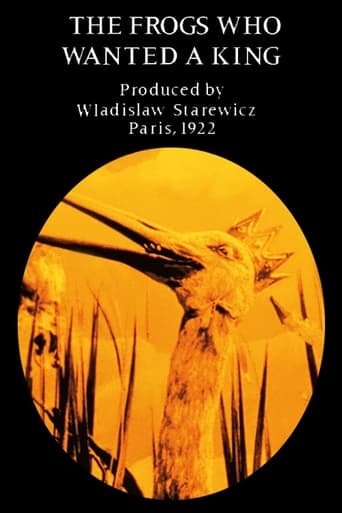
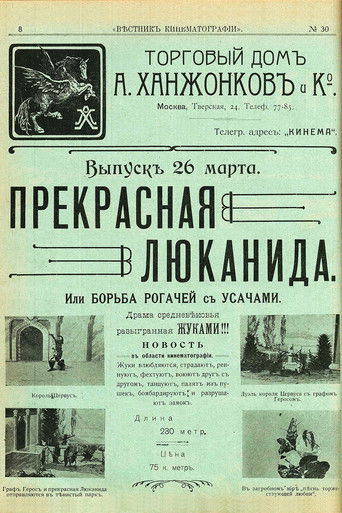
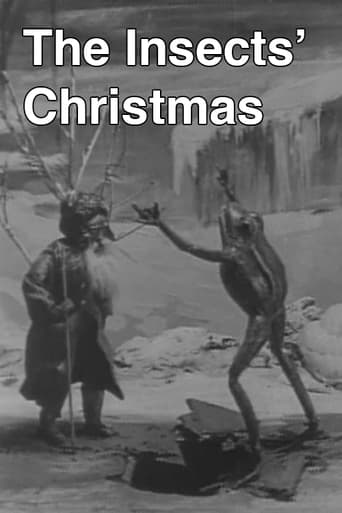
More from Władysław Starewicz
View all →
More about this film
About the production
Release dateDecember 1913
ProductionKhanzhonkov Company
Filmed inMoscow, Russia, Studio locations in the Moscow area
This film was groundbreaking for its time, combining live-action sequences with innovative stop-motion animation techniques. Starewicz used actual taxidermied insects and articulated puppets for the animated sequences, a technique he had pioneered. The production faced significant technical challenges due to the primitive equipment available in 1913, requiring multiple exposures and careful frame-by-frame manipulation. The devil character was particularly complex to animate, requiring dozens of articulated joints to achieve the desired expressive movements.
Themes
Love and sacrificeSupernatural intervention in human affairsClass mobility and aspirationThe triumph of human ingenuity over evilChristmas magic and miracles
Themes & topics
Christmas EveBlacksmithDevilMagicLove storyUkrainian folkloreSupernaturalQuestTsarinaFlyingStop-motion animationGogol adaptationWitchcraftMiracle
Historical background
The 1913 premiere of The Night Before Christmas coincided with broader shifts in silent era culture, from technology to social norms. Unlike most of Starevich's films, it is mainly live-action.
Why this film matters
The Night Before Christmas has outlived its original run as a document of silent era popular entertainment and craft. The Night Before Christmas (Russian: Ночь передъ Рождествомъ, Noch pered Rozhdestvom) is a 1913 silent film made in the Russian Empire by Ladislas Starevich, based on the 1832 tale of the same name by Nikolai Gogol.
Making of
The production of 'The Night Before Christmas' was a remarkable achievement in early cinema, representing Władysław Starewicz's mastery of combining live-action with stop-motion animation. Starewicz, working with the Khanzhonkov Company, employed his signature technique of using dead insects and articulated puppets for the supernatural elements. The devil character was particularly challenging to create, requiring months of meticulous work to design and build a puppet that could express emotion and movement. The live-action sequences, featuring the rising star Ivan Mosjoukine, were filmed on constructed sets that replicated Ukrainian village architecture. The integration between live-action and animated elements was accomplished through careful matte work and multiple exposures, techniques that were cutting-edge for 1913. The production team reportedly worked through harsh winter conditions to capture authentic snow scenes, with the cast having to perform in freezing temperatures while wearing period costumes that offered little protection from the cold.
What critics said
Re-evaluation in film journals has kept The Night Before Christmas in circulation among enthusiasts who track silent era releases.
Did you know?
- This was one of the first films to adapt Nikolai Gogol's supernatural tales to the screen, helping establish a tradition of Russian fantasy cinema
- Władysław Starewicz was originally trained as an entomologist, which influenced his revolutionary use of insects in animation
- The film's devil character required over 30 separate joints for articulation, making it among the leading complex animated puppets of its time
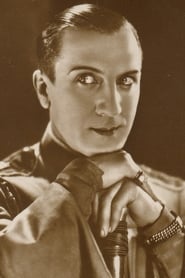
- Ivan Mosjoukine, who played the blacksmith Vakula, would later become widely praised Russian film actors and emigrated to France after the revolution
- The special effects showing the devil flying were achieved through a combination of stop-motion animation and multiple exposure techniques that were revolutionary for 1913
- The film was nearly lost during the Russian Revolution but survived through copies that had been exported to other countries
- Starewicz reportedly used real beetle wings for the devil's animated movements, leveraging his knowledge of insect anatomy
- The Tsarina's slippers shown in the film were actual antique footwear borrowed from a Moscow museum collection
- This film was part of a series of literary adaptations produced by the Khanzhonkov Company to elevate Russian cinema's cultural status
- The winter scenes were shot during an actual Russian winter, with the cast and crew enduring temperatures well below freezing
Visual style
The cinematography by Vladimir Siversen was highly advanced for its time, featuring sophisticated use of lighting to create atmospheric effects for the supernatural sequences. The film employed innovative techniques such as multiple exposure for the flying scenes and careful manipulation of focus to blend live-action with animated elements. The winter scenes benefited from natural snow, creating authentic visual textures that studio lighting of the period could not replicate. The cinematographer used pioneering close-up techniques for emotional moments, particularly in scenes between Vakula and Oksana, helping establish the psychological depth of the characters. The camera work during the animated sequences required precise frame-by-frame coordination, with the cinematographer needing to maintain consistent lighting and focus over extended periods of stop-motion work. The visual style successfully blended the romantic realism of the live-action sequences with the fantastical elements of the animation, creating a cohesive visual world that supported the story's magical elements.
Innovations
This film represents several major technical breakthroughs in early cinema. Starewicz's stop-motion animation techniques were years ahead of similar developments in Western cinema, with his method of using articulated puppets and taxidermied animals creating unprecedented realism in animated movement. The integration of live-action and animation through multiple exposure techniques was groundbreaking, requiring precise planning and execution. The flying effects for the devil character were achieved through a combination of stop-motion and careful matte work, creating illusions that would not become common in cinema for another decade. The film's special effects also included early examples of forced perspective and scale manipulation to make the animated characters appear to interact naturally with live actors. The production also pioneered techniques for creating convincing snow and winter effects on camera, using real snow and careful lighting to avoid the flat appearance common in early winter scenes. These technical innovations influenced both Russian and international filmmakers, with Starewicz's methods being studied and adapted by animators worldwide.
Music
As a silent film, 'The Night Before Christmas' would have been accompanied by live musical performance during its original theatrical run. The typical Russian cinema of 1913 would have featured a pianist or small orchestra playing selections from classical Russian composers like Tchaikovsky, Rimsky-Korsakov, or Mussorgsky. The musical accompaniment would have been carefully chosen to match the film's changing moods - romantic themes for the love scenes, dramatic music for the supernatural encounters, and folk melodies for the village scenes. Some theaters may have used popular Russian folk songs or Christmas carols during the Christmas Eve sequences. Modern restorations of the film have been scored by contemporary composers who attempt to recreate the musical atmosphere of early 20th-century Russian cinema. The lack of an original recorded soundtrack means that each viewing experience can be unique depending on the musical interpretation chosen for accompaniment.
Famous quotes
As a silent film, dialogue was conveyed through intertitles. Key intertitles included: 'I will marry none but Vakula, if he brings me the Tsarina's shoes!' - Oksana's impossible condition
'Even the devil cannot resist a determined blacksmith!' - Narrator's observation
'Christmas Eve is when miracles happen for those who believe' - Opening intertitle establishing the magical atmosphere
'Love can make a man fly, even without wings' - Romantic intertitle during the flying sequence
Memorable scenes
- The devil's first appearance, where Starewicz's stop-motion animation brings the supernatural character to life with unprecedented realism for 1913
- Vakula trapping the devil through clever use of religious symbols, showcasing the film's blend of folklore and Christian themes
- The flying sequence over the Russian landscape, combining innovative special effects with beautiful winter cinematography
- The climactic scene in St. Petersburg where Vakula obtains the Tsarina's slippers, demonstrating the film's elaborate production design
- The final Christmas celebration where Vakula returns with the shoes and wins Oksana's hand, bringing together all the film's thematic elements
What audiences thought
The film was reportedly popular with Russian audiences upon its release in December 1913, particularly appealing to educated viewers who were familiar with Gogol's literary work. Audiences were reportedly amazed by the special effects, especially the flying sequences and the animated devil, which were unlike anything they had seen before. The combination of familiar Russian literature with cutting-edge visual effects made the film a talking point in Moscow cultural circles. Contemporary accounts suggest that the film ran for several weeks in Moscow cinemas, which was considered a successful run for the period. The film's popularity helped establish both Ivan Mosjoukine as a major star and Władysław Starewicz as a pioneering director. Modern audiences who have seen restored versions of the film continue to be impressed by its technical achievements, with many noting how the stop-motion animation remains remarkably effective more than a century later.
Film connections
Influenced by
- Nikolai Gogol's 'The Night Before Christmas' from 'Evenings on a Farm Near Dikanka'
- Ukrainian folk tales and Christmas traditions
- Russian Orthodox Christmas customs
- Earlier Russian literary adaptations by Khanzhonkov Company
- Georges Méliès's trick films and special effects techniques
This film influenced
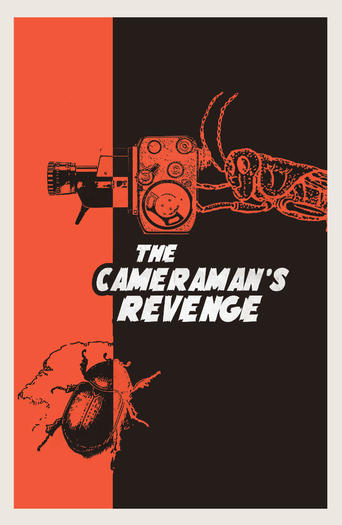
- Starewicz's later animated works including 'The Cameraman's Revenge' (1912) and 'The Tale of the Fox' (1930)
- Later Russian fantasy films such as 'Alexander Nevsky' (1938) in their use of supernatural elements
- Soviet animated adaptations of folk tales
- Modern stop-motion films that use articulated puppets
- Contemporary Russian fantasy cinema's approach to folklore adaptation
Film restoration
The film has survived in a partially complete state through prints that were exported before the Russian Revolution. Several archives hold copies, including the Gosfilmofond in Russia and various European film archives. The film has undergone restoration efforts, though some sequences remain incomplete or damaged. The surviving prints show varying degrees of deterioration, with some animated sequences particularly affected by nitrate decomposition. Modern digital restoration has helped stabilize the surviving footage and enhance visibility of the stop-motion sequences. The film is considered an important artifact of early cinema and continues to be preserved as part of world film heritage.
Where to watch
- Available on specialized streaming platforms dedicated to classic cinema
- Included in some DVD collections of early Russian cinema or silent film masterpieces
- Screened occasionally at film festivals and museum retrospectives focusing on early cinema or animation history
- Accessible through some academic film archives and library collections
- Available on certain public domain film websites, though quality may vary significantly between sources