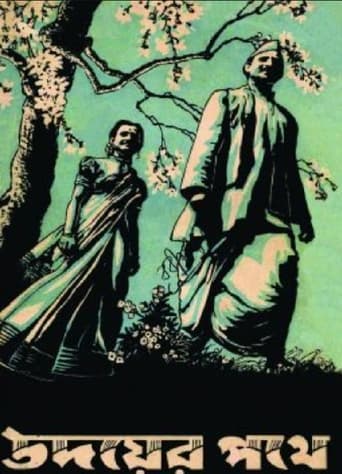

Films
1 film
About Binota Roy
Binota Roy worked on Bengali cinema during the 1940s. Her most notable work was in the film 'Udayer Pathey' (1944), directed by Bimal Roy, which is considered a milestone in Indian cinema for its social realist approach and progressive themes. The film was highly influential in shaping the parallel cinema movement in India and was one of the first Bengali films to gain national recognition. While detailed documentation about her career is limited, her contribution to this landmark film places her among the early pioneers of Bengali cinema's golden era. The film itself was notable for its critique of social inequalities and its modern outlook, which was revolutionary for its time. Binota Roy's participation in this significant cinematic achievement demonstrates her involvement in cultural productions of 1940s Indian cinema.
The Craft
Milestones
- Appeared in Udayer Pathey (1944), a landmark film in Indian cinema history
Best Known For
Must-See Films
Working Relationships
Worked Often With
Why They Matter
Impact on Culture
Binota Roy's contribution to Indian cinema, though limited in documented scope, is significant through her participation in 'Udayer Pathey' (1944). This film was revolutionary in its approach to social issues and marked a departure from conventional filmmaking in India. The film's success and critical acclaim helped establish Bengali cinema as a serious artistic medium on the national stage. Its themes of social justice and modernity influenced generations of Indian filmmakers and contributed to the development of parallel cinema in India. By being part of this cinematic milestone, Binota Roy indirectly contributed to the evolution of Indian cinema toward more socially conscious and artistically ambitious filmmaking.
Lasting Legacy
While detailed records of Binota Roy's complete filmography are not readily available, her legacy is preserved through her association with 'Udayer Pathey,'. The film continues to be studied by film scholars and is recognized as a work that introduced social realism to Indian cinema. Her participation in this landmark production ensures her place in the annals of Bengali cinema's golden era, even though comprehensive documentation of her career remains limited.
Who They Inspired
As an actor from the early era of Bengali cinema, Binota Roy was part of the foundational generation that helped establish regional cinema as a serious artistic medium in India. The film 'Udayer Pathey' itself influenced countless filmmakers and actors who followed, demonstrating that cinema could be a vehicle for social commentary and artistic expression beyond mere entertainment.
Off Screen
Limited documentation exists about Binota Roy's personal life, which was common for many character actors in early Indian cinema.
Did You Know?
- Udayer Pathey (1944) was director Bimal Roy's directorial debut before he became famous in Mumbai
- The film was remade in Hindi as 'Anjaam' in 1952
- Udayer Pathey was one of the first major Bengali films to gain nationwide recognition
- The film's title translates to 'Towards the Dawn' in English
- The movie was known for its progressive social themes and critique of class inequality
- The film's success helped establish Bimal Roy as a major director in Indian cinema
- Udayer Pathey is considered a precursor to the Indian parallel cinema movement
Frequently Asked Questions
Who was Binota Roy?
Screen credits include Bengali cinema, best known for her role in the landmark film 'Udayer Pathey' (1944), which was a revolutionary film in Indian cinema history.
What films is Binota Roy best known for?
Titles linked here include Udayer Pathey (1944).
When was Binota Roy born and when did she die?
Specific birth and death dates for Binota Roy are not documented in available historical records, which was common for many supporting actors from early Indian cinema.
What awards did Binota Roy win?
There are no documented awards or nominations for Binota Roy in available historical records, as formal award systems for Indian cinema were not well-established during her active period.
What was Binota Roy's acting style?
Detailed information about Binota Roy's specific acting style is not available in documented sources, though her participation in 'Udayer Pathey' suggests she was part of the new wave of realistic acting that the film pioneered.