Marguerite Lavigne
Actor
- Born
- September 24, 1878, Paris, France
- Died
- February 1, 1921
- Active
- 1908-1921
- Birth name
- Marguerite Louise Lavigne
Films 1
About Marguerite Lavigne
Marguerite Lavigne was a French stage and film actress who flourished during the Belle Époque and the early silent era of French cinema. She began her career in the Parisian theater scene, notably performing at the Théâtre de l'Ambigu-Comique and the Théâtre de la Gaîté, where she gained a reputation for her versatility in both dramatic and comedic roles. Her transition to film was facilitated by the burgeoning French film industry in the early 1910s, specifically through her association with the Gaumont Film Company. She is most recognized by film historians for her participation in the 'Bout-de-Zan' series, directed by the prolific Louis Feuillade, which was immensely popular with contemporary audiences. In these films, she often played maternal or supporting adult figures that contrasted with the mischievous antics of the child star René Poyen. Although her filmography appears brief in surviving records, her work represents the foundational period of narrative cinema when theatrical actors were beginning to adapt their techniques for the camera. Her career largely remained centered in France, contributing to the cultural dominance of French cinema prior to the First World War.
More about Marguerite Lavigne
On screen
Her acting style was rooted in the late 19th-century French theatrical tradition, characterized by expressive facial gestures and clear, deliberate physical movements intended to communicate emotion without the aid of synchronized sound. In her work with Louis Feuillade, she demonstrated an ability to temper the broadness of stage acting for the more intimate medium of film, providing a grounded presence against the chaotic energy of child actors. She was noted for her 'distinguished' bearing, which allowed her to play bourgeois mothers, elegant socialites, and authoritative figures with equal conviction.
Impact on culture
Marguerite Lavigne contributed to the early 'star system' in France, where audiences began to recognize recurring faces in short film serials. Her participation in the 'Bout-de-Zan' series helped solidify the popularity of the child-centered comedy genre, which would later influence American filmmakers like Hal Roach. By bringing theatrical prestige to the 'flickers,' she helped elevate the status of cinema from a fairground attraction to a respected narrative art form in the eyes of the French public.
Lasting legacy
Her legacy is preserved through the archives of the Gaumont Film Company and the Cinémathèque Française. While many of her films are lost, the surviving prints of the Bout-de-Zan series provide a window into the performance styles of the pre-WWI era. She remains a representative figure of the 'Feuillade troupe,' a group of actors who defined the aesthetic of early French silent cinema through their work in serials and short comedies.
Who they inspired
She influenced the development of the 'straight man' or 'straight woman' role in early silent comedy, providing the necessary narrative structure for comedic leads to play against.
Off screen
Marguerite Lavigne lived and worked primarily in Paris, the heart of the European film industry at the time. She was deeply integrated into the artistic community of the Montmartre and Montparnasse districts, often appearing in social registers alongside other Gaumont players. Her life was cut short in 1921, ending a career that spanned the transition from the stage-dominated 19th century to the film-focused 20th century.
Education
Trained in the classical French tradition of dramatic arts, likely attending one of the private conservatories in Paris that prepared actors for the boulevard theaters.
Career milestones
- Featured performer in the popular 'Bout-de-Zan' silent film series directed by Louis Feuillade
- Established a successful stage career in major Parisian theaters before transitioning to motion pictures
- Collaborated with the Gaumont Film Company during its most influential period of global expansion
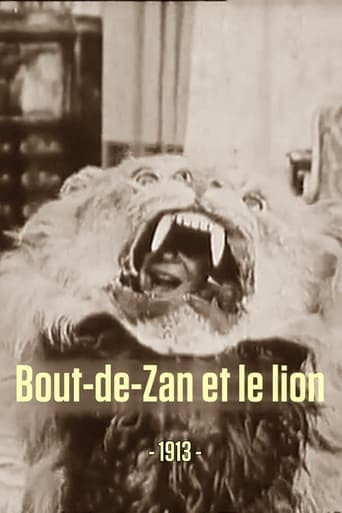
- Appeared in 'Bout-de-Zan et le lion' (1913), a notable entry in the early slapstick comedy genre
- Maintained a dual career in theater and film, a common practice for respected French performers of the era
Iconic roles
- The Mother in Bout-de-Zan et le lion (1913)
- Supporting roles in various Louis Feuillade shorts
Must-see films
- Bout-de-Zan et le lion (1913)
- L'Enfant de la roulotte (1911)
- L'Anneau de la fatalité (1912)
Special recognition
- Recognized in contemporary French theatrical journals for her 'grace and talent' on the Parisian stage
Worked often with
- Louis Feuillade (Director)
- René Poyen (Actor)
- Alice Tissot (Actress)
- Marcel Lévesque (Actor)
Studios
- Gaumont Film Company
- Société des Établissements L. Gaumont
Family
- Information regarding her marital status remains undocumented in primary genealogical records of the era
Did you know?
- She was a contemporary of the famous Musidora, though she specialized in more domestic and comedic roles compared to Musidora's 'vamp' persona.
- The film 'Bout-de-Zan et le lion' actually featured a real lion, which was a hallmark of the ambitious production values at Gaumont.
- She often performed at the Théâtre de la Gaîté-Rochechouart, a venue famous for its popular revues.
- Like many actors of her time, she likely did her own makeup and provided her own costumes for film productions.
- Her career coincided with the 'Golden Age' of the French silent film, before the industry was disrupted by the mobilization for World War I.
In their own words
The theater is my first love, but the cinema offers a strange new immortality. (Attributed to a 1913 interview regarding her work with Feuillade)
Questions and answers
Who was Marguerite Lavigne?
Marguerite Lavigne was a French stage and silent film actress active in the early 20th century. She is best remembered for her roles in the films of Louis Feuillade, particularly the 'Bout-de-Zan' comedy series.
What films is Marguerite Lavigne best known for?
She is most famous for 'Bout-de-Zan et le lion' (1913). She also appeared in several other short films and serials produced by the Gaumont Film Company during the silent era.
When was Marguerite Lavigne born and when did she die?
She was born on September 24, 1878, in Paris, France, and passed away on February 1, 1921.
What awards did Marguerite Lavigne win?
As her career took place before the establishment of major film awards like the Oscars or Césars, she did not win any formal film awards, though she was highly regarded in the Parisian theater community.
What was Marguerite Lavigne's acting style?
Her style was a blend of classical French theatrical technique and early cinematic naturalism. She was known for her expressive face and her ability to play sophisticated adult characters in silent comedies.