Bout-de-Zan et le lion
“Les aventures du plus célèbre gamin de France!”
About Bout-de-Zan et le lion
The mischievous young Bout-de-Zan, played by the child star René Poyen, decides to play a grand prank on his family and neighbors by convincing them that a wild lion is on the loose in their suburban environment. He cleverly utilizes a realistic lion skin costume to terrify the local adults, leading to a series of slapstick chases and comedic misunderstandings as the townspeople flee in genuine terror. The plot escalates when the 'lion' is spotted in various domestic settings, causing chaos in gardens and living rooms alike. Eventually, the ruse is uncovered, leading to a lighthearted conclusion where the child's ingenuity is both scolded and admired. The film serves as a quintessential example of the 'mischievous child' trope that was immensely popular in early French silent comedy.
Cast & crew
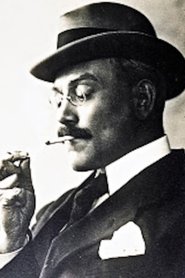
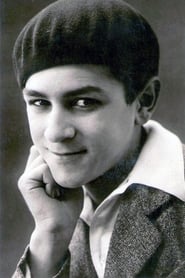
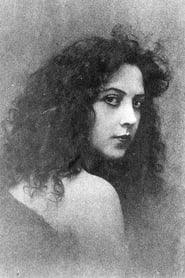


More from Louis Feuillade
View all →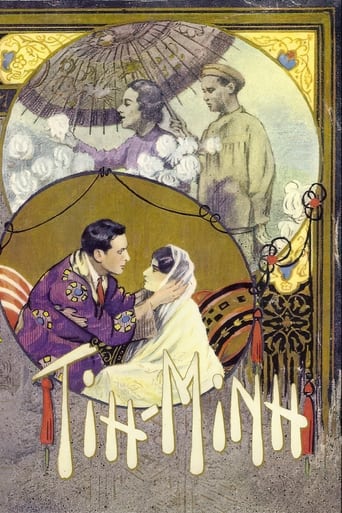
More about Bout-de-Zan et le lion
Production
- Release date
- May 23, 1913
- Country
- France
- Production
- Société des Etablissements L. Gaumont
- Filmed in
- Gaumont Studios, Buttes-Chaumont, Paris, France
The film was part of the highly successful 'Bout-de-Zan' series directed by Louis Feuillade, which consisted of over 50 short films produced between 1912 and 1916. René Poyen, the child actor, was discovered by Feuillade and became one of the first child stars in cinema history, often compared to the later popularity of Jackie Coogan. The production utilized the standard Gaumont 'house style' of the era, which favored deep focus and naturalistic sets even within a studio environment. The lion costume used in the film was a stock prop from the Gaumont studios, which frequently produced adventure serials requiring animal skins and exotic taxidermy.
Themes & topics
Historical background
In 1913, the French film industry, led by Gaumont and Pathé, was the most dominant in the world, exporting films to every corner of the globe before the outbreak of World War I. This period, known as the 'Belle Époque' of cinema, saw the birth of the star system and the refinement of visual storytelling. The Bout-de-Zan series reflected a cultural fascination with the 'enfant terrible'—the rebellious child who disrupts the rigid social order of the bourgeoisie. This film was released just months before Feuillade would revolutionize cinema with his long-form crime serials, marking a transition point between simple gag films and complex narrative structures.
Why this film matters
Bout-de-Zan remains a significant figure in film history as one of the earliest examples of a recurring character franchise. The series helped establish the 'anarchic child' archetype that would influence later characters like Our Gang (The Little Rascals) and Dennis the Menace. Furthermore, the film showcases the versatility of Louis Feuillade, proving his mastery over light comedy before he became famous for his dark, surrealist-inflected thrillers. The presence of Musidora in a minor role provides a fascinating look at the early career of a woman who would become a feminist icon and a symbol of the French avant-garde.
Making of
Louis Feuillade was known for his improvisational directing style, often working without a finished script and allowing his actors, especially the children, to react naturally to the situations he created. For 'Bout-de-Zan et le lion', the director focused on capturing the genuine reactions of the adult actors to the child's antics to enhance the comedic timing. The Gaumont studios at Buttes-Chaumont provided a massive glass-roofed stage that allowed for natural lighting, which was essential for the clarity of the silent image. Musidora and Edmund Breon, who were part of Feuillade's regular troupe of actors, often played various supporting roles in these shorts to fill out the cast between larger productions.
What critics said
At the time of its release, the film was praised for its charm and the naturalistic performance of young René Poyen, who was considered a prodigy of the screen. Contemporary film historians view it as a polished example of early French comedy, noting Feuillade's sophisticated use of space and staging. While modern audiences may find the 'lion' costume primitive, critics often highlight the film's timing and its ability to convey a complete narrative arc in under ten minutes. It is frequently cited in retrospectives of the Gaumont studio as a highlight of their early 20th-century output.
What audiences thought
The Bout-de-Zan shorts were immensely popular with French audiences, leading to the character's name becoming a household word for a mischievous child. International audiences also embraced the films; they were widely distributed in the United States and across Europe, where the visual humor transcended language barriers. The character's popularity was so great that Gaumont produced a wide range of merchandise, including postcards and dolls, making Bout-de-Zan one of the first commercially exploited film characters.
Visual style
The film utilizes a fixed camera position common for the era, but Feuillade employs 'deep staging' where action occurs in both the foreground and background to create a sense of depth. The lighting is primarily natural, filtered through the glass roof of the Gaumont studio, which provides a soft, even tone to the scenes. There are no close-ups in the modern sense; instead, the camera remains at a medium-long distance to capture the full physical comedy of the performers. The framing is precise, ensuring that the 'lion's' movements are always visible to the audience while remaining 'hidden' from the characters on screen.
Innovations
The film is a testament to the efficiency of the Gaumont production line, showcasing high-quality set design and costume work for a short-form comedy. The use of a realistic (for the time) animal costume as a central plot device was a sophisticated step up from the more abstract pantomime animals of earlier cinema. It also demonstrates an early mastery of 'chase' choreography, a staple of the silent era that required precise timing between the actors and the camera operator.
Music
As a silent film, there was no recorded soundtrack. Original screenings would have been accompanied by a live pianist or a small orchestra, likely playing popular light classical music or upbeat ragtime-style pieces to match the comedic tone. Modern restorations often feature new scores composed in the style of early 20th-century salon music.
Film restoration
The film is preserved in the Gaumont archives and has been digitally restored as part of the 'Gaumont Le Cinéma Premier' collection. It is occasionally screened at silent film festivals such as Le Giornate del Cinema Muto in Pordenone.
Did you know?
- René Poyen was only four or five years old when he began playing the character of Bout-de-Zan.
- The name 'Bout-de-Zan' literally translates to 'Bit of Licorice,' referring to the character's small stature and sweet but dark-humored nature.
- This film features an early appearance by Musidora, who would later become the iconic 'Vamp' of French cinema in Feuillade's 'Les Vampires'.
- Louis Feuillade directed this short while simultaneously working on his darker crime serial 'Fantômas'.
- The Bout-de-Zan character replaced Feuillade's previous child star, Bébé (René Dary), after the latter grew too old for the role.
- The film was shot on 35mm black and white film stock, which was the industry standard for Gaumont at the time.
- During this period, Feuillade was known for his incredible speed, often filming several shorts in a single week.
- The 'lion' in the film is actually a person in a costume, a common low-budget practical effect of the 1910s.
Memorable scenes
- The moment Bout-de-Zan first puts on the lion skin and practices his 'roar' in front of a mirror.
- The scene where a group of elegant ladies at a garden party see the 'lion' and scatter in total panic, knocking over tea tables.
- The final reveal where Bout-de-Zan is caught inside the costume, grinning at his frustrated parents.
Influenced by
- The 'Bébé' film series
- Max Linder's physical comedy
- Commedia dell'arte archetypes
This film influenced
- Our Gang (The Little Rascals)
- The Kid (1921)
- Dennis the Menace
Where else to watch
- Gaumont Treasures DVD Box Set (Vol 1)
- Streaming on specialized platforms like MUBI or Criterion Channel during Feuillade retrospectives
- YouTube (various archival channels)
Famous quotes
Note: As a silent film, there is no spoken dialogue. Intertitles are minimal, focusing on setting the scene: 'Bout-de-Zan décide de faire peur à tout le monde.' (Bout-de-Zan decides to scare everyone.)