Margie Angus
Actor
- Active
- 1925-1925
Films 1
About Margie Angus
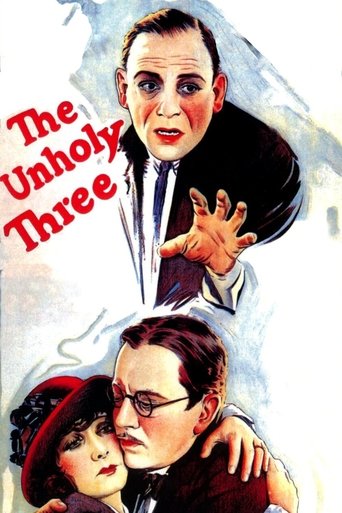
Margie Angus appears in available film records as a very minor silent-era screen performer, credited for a single known appearance in D. W. Griffith's The Unholy Three (1925). Beyond that credit, reliable biographical documentation is extremely scarce, and standard reference sources do not provide a securely verified birth date, birthplace, or extended career history. Her filmography as currently documented suggests a brief or possibly one-off screen presence during the silent-film era rather than a long, widely publicized acting career. Because she is not well documented in surviving studio publicity or major archival biographical references, much of her personal history remains unknown. What can be stated with confidence is that she is part of the broad constellation of lesser-known silent-film players whose names survive primarily through cast lists and studio records. Her association with The Unholy Three places her within one of the era's notable crime melodramas, directed by Tod Browning and starring Lon Chaney, which has helped preserve her name in film history. No trustworthy evidence currently confirms a later screen career, stage work, or subsequent public life.
More about Margie Angus
In film history
Margie Angus's cultural impact is necessarily limited and indirect, but she represents an important category in silent cinema history: the largely unheralded performer whose work survives primarily through archival film credits. In classic Hollywood scholarship, such figures matter because they help reconstruct the production networks, casting practices, and performance communities that supported major studio-era films. Her presence in The Unholy Three also links her to a film of enduring interest to historians of Lon Chaney, Tod Browning, and early crime melodrama. Even when the role itself is not fully documented, inclusion in a well-known title ensures that her name remains part of the historical record of the silent screen.
Later reputation
Margie Angus's legacy is that of a documented but elusive silent-film participant whose name persists through one surviving screen credit. For historians and database researchers, she illustrates how many early film workers remain only partially visible because records were incomplete, publicity was selective, and many performers never transitioned to sustained careers in the sound era. Her continued listing in cast records means she occupies a small but legitimate place in the historical fabric of silent cinema. In that sense, her legacy is tied less to celebrity than to archival survival and the ongoing effort to preserve the full personnel history of classic films.
Influence
There is no verifiable evidence that Margie Angus exerted a documented influence on later actors or filmmakers. Any impact she may have had was likely local, professional, or limited to the productions she participated in. From a historical perspective, however, her credited presence contributes to the broader understanding of silent-era casting and the many supporting players whose work made early Hollywood productions possible. Her influence is therefore best understood as part of the cumulative labor of unnamed or underrecognized performers rather than through direct, traceable mentorship or stylistic legacy.
Off screen
No dependable public information has been located regarding Margie Angus's personal life, including family background, marital status, or domestic circumstances. She does not appear to have left behind the kind of publicity trail, interview record, or later-life newspaper coverage that would make such details easy to verify. As a result, any claims about spouses, children, or private biography would be speculative and are best left unassigned. Her surviving historical footprint is almost entirely professional and filmographic.
Credits
- Credited appearance in The Unholy Three (1925), a significant silent-era crime drama directed by Tod Browning
- Association with a major Lon Chaney vehicle that remains a notable title in silent film history
- Survival of her name in cast documentation despite otherwise limited biographical trace
Roles
- Unnamed or undocumented role in The Unholy Three (1925)
Films
- The Unholy Three (1925)
Collaborators
- Tod Browning
- Lon Chaney
Notes
- Margie Angus is primarily documented through a single known film credit rather than a long filmography.
- Her known screen appearance is in The Unholy Three (1925), a Tod Browning film associated with Lon Chaney.
- She is an example of a silent-era performer whose biography has not been preserved in standard reference works.
- Because of the scarcity of sources, many details about her life remain unverified rather than merely undiscovered.
- Her name survives largely through cast lists and film databases, which is common for minor silent-era performers.
- She is not known to have an established sound-era career based on currently available records.
Questions
Who was Margie Angus?
Margie Angus was a silent-era actor best known for appearing in The Unholy Three (1925). She is a largely obscure figure in film history, with very limited surviving biographical information. Her name survives mainly through film credits and archival records.
What films is Margie Angus best known for?
She is best known for The Unholy Three (1925), which is the only reliably documented screen credit currently associated with her. No other major films can be confidently confirmed from available records.
When was Margie Angus born and when did she die?
Her birth and death dates are not currently verified in reliable public sources. As a result, both remain unknown in standard film reference material.
What awards did Margie Angus win?
No awards or nominations are currently documented for Margie Angus. Given the extremely limited surviving record of her career, there is no verified evidence of formal industry recognition.
What was Margie Angus's acting style?
There is not enough surviving documentation to describe her acting style in detail. Since her known work is limited to one silent-era film credit, any assessment would be speculative. Her performances, if preserved at all, would need to be studied directly in surviving prints.
What is Margie Angus's legacy in film history?
Her legacy is primarily archival: she is one of many silent-film performers whose names remain attached to notable productions even when personal details have been lost. Her credit in The Unholy Three helps preserve her place in the historical record of classic cinema.