
Gina Manès
Actor
Born: April 7, 1893 in Paris, France Died: September 6, 1989 Active: 1916-1957 Birth Name: Blanche Moulin
Films
2 films
About Gina Manès
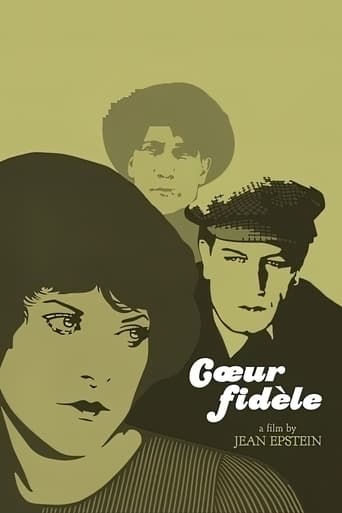
Prominent French actress who enjoyed a remarkable career spanning over four decades in French cinema, beginning in the silent era and continuing into the 1950s. Born Blanche Moulin, she adopted her stage name early in her career and quickly became one of France's most recognizable film stars of the 1920s. Her breakthrough came with her powerful performance in Jean Epstein's avant-garde masterpiece 'Cœur fidèle' (1923), where she portrayed Marie with emotional depth and naturalism that was revolutionary for the time. Throughout the silent era, she worked with many of France's most important directors, including Abel Gance and Marcel L'Herbier, establishing herself as a versatile performer capable of handling both dramatic and comedic roles. Manès successfully transitioned to sound films in the 1930s, though her career gradually shifted toward supporting roles as new stars emerged. She continued acting through the 1940s and 1950s, appearing in over 80 films throughout her career, becoming a beloved character actress in her later years. Her final film appearance came in 1957, marking the end of an extraordinary career that had witnessed the entire evolution of cinema from silent films to modern sound pictures.
The Craft
On Screen
Gina Manès was known for her naturalistic and emotionally expressive acting style, which was particularly innovative during the silent era when many performers relied on exaggerated gestures. Her performances were characterized by subtle facial expressions and a deep psychological understanding of her characters, bringing unprecedented realism to French cinema. In 'Cœur fidèle,' her portrayal of Marie demonstrated remarkable restraint and authenticity, influencing a generation of French actors. She possessed a versatile range, able to convey both intense drama and light comedy with equal skill, making her a favorite among directors seeking nuanced performances.
Milestones
- Breakout role in 'Cœur fidèle' (1923)
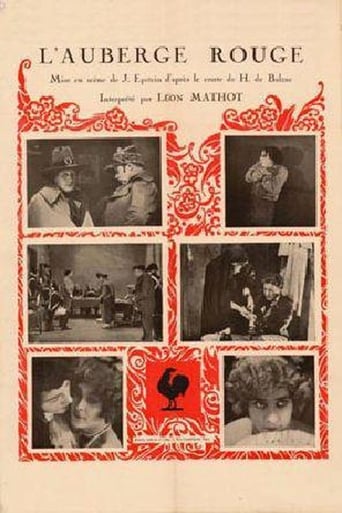
- Leading role in 'The Red Inn' (1923)
- Successful transition to sound films in the 1930s
- Over 80 film appearances across four decades
- Collaboration with major French directors including Jean Epstein and Abel Gance
Best Known For
Iconic Roles
Must-See Films
Accolades
Won
- Officer of the Legion of Honour (1973)
Special Recognition
- Commander of the Order of Arts and Letters
- Honorary mentions at various French film festivals for lifetime achievement
Working Relationships
Worked Often With
Studios
Why They Matter
Impact on Culture
Gina Manès played a significant role in the development of French cinema's acting style, helping to move away from theatrical exaggeration toward more naturalistic performances. Her work in avant-garde films like 'Cœur fidèle' contributed to the artistic legitimacy of French cinema during the 1920s, influencing the transition from melodramatic to psychologically complex characterizations. As one of the few actresses who successfully navigated both silent and sound eras, she represented continuity in French film history. Her performances helped establish the template for the modern French film actress, combining emotional authenticity with technical precision.
Lasting Legacy
Gina Manès is remembered as a figure in French cinema who helped define the art of film acting during its formative years. Her body of work, particularly her silent film performances, continues to be studied by film scholars and cited as examples of early cinematic naturalism. She represents the bridge between the theatrical traditions of the 19th century and the modern film acting techniques that would emerge in the mid-20th century. Her longevity in the industry, spanning from the early teens of cinema to the late 1950s, made her a living link to the origins of French film. Today, film historians recognize her as an essential figure in understanding the evolution of acting in world cinema.
Who They Inspired
Manès influenced generations of French actors through her emphasis on psychological realism and subtle emotional expression. Her technique of using minimal gestures to convey maximum emotion became a model for French cinema's distinctive acting style. Directors like Jean Renoir and François Truffaut later cited performances from the 1920s era, including Manès's work, as foundational to their understanding of cinematic acting. Her approach to character development influenced the French New Wave directors' preference for naturalistic performances over theatricality.
Off Screen
Gina Manès led a relatively private personal life despite her public fame. She married French actor Henri Baudin in 1920, though the marriage ended in divorce. Later in life, she formed a long-lasting partnership with director Jacques de Baroncelli, though they never married. She had no children and devoted herself primarily to her craft. After retiring from acting, she lived quietly in Paris, occasionally giving interviews about the golden age of French cinema and attending film retrospectives. She remained connected to the film community until her death at age 96.
Education
Educated at the Conservatoire de Paris, where she studied dramatic arts before entering films
Family
- Henri Baudin (1920-1925)
Did You Know?
- Was discovered by film director Georges Monca while performing in a Paris theater
- Her stage name 'Manès' was chosen to honor her favorite composer, Emmanuel Chabrier's opera 'Gwendoline'
- Spoke fluent English and was offered contracts in Hollywood but declined to remain in France
- During World War II, she continued acting in Vichy France, a decision that later caused some controversy
- Was one of the first French actresses to demand and receive equal billing with male co-stars
- Her performance in 'Cœur fidèle' was studied by acting schools for decades as an example of silent film technique
- Appeared in films directed by both Jean Epstein and his sister Marie Epstein
- Survived two major transitions in cinema: from silent to sound, and from studio system to independent production
- Was a close friend of fellow French actress Sarah Bernhardt in her later years
- Her final film role was as a grandmother in a small independent production in 1957
In Their Own Words
The camera sees everything, especially what you try to hide. That's why honesty is the actor's greatest tool.
In silent films, we had to say everything with our eyes. In sound films, we must learn when not to speak.
The transition from silent to sound was not as difficult for actors as people think. The challenge was for directors who had to learn what to do with all that noise.
I never considered myself a star. I was a worker who happened to be in films.
Frequently Asked Questions
Who was Gina Manès?
French actress who had a remarkable career spanning from 1916 to 1957, appearing in over 80 films. She was particularly renowned for her naturalistic acting style during the silent era and her ability to successfully transition to sound films. Born Blanche Moulin, she became one of France's most recognizable film stars of the 1920s and continued working as a respected character actress through the 1950s.
What films is Gina Manès best known for?
Titles linked here include Cœur fidèle (1923), The Red Inn (1923).
When was Gina Manès born and when did she die?
Born April 7, 1893; died September 6, 1989.
What awards did Gina Manès win?
Gina Manès was awarded the Officer of the Legion of Honour in 1973, one of France's highest civilian honors, in recognition of her contributions to French cinema. She also received the Commander of the Order of Arts and Letters and various honorary mentions at French film festivals for her lifetime achievement in film. While she didn't receive competitive acting awards during her active career, these honors recognized her significant impact on French cultural heritage.
What was Gina Manès's acting style?
Gina Manès was known for her revolutionary naturalistic acting style that was particularly innovative during the silent era when many performers relied on exaggerated gestures. Her performances were characterized by subtle facial expressions, emotional depth, and psychological authenticity. She emphasized minimal gestures to convey maximum emotion, helping to establish a more realistic approach to film acting that influenced generations of French performers and contributed to the distinctive style of French cinema.