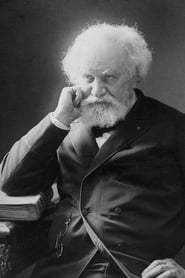
P.J.C. Janssen
Actor & Director
Born: February 22, 1824 in Paris, France Died: December 23, 1907 Active: 1874-1895 Birth Name: Pierre Jules César Janssen
Films
2 films
About P.J.C. Janssen
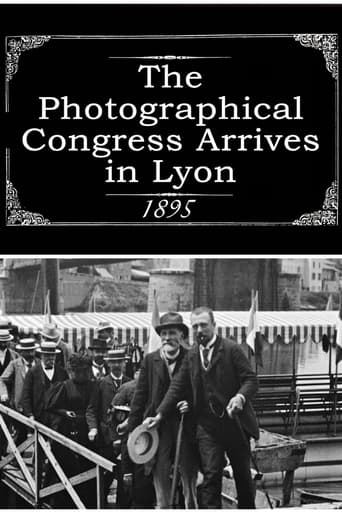
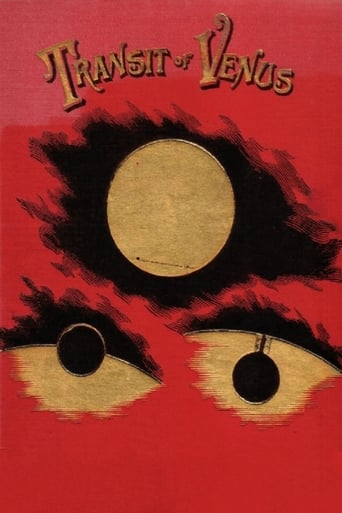
Pierre Jules César Janssen — French astronomer and early cinema innovator who made significant contributions to both scientific photography and the dawn of motion pictures. Born in 1824, Janssen developed the 'revolver photographique' (photographic revolver) in 1874 to capture the transit of Venus across the sun, creating one of the earliest known sequences of images that could be considered a primitive form of motion picture. His scientific background and innovative photographic techniques positioned him as a crucial figure in the transition from still photography to moving images. Janssen's work with the French Academy of Sciences and his participation in early photographic congresses placed him at the intersection of scientific advancement and artistic innovation. In 1895, he appeared in 'The Photographical Congress Arrives in Lyon,' one of the earliest films to feature actual scientists and innovators of the era, documenting the very birth of cinema as an art form. His career moved from astronomical discoveries to work in sequential photography, making him a bridge between 19th-century scientific photography and 20th-century cinema. Janssen's legacy as both a scientist and early filmmaker represents the interdisciplinary nature of cinema's origins.
The Craft
On Screen
As an early documentary subject rather than a professional actor, Janssen appeared in his natural capacity as a scientist and innovator. His presence in early cinema was authentic and unscripted, representing the genuine scientific community that was photographic and cinematic technologies.
Behind the Camera
Janssen's directing approach was scientific and methodical, focused on capturing natural phenomena and events with precision. His work with the photographic revolver demonstrated an early understanding of frame rates and sequential imaging, though his primary concern was scientific documentation rather than artistic expression.
Milestones
- Invented the 'revolver photographique' for capturing sequential images (1874)
- Documented the transit of Venus using early motion picture techniques (1874)
- Participated in the first International Congress of Photography (1889)
- Appeared in one of the earliest documentary films 'The Photographical Congress Arrives in Lyon' (1895)
- Contributed to the development of chronophotography alongside Étienne-Jules Marey
- Served as director of the Meudon Observatory
- Discovered the gaseous nature of solar prominences
Best Known For
Iconic Roles
Must-See Films
Accolades
Won
- Member of the French Academy of Sciences (1873)
- Gold Medal of the Royal Astronomical Society (1876)
- Janssen Medal established in his honor by the French Academy of Sciences
Special Recognition
- Crater Janssen on the Moon named in his honor
- Janssen Medal for astronomical achievements
- Commander of the Legion of Honour
- Member of numerous international scientific societies
Working Relationships
Worked Often With
Why They Matter
Impact on Culture
Janssen's work represents the crucial intersection between scientific advancement and artistic innovation that characterized the birth of cinema. His photographic revolver and sequential imaging techniques directly influenced the development of motion picture technology, bridging the gap between still photography and moving images. By appearing in early films, he helped legitimize cinema as a medium capable of documenting important scientific and cultural events. His contributions demonstrate how cinema emerged from scientific curiosity and technological experimentation rather than purely artistic impulses.
Lasting Legacy
P.J.C. Janssen's legacy encompasses both his significant astronomical discoveries and his role in the development of motion picture technology. His work with the photographic revolver represents one of the earliest successful attempts to capture sequential images, a fundamental principle of cinema. The Janssen Medal continues to honor achievements in astronomy, while his early films remain important historical documents of cinema's birth. His interdisciplinary approach to science and art exemplifies the collaborative nature of early cinematic innovation.
Who They Inspired
Janssen's sequential photography techniques directly influenced Étienne-Jules Marey's chronophotography and, by extension, the Lumière Brothers' cinematograph. His scientific approach to capturing motion demonstrated the potential of photography as a tool for studying and documenting movement, influencing both scientific and artistic applications of early cinema. His work helped establish the technical foundations that would enable the rapid development of motion picture technology in the late 19th and early 20th centuries.
Off Screen
Janssen dedicated his life to scientific pursuits and astronomical research, maintaining a focus on his work throughout his career. He was known for his intense dedication to scientific observation and innovation, often working long hours at observatories and during astronomical events. His personal life was largely overshadowed by his professional achievements and contributions to science and early photography.
Education
École Polytechnique, University of Paris (studied mathematics and physical sciences)
Family
- Henriette Augustine Boulanger (married 1851-1907)
Did You Know?
- His photographic revolver could capture 48 images in 72 seconds
- The 'Passage of Venus' series is considered one of the first motion pictures
- He was imprisoned during the Franco-Prussian War but continued his astronomical observations from prison
- Janssen was one of the first scientists to suggest using photography to study astronomical phenomena
- He discovered helium in the solar spectrum before it was found on Earth
- His work influenced both scientific photography and early cinema development
- The Janssen crater on the Moon is named in his honor
- He was a founding member of the Société Française de Photographie
- His photographic methods were used to study both astronomical and biological motion
- He corresponded with many of the key figures in early photography and cinema
In Their Own Words
The camera is to the astronomer what the telescope is to the eye - an extension of our ability to observe and understand the universe
In capturing the movement of celestial bodies, we may one day capture the movement of all things
Science and art are not separate pursuits, but different approaches to understanding the same reality
Frequently Asked Questions
Who was P.J.C. Janssen?
Pierre Jules César Janssen — French astronomer and early cinema pioneer who invented the photographic revolver in 1874, creating one of the earliest motion picture sequences to document the transit of Venus. He was a key figure in the development of sequential photography that would eventually lead to modern cinema.
What films is P.J.C. Janssen best known for?
Titles linked here include Passage of Venus (1874), The Photographical Congress Arrives in Lyon (1895).
When was P.J.C. Janssen born and when did he die?
Born February 22, 1824; died December 23, 1907.
What awards did P.J.C. Janssen win?
Janssen received numerous honors including the Gold Medal of the Royal Astronomical Society (1876), was named Commander of the Legion of Honour, and had the Janssen Medal established in his honor by the French Academy of Sciences.
What was P.J.C. Janssen's contribution to early cinema?
Janssen invented the photographic revolver, capable of capturing sequential images at 48 frames in 72 seconds, making it one of the first devices capable of creating motion pictures. His work directly influenced the development of chronophotography and early motion picture technology.
How did Janssen's scientific work influence cinema?
Janssen's astronomical photography required capturing rapid celestial movements, leading him to develop sequential imaging techniques that became foundational to motion picture technology. His scientific approach to documenting movement influenced both scientific and artistic applications of early cinema.