Films
2 films
About Sylvester Schäffer Sr.
Sylvester Schäffer Sr. Was one of the performers in the earliest days of cinema, appearing in German films during the revolutionary year of 1895 when motion pictures were first being exhibited to the public. His brief film career coincided with the birth of cinema itself, working in the experimental medium alongside the Skladanowsky brothers, who were among the first filmmakers in Germany. Schäffer likely transitioned from stage performance to the new medium of film, as was common among early cinema performers who were typically vaudeville, circus, or variety theater artists. His appearance in 'Der Jongleur' suggests he may have been a juggler or variety performer by trade, showcasing his skills in one of the first motion picture recordings. The fact that he appeared in the 'Wintergartenprogramm' indicates he was part of the historic first film screening at Berlin's Wintergarten variety theater on November 1, 1895, organized by Max Skladanowsky. Like many performers from this embryonic period of cinema, Schäffer's film career was extremely brief, spanning only the single year of 1895 before he likely returned to stage performance or other pursuits. His work represents a crucial moment in film history when the boundaries between live performance and recorded entertainment were first being explored.
The Craft
On Screen
Likely theatrical and exaggerated, typical of stage performers transitioning to early silent film who had to project emotions and actions for the camera without the benefit of sound or close-ups
Milestones
- Appeared in 'Der Jongleur' (1895), one of the earliest narrative films
- Participated in the historic Wintergartenprogramm screening in Berlin
- Contributed to the birth of German cinema during its inaugural year
Best Known For
Iconic Roles
Must-See Films
Working Relationships
Worked Often With
Studios
Why They Matter
Impact on Culture
Sylvester Schäffer Sr. Represents the crucial transition from live stage performance to recorded motion pictures that occurred in 1895. His participation in the Wintergarten screening places him at the very birth of public cinema exhibition in Germany, making him part of a historic moment when audiences first experienced moving images as entertainment. Though his individual contributions were small, collectively performers like Schäffer helped establish the foundation for the film industry that would soon transform global culture and entertainment.
Lasting Legacy
As one of the first actors to appear in German motion pictures, Schäffer's legacy lies in his participation in cinema's infancy. His work in 'Der Jongleur' represents an early example of performance capture on film, demonstrating how variety acts and stage performances were adapted for the new medium. While he did not have a lasting career in film, his brief appearances document the experimental nature of early cinema and the willingness of performers to embrace this revolutionary technology.
Who They Inspired
Due to the extremely brief nature of his film career and the primitive state of cinema in 1895, Sylvester Schäffer Sr. Had minimal direct influence on subsequent performers or filmmakers. However, his work exemplifies the spirit of early cinema artists who helped establish the basic vocabulary of film performance that would evolve dramatically in the following decades.
Off Screen
Very little is known about Sylvester Schäffer Sr.'s personal life, which is typical for performers from the earliest days of cinema who were often stage artists who briefly experimented with the new medium before returning to their primary careers.
Did You Know?
- Appeared in films during the very first year of cinema history (1895)
- Participated in the historic Wintergarten screening, one of the first public film exhibitions in Germany
- His film 'Der Jongleur' translates to 'The Juggler' in English
- Like most early film performers, he was likely a stage performer who briefly experimented with the new medium
- The Skladanowsky brothers, who likely filmed him, were competitors to the more famous Lumière brothers
- 1895 was the year cinema was born, with public screenings beginning in Paris and Berlin
- Early films like his were typically very short, often under a minute in length
- No copies of 'Der Jongleur' are known to survive, making it a lost film from cinema's birth year
Frequently Asked Questions
Who was Sylvester Schäffer Sr.?
Screen credits include two of the earliest films ever made in 1895, making him one of the pioneers of cinema during its birth year. He worked in the experimental medium of motion pictures when the technology was first being introduced to public audiences in Germany.
What films is Sylvester Schäffer Sr. Best known for?
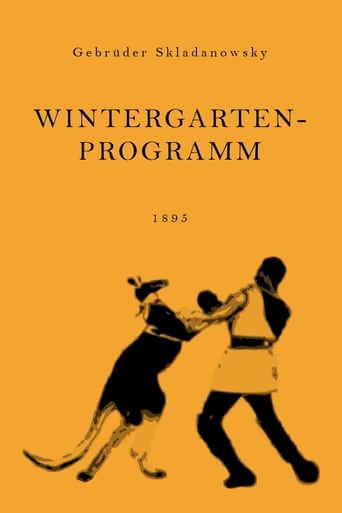
Titles linked here include Wintergartenprogramm (1895), Der Jongleur (1895).
When was Sylvester Schäffer Sr. Active in films?
Sylvester Schäffer Sr. Had an extremely brief film career, active only in 1895 during the very birth of cinema. His entire known filmography consists of two short films from that pivotal year when motion pictures were first exhibited to the public.
What was the significance of the Wintergartenprogramm?
The Wintergartenprogramm was historically significant as it featured in one of the first public film screenings in Germany, held at Berlin's Wintergarten variety theater on November 1, 1895. This event, organized by the Skladanowsky brothers, helped establish cinema as a public entertainment medium.
Why is so little known about Sylvester Schäffer Sr.?
Very little is known about Schäffer because he was active in 1895, the absolute infancy of cinema when records were scarce and most performers were stage artists who only briefly experimented with film. Many early film pioneers like him left minimal documentation, and their films have often been lost to time.