Wintergartenprogramm
"On 1 November 1895, the brothers Max and Emil Skladanowsky presented their…"
Keys: Space play/pause · ←/→ 10s · F fullscreen · M mute · </> speed
About this film
On 1 November 1895, the brothers Max and Emil Skladanowsky presented their pioneer film work and legendary Bioscop program in Berlin′s Wintergarten Theater. With live musical accompaniment, the compilation program included short film sequences with famous artists of the time: Ita
Cast & crew
More films like this
More from Max Skladanowsky
View all →
More about this film
About the production
Release dateNovember 1, 1895
BudgetMinimal production costs, primarily covering film stock and basic equipment - estimated at several hundred marks, as these were experimental demonstrations rather than commercial productions
Box officeThe Wintergarten screening was commercially successful, with tickets sold at 1 mark each, attracting approximately 1,500-2,000 viewers across multiple showings on November 1, 1895
ProductionSkladanowsky Brothers (Max and Emil Skladanowsky)
Filmed inBerlin, Germany, Various outdoor locations in and around Berlin for the individual short films
The films were shot using the brothers' proprietary Bioscop camera, which used a circular mechanism with two lenses and film strips running in parallel. Each individual short film was extremely brief, typically lasting only 5-10 seconds, due to technical limitations of the equipment. The brothers had to manually crank the camera for each shot, and the entire program was filmed over several months in summer 1895. The production was challenged by the need for bright natural light, as artificial lighting was not yet practical for film production.
Themes
Innovation and technological progressPreservation of performance artThe magic of motion picturesEarly entertainment and spectacleThe birth of cinema as commercial art
Themes & topics
variety showacrobaticsdancecircusearly cinemasilent filmexperimental filmdocumentaryperformancehistorical
Historical background
Released in 1895 during cinema's first decade, Wintergartenprogramm reached audiences when exhibitors were still defining programming conventions. The narrative hook—On 1 November 1895, the brothers Max and Emil Skladanowsky presented their…—reflects what contemporary producers thought would draw viewers.
Why this film matters
Wintergartenprogramm remains discussed by archivists tracing how screen stories of its period represented work, desire, conflict, and social order. Its central situation—On 1 November 1895, the brothers Max and Emil Skladanowsky presented their…—still prompts questions about genre conventions and audience expectations.
Making of
The making of Wintergartenprogramm was a family affair, with Max and Emil Skladanowsky working alongside their father Carl and other family members. The brothers developed their Bioscop camera and projector in a small workshop in Berlin, experimenting with various mechanical designs over several years. They faced significant technical challenges, including the need to create a reliable intermittent motion mechanism to advance the film frames. The individual shorts were filmed outdoors to take advantage of natural light, as the sensitivity of early film stock required bright illumination. The performers in the films were primarily local variety acts and circus performers who agreed to be filmed for little or no compensation, attracted by the novelty of the medium. The brothers had to carefully choreograph each performance to fit within the extremely short duration possible with their equipment, requiring multiple takes and careful timing. The entire project was self-funded, with the brothers investing their personal savings and even pawning family possessions to finance their invention.
What critics said
Trade and newspaper notices for Wintergartenprogramm generally emphasized casting, spectacle, and program fit rather than extended aesthetic argument. Retrospective screenings and archival notes continue to shape how viewers evaluate Wintergartenprogramm today.
Did you know?
- The Wintergarten screening predated the famous Lumière brothers' first public screening in Paris by nearly two months, making it one of the earliest commercial film exhibitions in history
- The Bioscop projector used by the Skladanowsky brothers could only show 16 frames per second, compared to today's standard of 24 frames per second
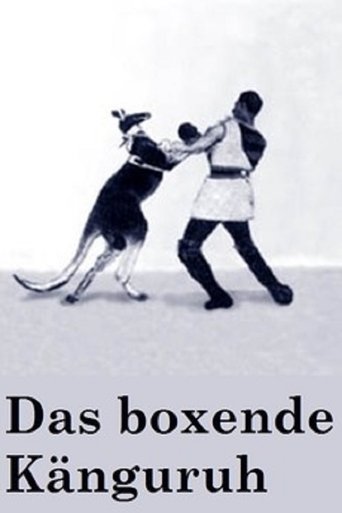
- The boxing kangaroo sequence was filmed with a real kangaroo that the brothers borrowed from the Berlin Zoo
- Each individual film in the program was shot on 35mm film, but the Bioscop projector required two film strips running simultaneously
- The Skladanowsky brothers were originally glassblowers and magic lantern show operators before inventing their film projection system
- The Wintergarten Theater was a famous variety venue in Berlin that regularly featured live performances, making it an ideal location for the first film screening
- The brothers' father, Carl Skladanowsky, was a photographer and inventor who inspired his sons' interest in optical technology
- Only fragments of the original Wintergartenprogramm survive today, as many early films were lost or destroyed over time
- The program was accompanied by live musical performances, as early films had no synchronized sound
- The brothers patented their Bioscop invention in Germany in 1895, but international patent protection proved difficult to secure
Awards & recognition
- None - formal film awards did not exist in 1895
Visual style
The cinematography of Wintergartenprogramm was extremely basic by modern standards but innovative for its time. The shots were all static, wide-angle compositions with the camera placed at a fixed distance from the performers. The framing was typically full-body, capturing entire performances from beginning to end. The films were shot outdoors in bright daylight to compensate for the low sensitivity of early film stock. There was no camera movement, zooming, or panning - the camera remained stationary throughout each take. The visual style was direct and documentary-like, simply recording the performances without artistic flourishes. The black and white images had high contrast and limited tonal range due to the primitive film emulsions available. Despite these limitations, the cinematography successfully captured the novelty of motion and preserved these early performances for posterity.
Innovations
The Bioscop system developed by the Skladanowsky brothers represented a significant technical achievement in early cinema. Their projector used a unique dual-lens system with two film strips running in parallel, alternating between them to create smoother motion. This was an innovative solution to the problem of intermittent film transport, though it was soon superseded by more efficient single-lens systems. The brothers developed their own camera mechanism capable of capturing sequential images at approximately 16 frames per second. They also solved the challenge of film perforation and transport, creating a reliable system for moving film through the camera and projector. The entire apparatus was portable enough to be set up in a theater, demonstrating practical considerations for commercial exhibition. While their technology was quickly outdated by more advanced systems, the Bioscop represented an important milestone in the development of motion picture technology and demonstrated the feasibility of commercial film exhibition.
Music
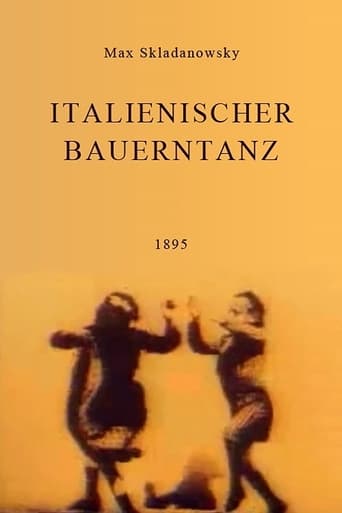
The original Wintergartenprogramm was accompanied by live musical performance, as synchronized sound technology did not exist in 1895. The Wintergarten Theater's house orchestra likely provided musical accompaniment, playing popular tunes of the era and dramatic music to enhance the spectacle. The music would have been synchronized loosely with the on-screen action, with musicians improvising or following cue sheets. The choice of music probably reflected the variety theater tradition, with different musical styles matching each performance type - perhaps folk music for the Italian peasant dance, circus music for the acrobats, and dramatic fanfares for the boxing kangaroo. The live musical element was crucial to the entertainment value of the program, helping to maintain audience engagement during the very short film segments and covering any technical interruptions or delays.
Famous quotes
'A wonder of the modern age' - Contemporary Berlin newspaper review
'The pictures move as if by magic' - Audience member reported reaction
'We have captured life itself' - Attributed to Max Skladanowsky
'The future belongs to moving pictures' - Emil Skladanowsky (reported statement)
Memorable scenes
- The boxing kangaroo sequence, which delighted audiences with its novelty and humor
- The concluding 'Apotheose' scene showing the Skladanowsky brothers bowing, creating an early meta-cinematic moment
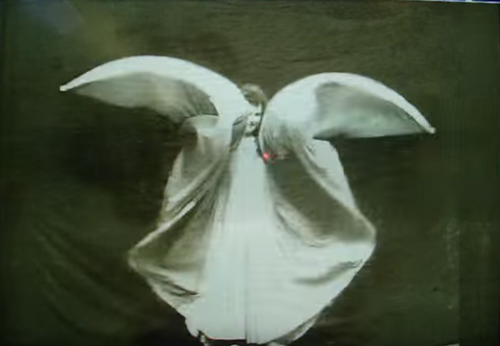
- The serpentine dancer's flowing movements, which showcased the medium's ability to capture graceful motion
- The Italian peasant dance, which preserved authentic folk performance for posterity
- The acrobatic performances on parallel bars, demonstrating early action cinematography
What audiences thought
The audience reception at the Wintergarten screening was enthusiastic, with reports of applause, astonishment, and wonder from the spectators. Many viewers had never seen moving images before, and the experience was described as magical and revolutionary. The program's variety format appealed to the theater-going public of the time, who were familiar with similar acts in live performance. Some audience members reportedly attempted to touch the screen, believing the images were real. The success of the initial screening led to additional performances, though the brothers' technology was soon surpassed by more advanced systems. Contemporary audiences viewing restored versions of the films are struck by their historical significance and the glimpse they provide into 19th-century entertainment and daily life.
Film connections
Influenced by
- Magic lantern shows
- Photography
- Eadweard Muybridge's motion studies
- Étienne-Jules Marey's chronophotography
- Thomas Edison's Kinetoscope
This film influenced
- Early Lumière films
- Georges Méliès's fantasy films
- Edwin S. Porter's early narrative films
- Early German cinema
- Variety and circus films
Film restoration
Partially preserved - Only fragments of the original Wintergartenprogramm survive today. Some individual shorts have been preserved in archives including the Bundesarchiv in Germany and various international film archives. The surviving elements have been restored and digitized by film preservation organizations. Several of the original nine films are considered lost, a common fate for early cinema due to the fragile nature of early film stock and lack of systematic preservation efforts in the 19th century. The surviving fragments have been compiled into restored versions that attempt to recreate the original program experience.
Where to watch
- Bundesarchiv (German Federal Archives) website
- Museum of Modern Art (MoMA) film collection
- British Film Institute (BFI) archive
- Early cinema documentary compilations
- YouTube (archival uploads from film preservation organizations)
- Film museums with early cinema collections
- Academic film archives and university collections