Films
2 films
About Grunato
Performer in the earliest days of cinema, appearing in two of the most significant films of 1895. His work was captured by the Skladanowsky brothers, Max and Emil, who were German inventors and crucial figures in the development of motion picture technology. Grunato's performances in 'Akrobatisches Potpourri' and 'Wintergartenprogramm' showcased his acrobatic and vaudevillian talents, making him one of the first individuals to have their movements recorded for a projected audience. These films were part of the very first public film program ever presented, which debuted at the Wintergarten variety theatre in Berlin on November 1, 1895. His career, while exceptionally brief, represents the crucial transition from live stage performance to the new medium of film. As an actor in these nascent productions, he was not a dramatic actor in the traditional sense but rather a physical performer whose act was perfectly suited to the short, spectacle-driven films of the era. His entire known film career was confined to the single year of 1895, making him a true but fleeting star of cinema's genesis.
The Craft
On Screen
Grunato's acting style was rooted in the physical and acrobatic traditions of 19th-century vaudeville and circus performance. Unlike the pantomimic style that would later define silent film drama, his work was purely spectacle-based, relying on impressive physical feats to entertain the audience. His performances were designed to be visually captivating without the need for narrative context, making them ideal for the very short, non-story-driven films of the time.
Milestones
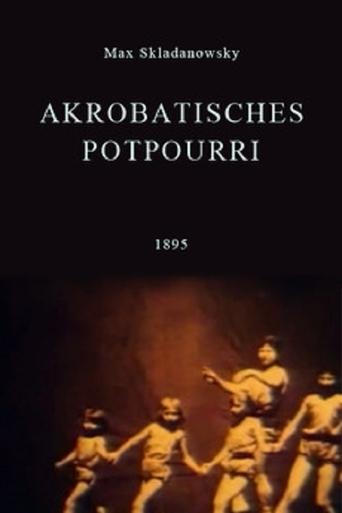
- Appeared in 'Akrobatisches Potpourri' (1895), one of the first German motion pictures
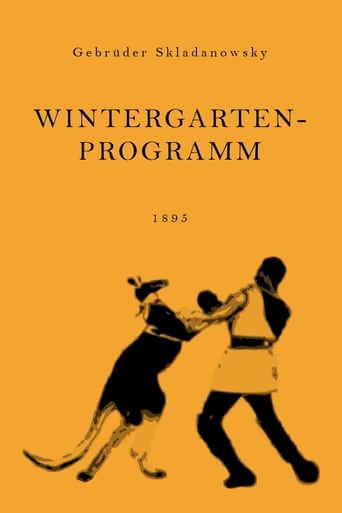
- Performed in 'Wintergartenprogramm' (1895), the film program shown at the first-ever public film screening in Europe
- Was part of the inaugural presentation of the Bioscop projection system invented by the Skladanowsky brothers
Best Known For
Iconic Roles
Must-See Films
Working Relationships
Worked Often With
Studios
Why They Matter
Impact on Culture
Grunato's cultural impact is not as an individual artist but as a representative of the very first generation of film performers. His participation in the 1895 Wintergarten program places him at the absolute dawn of public cinema exhibition. These early films were instrumental in demonstrating the commercial viability of motion pictures as a form of mass entertainment, paving the way for the entire film industry. Grunato and his fellow performers were the first humans to be projected as moving images for a paying audience, a moment that fundamentally changed the landscape of popular culture and performance art.
Lasting Legacy
Grunato's legacy is that of a foundational figure in film history, a name that appears in the credits of the world's first public film screenings. While his personal story is lost to time, his image is preserved in two of the most historically important artifacts of cinema's birth. He serves as a symbol of the anonymous performers who were crucial to cinema's initial success, their physical talents captivating audiences and proving that this new technology had a future. His work is studied by film historians not for its artistic depth, but for its historical significance as a primary document of the medium's inception.
Who They Inspired
As one of the very first film actors, Grunato's direct influence on subsequent performers is difficult to trace. However, his work exemplifies the type of non-narrative, spectacle-based entertainment that characterized the earliest years of cinema. The success of performers like him helped establish film as a medium for capturing and displaying live acts, which later evolved into the narrative storytelling that would dominate the 20th century. He represents the starting point from which all screen acting would eventually grow.
Off Screen
Virtually no personal information is available about Grunato. Like many early film performers, his identity was secondary to the spectacle he presented, and detailed records of individual performers from this era were rarely kept. He was likely a professional acrobat or variety show performer who was hired by the Skladanowsky brothers specifically for their film experiments. His life outside of these two brief film appearances remains completely undocumented.
Did You Know?
- Grunato appeared in what is widely considered the first public film screening in history, which took place in Berlin on November 1, 1895.
- His films were shot using the Bioscop, an early film projector developed by the German inventors Max and Emil Skladanowsky.
- The films he appeared in were very short, typically lasting only a few seconds, which was standard for the era.
- He was a professional acrobat, a common type of performer featured in early films due to their visually engaging and dynamic movements.
- His name is known solely from the film credits; no biographical details about his life have survived.
- The Skladanowsky brothers' films, including Grunato's, were surpassed in popularity just two months later by the Lumière brothers' Cinématographe in Paris.
- His performance in 'Akrobatisches Potpourri' involved a complex routine with another performer, demonstrating the early use of multi-person scenes.
- The 'Wintergartenprogramm' was a collection of several short films, and Grunato's act was one of the main attractions.
Frequently Asked Questions
Who was Grunato?
German acrobat and one of the very first film with credits in this catalog. He is known for appearing in two short films in 1895 that were part of the first-ever public film screening in Berlin, presented by the Skladanowsky brothers.
What films is Grunato best known for?
Titles linked here include Akrobatisches Potpourri (1895), Wintergartenprogramm (1895).
When was Grunato born and when did he die?
The birth and death dates for Grunato are unknown. Like many performers from the earliest days of cinema, detailed biographical records were not kept, and his identity is known only through his film credits.
What awards did Grunato win?
Grunato did not win any awards. His career predated the establishment of any formal film awards or industry recognition, as he was active during the literal infancy of the medium in 1895.
What was Grunato's acting style?
Grunato's 'acting' was purely physical and acrobatic, drawn from his background as a vaudeville performer. His style was not based on character or dialogue but on showcasing impressive physical feats suited for the short, spectacle-driven films of the era.