Films
2 films

About Saroj Borkar
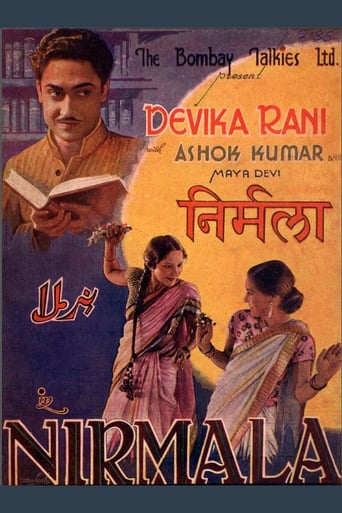
Early Indian cinema actress who worked during the formative years of Indian talkies in the late 1930s. Her career, though brief, coincided with a crucial transitional period when Indian cinema was establishing its narrative and artistic conventions. Saroj appears in notable productions of the era, including 'Prem Kahani' (1937) and 'Nirmala' (1938), which were part of the burgeoning Indian film industry's efforts to create socially relevant entertainment. Her work in these films reflected the emerging trends in Indian cinema that blended traditional themes with contemporary storytelling techniques. Like many actors of this period, her contributions helped lay the groundwork for the future development of Indian cinema, even though her own career was relatively short-lived. The limited documentation of her work is typical of many early cinema actors whose careers were not extensively preserved in film archives or historical records.
The Craft
Milestones
- Appeared in Prem Kahani (1937)
- Starred in Nirmala (1938)
Best Known For
Must-See Films
Why They Matter
Impact on Culture
Saroj Borkar's contribution to Indian cinema, though brief, represents the work of the generation of actors who helped establish the foundation of Indian film industry during its early sound era. Her appearances in films like 'Prem Kahani' and 'Nirmala' came during a critical period when Indian cinema was developing its unique identity and storytelling methods. These early actors often worked under challenging conditions with limited resources, yet their performances helped shape the emerging conventions of Indian film acting and narrative structure. The preservation of their work, even in fragmentary form, provides valuable insight into the evolution of Indian cinema and the social contexts of the 1930s.
Lasting Legacy
Saroj Borkar's legacy is primarily preserved through her filmography from the late 1930s, representing an important but often overlooked chapter in Indian cinema history. As one of the early actresses in Indian talkies, she contributed to the development of film acting techniques that would influence future generations. While detailed records of her life and career are scarce, her work in films like 'Prem Kahani' and 'Nirmala' shows the contributions of countless early cinema pioneers whose individual stories may be lost to time but whose collective impact on Indian cinema remains significant.
Who They Inspired
Due to the limited documentation of her career and the brevity of her active period, specific details about Saroj Borkar's direct influence on other actors or filmmakers are not well-recorded. However, as part of the first generation of sound film actors in India, she and her contemporaries collectively influenced the development of acting styles and techniques that would become standard in Indian cinema. Their work helped establish the dramatic and emotional conventions that would characterize Indian film performance for decades to come.
Off Screen
Very limited information is available about Saroj Borkar's personal life, which is common for actors from early Indian cinema whose personal details were not extensively documented in contemporary records.
Did You Know?
- Saroj Borkar was active during the early sound era of Indian cinema
- Her active years covered only two known years: 1937-1938
- She appeared in films during a period when Indian cinema was transitioning from silent to talkies
- The 1930s was a decade of significant growth for the Indian film industry
- Many early Indian cinema actors like Borkar have limited documented biographical information
- Her films were produced during the British Raj period in India
- Early Indian cinema often focused on social themes and mythological stories
- Film preservation from this era is limited, making complete filmographies difficult to compile
Frequently Asked Questions
Who was Saroj Borkar?
Early Indian cinema actress who worked during the late 1930s, appearing in films during the formative years of Indian talkies. Her known filmography includes 'Prem Kahani' (1937) and 'Nirmala' (1938).
What films is Saroj Borkar best known for?
Titles linked here include Prem Kahani (1937), Nirmala (1938).
When was Saroj Borkar active in cinema?
Saroj Borkar was active in Indian cinema from 1937 to 1938, working during the early sound era when Indian cinema was establishing its artistic and narrative conventions.
What was the significance of Saroj Borkar's era in Indian cinema?
The period when Saroj Borkar worked (late 1930s) was crucial for Indian cinema as it was transitioning from silent films to talkies and developing its unique identity. Actors of this generation helped establish the foundations of Indian film acting.
Why is there limited information about Saroj Borkar?
Limited information about Saroj Borkar is typical of many early Indian cinema actors whose careers and personal details were not extensively documented. Film preservation and record-keeping from the 1930s was not as systematic as in later decades.