Michele Ciusa
Actor
- Active
- 1913-1913
Films 1
About Michele Ciusa
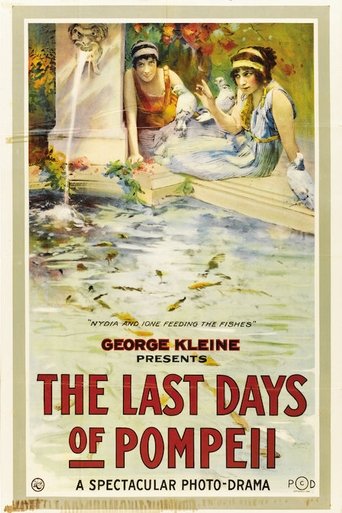
Michele Ciusa was an Italian screen performer associated with the very early years of narrative feature filmmaking, and his surviving film record places him in the silent era. He is credited as an actor in Enrico Guazzoni’s The Last Days of Pompeii (1913), one of the important early Italian historical spectacles, a production that helped define the international prestige of Italian cinema before World War I. Beyond this single confirmed screen credit, readily available reference material on Ciusa is extremely limited, which suggests that he was either a short-lived film performer or a figure whose career was not extensively documented in standard film histories. Because of the scarcity of surviving records, details such as his birth, death, training, and later life have not been firmly established in widely accessible sources. His significance today lies primarily in his participation in one of the landmark epics of the silent period rather than in a long or highly publicized career. Ciusa is therefore remembered as part of the broader ensemble of early Italian cinema artisans and actors who helped bring literary and historical pageantry to the screen at a time when the medium was still developing its language. Any fuller reconstruction of his life would likely require archival research in Italian film periodicals, production records, or local civil registries.
More about Michele Ciusa
In film history
Michele Ciusa’s cultural impact is tied less to celebrity than to his participation in one of the formative achievements of Italian silent cinema. The Last Days of Pompeii (1913) belonged to the monumental historical and literary adaptation tradition that gave early Italian films an international identity, especially through grand sets, classical themes, and theatrical scale. Even when an actor’s individual role is obscure, appearing in such a production means contributing to a film culture that influenced how epic storytelling could function on screen. Ciusa’s name survives as a small but legitimate part of that early cinematic ecosystem, representing the many performers whose work supported the rise of feature-length spectacle.
Later reputation
Ciusa’s legacy is primarily archival: he is part of the documented cast history of a major silent-era epic and therefore remains a traceable name in the history of Italian film. For historians and database researchers, such figures are important because they help reconstruct the personnel networks behind early cinema, where credits were often incomplete and documentation uneven. His presence in The Last Days of Pompeii links him to a landmark production that still attracts scholarly attention for its role in the development of historical spectacle. While he does not appear to have left a widely known star persona, his surviving credit contributes to the broader understanding of the silent era as a collaborative art form built by many now-obscure participants.
Influence
No direct line of influence from Michele Ciusa to later actors or directors has been firmly documented in readily available sources. His significance is best understood indirectly: he participated in a film tradition that influenced later epic filmmaking in Italy and abroad. By working in a production associated with Enrico Guazzoni’s large-scale approach to historical cinema, Ciusa became part of the early screen grammar that helped shape future spectacle filmmaking. His influence is therefore historical and collective rather than personal and traceable.
Off screen
No reliable, widely accessible biographical information about Michele Ciusa’s personal life has been confirmed in standard film-reference sources. His family background, marriages, children, residence, and later years are not documented in the surviving public material readily available to researchers. As with many early silent-era performers, the historical record focuses far more on the productions themselves than on the private lives of minor cast members. Further personal details may exist in Italian archival holdings, but they are not established here.
Credits
- Appeared in the 1913 silent historical epic The Last Days of Pompeii, one of early Italian cinema’s notable prestige productions
- Participated in the wave of large-scale Italian screen epics that brought international attention to the nation’s film industry before the First World War
- Is documented as part of the cast history of an important early feature film, preserving his name within silent-era cinema records
Roles
- Role in The Last Days of Pompeii (1913) not clearly identified in surviving widely accessible sources
Films
- The Last Days of Pompeii (1913)
Collaborators
Notes
- Michele Ciusa is known today almost entirely through his 1913 credit in The Last Days of Pompeii.
- His surviving film record places him in the silent era, before sound films became standard.
- The Last Days of Pompeii was one of the early Italian historical epics that helped define the country's prewar film reputation.
- Because early film credits were often incomplete, many performers from this period remain only partially documented.
- No widely confirmed birth or death details for Ciusa are readily available in standard public film references.
- His name is preserved as part of the cast history of a production that continues to be studied in silent-cinema scholarship.
Questions
Who was Michele Ciusa?
Michele Ciusa was an Italian silent-era actor best known for appearing in The Last Days of Pompeii (1913). Surviving public references to him are scarce, so he is primarily remembered through his connection to this early historical epic.
What films is Michele Ciusa best known for?
He is best known for The Last Days of Pompeii (1913), which is the key documented film credit associated with his name. No other widely verified screen credits are readily available in standard sources.
When was Michele Ciusa born and when did he die?
His birth and death dates are not reliably documented in the readily accessible public record. As a result, both his birth date and death date must be treated as unknown unless new archival evidence is found.
What awards did Michele Ciusa win?
No awards or nominations are currently documented for Michele Ciusa in the available reference material. This is not unusual for early silent-era performers whose careers were only partially recorded.
What was Michele Ciusa's acting style?
There is no detailed surviving description of his individual acting style. Like many performers in early Italian silent cinema, he likely worked within the expressive, gesture-based performance conventions of the era, especially in large historical productions.
What is Michele Ciusa's legacy in film history?
His legacy is largely historical and archival: he is part of the cast record of a significant 1913 Italian epic. That makes him a small but meaningful figure in the documentation of silent-era cinema and the development of feature-length historical spectacle.