Pancho Cossío
Actor
- Born
- October 20, 1894, San Diego de los Baños, Cuba
- Died
- January 16, 1970
- Active
- 1914-1970
- Birth name
- Francisco María Gutiérrez Cossío
Films 1
About Pancho Cossío
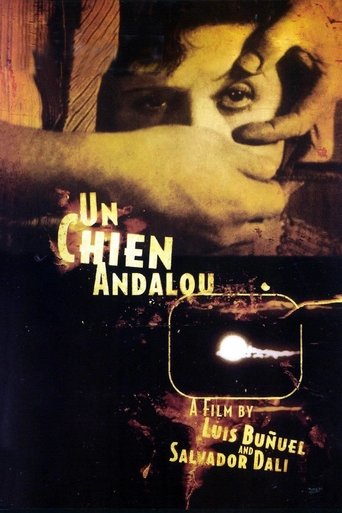
Francisco 'Pancho' Gutiérrez Cossío was a prominent Spanish avant-garde painter who made a brief but historically significant foray into cinema during the late 1920s. Born in Cuba to Spanish parents, he moved to Santander as a child and later studied in Madrid under Cecilio Pla, where he developed a lifelong friendship with artist Francisco Bores. In the 1920s, he moved to Paris and became a key figure in the 'Spanish School of Paris,' a group of expatriate artists that included Maria Blanchard and Ismael de la Serna. It was during this period that he became involved with the Surrealist movement, leading to his uncredited appearance in Luis Buñuel and Salvador Dalí's landmark film 'Un Chien Andalou' (1929). Though his primary devotion remained to the canvas, his presence in the film solidified his connection to the most radical artistic circles of the era. After returning to Spain in 1932, he briefly abandoned art for political activism before returning to painting in the 1940s, eventually becoming one of Spain's most respected post-war artists.
More about Pancho Cossío
On screen
As a non-professional actor and member of the Surrealist social circle, Cossío's performance was characterized by the 'found object' aesthetic common in avant-garde cinema. His presence in 'Un Chien Andalou' was naturalistic and atmospheric, serving the dreamlike and disjointed narrative structure of Luis Buñuel's direction rather than traditional dramatic technique.
Impact on culture
Pancho Cossío represents the vital intersection between the visual arts and early avant-garde cinema. His involvement in 'Un Chien Andalou' links the Spanish painting tradition to the birth of Surrealist film, illustrating how the 1920s Parisian art scene was a melting pot of different media. As a painter, he transitioned from Cubism and Ultraism to a highly personal 'Neo-Romantic' style that influenced the development of modern Spanish art.
Lasting legacy
Cossío is remembered primarily as one of the most significant Spanish painters of the 20th century, bridging the gap between the historical avant-garde and post-war figurative art. In the realm of cinema, he remains a cult figure for his participation in the most famous short film in history, serving as a human link between the canvases of the Spanish masters and the celluloid dreams of Buñuel.
Who they inspired
He influenced the 'School of Paris' through his unique blend of post-cubist structure and atmospheric lyricism. His later work in Spain influenced a generation of post-war painters seeking a path between abstraction and traditional Spanish realism.
Off screen
Cossío was born into a family of Cantabrian immigrants in Cuba; his father, Genaro Gutiérrez, was a tobacco merchant and mayor who notably abolished slavery on his farm. The family returned to Spain in 1898 following the Cuban War of Independence. A childhood leg injury left him with a permanent limp, which influenced his early turn toward the sedentary pursuit of painting.
Education
Studied under Francisco Rivero in Santander and later at the prestigious studio of Cecilio Pla in Madrid from 1914 to 1918.
Career milestones
- Appeared in the seminal Surrealist film 'Un Chien Andalou' (1929)
- Member of the influential 'Spanish School of Paris' in the 1920s
- Won the First Place Medal at the National Fine Arts Exhibition in 1954
- Awarded the Medal of Honor at the National Exhibition of Fine Arts in 1962
- Subject of a dedicated room at the 1965 New York World's Fair
- Exhibited at the Museum of Modern Art in Madrid in 1950, marking his definitive critical success
Iconic roles
- Stroller (uncredited) in Un Chien Andalou
Must-see films
- Un Chien Andalou (1929)
- L'Âge d'Or (1930)
Awards
- First Place Medal, National Fine Arts Exhibition (1954)
- Medal of Honor, National Exhibition of Fine Arts (1962)
- Civil Order of Alfonso X the Wise
Special recognition
- Dedicated room at the New York World's Fair (1965)
- Tribute at the Monovar region
- Member of the Spanish School of Paris
Worked often with
- Luis Buñuel (Director)
- Salvador Dalí (Artist/Writer)
- Francisco Bores (Painter)
- Christian Zervos (Art Critic/Cahiers d'Art)
Studios
- Galerie de France (Paris)
- Jacques Bernheim Gallery
Did you know?
- He was a member of the political group JONS (Juntas de Ofensiva Nacional-Sindicalista) during the 1930s.
- His family fled Cuba in 1898 because of the cruelty of guerrilla leader Quintín Banderas toward Spaniards.
- He completely gave up painting for nearly a decade (1932-1942) to focus on politics.
- He was a close friend of the sculptor Daniel Alegre, with whom he first traveled to Paris.
- His 1950 exhibition at the Museum of Modern Art in Madrid is considered the turning point that established him as a national master.
- He painted famous portraits of Spanish political figures José Antonio Primo de Rivera and Onésimo Redondo.
In their own words
I consider Cecilio Pla my only and true teacher.
In Paris, my work acquired a style I would call 'Neo-Romantic'.
Questions and answers
Who was Pancho Cossío?
Pancho Cossío was a renowned Spanish painter and a minor actor in early Surrealist cinema. He is best known for his contributions to the Spanish avant-garde art movement and his appearance in the film 'Un Chien Andalou'.
What films is Pancho Cossío best known for?
He is best known for his uncredited role as a 'stroller' in the 1929 Surrealist masterpiece 'Un Chien Andalou', directed by Luis Buñuel and Salvador Dalí. He also appeared in Buñuel's 'L'Âge d'Or' (1930).
When was Pancho Cossío born and when did he die?
He was born on October 20, 1894, in San Diego de los Baños, Cuba, and died on January 16, 1970, in Alicante, Spain.
What awards did Pancho Cossío win?
As a painter, he won the First Place Medal (1954) and the Medal of Honor (1962) at the National Fine Arts Exhibition in Spain, and was awarded the Civil Order of Alfonso X the Wise.
What was Pancho Cossío's artistic style?
His style evolved from Ultraism and Cubism in his youth to a 'Neo-Romantic' and post-cubist approach in Paris, eventually settling into a lyrical, almost abstract style of still-lifes and maritime scenes in his later years.