Un Chien Andalou
“A masterpiece of the surrealist movement.”
About Un Chien Andalou
The film opens with a shocking sequence where a man, played by director Luis Buñuel, sharpens a straight razor and appears to slice the eye of a woman as a thin cloud passes over the moon. What follows is a series of disjointed, dream-like vignettes that defy linear logic, including a man dragging two grand pianos filled with rotting donkey carcasses and two priests across a room to reach a woman. The narrative jumps through time with title cards such as 'Eight years later' and 'Around three in the morning,' though the characters and settings remain largely the same. Ants emerge from a hole in a man's palm, a severed hand is toyed with in the street, and characters undergo sudden, inexplicable transformations or deaths. The film concludes with a static, haunting image of a man and woman buried in sand up to their chests, seemingly preserved like statues or insects in a display.
Cast & crew

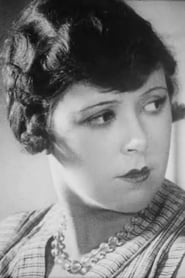
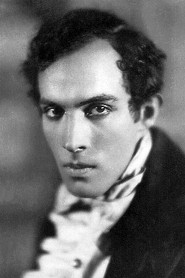
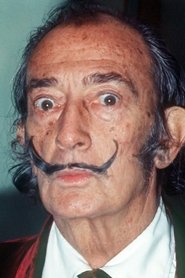
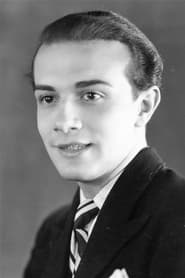
More films like this
More from Luis Buñuel
View all →
More about Un Chien Andalou
Production
- Release date
- June 6, 1929
- Country
- France
- Budget
- Approximately 25,000 French Francs (funded by Luis Buñuel's mother)
- Box office
- Unknown; primarily screened in private cine-clubs and avant-garde theaters
- Production
- Luis Buñuel (Independent Production)
- Filmed in
- Le Havre, France, Billancourt Studios, Paris, France
The film was born from a meeting between Buñuel and Dalí where they shared their dreams; Buñuel dreamed of a cloud slicing the moon like a razor through an eye, and Dalí dreamed of a hand crawling with ants. They agreed to a strict rule during the writing process: no idea or image that could be explained by logic, psychology, or Brahminism would be accepted. The filming took approximately two weeks in March 1929. Despite its low budget, the film utilized professional lighting and studio space at Billancourt to achieve a polished look that contrasted with its disturbing content.
Themes & topics
Historical background
Created in 1929, the film arrived at the height of the Surrealist movement in Paris, led by André Breton. It was a time of great intellectual upheaval where artists were obsessed with Sigmund Freud's theories of the unconscious and the rejection of traditional morality following the trauma of World War I. The film served as a manifesto for Surrealism in cinema, moving away from the 'Impressionist' style of French filmmaking toward something more aggressive and confrontational. It also marked the transition period between the silent era and the 'talkies,' though its creators chose to remain within the visual language of silence to enhance the dream-like atmosphere.
Why this film matters
Un Chien Andalou is widely considered the most famous short film ever made and the definitive work of cinematic surrealism. It broke the 'fourth wall' of the viewer's expectations, proving that film did not need a narrative to be emotionally and viscerally powerful. Its influence extends beyond cinema into music videos (notably David Bowie and Pixies), fashion, and modern art. It established Luis Buñuel as a major director and Salvador Dalí as a force in the film world, forever changing how dream states are depicted on screen.
Making of
The collaboration between Buñuel and Dalí was intense and focused on the subversion of bourgeois sensibilities. They wrote the script in six days at Dalí's home in Cadaqués, purposefully rejecting any elements that suggested a rational plot. During production, Dalí was frequently on set, assisting with the art direction and the 'look' of the more grotesque elements, such as the piano arrangement. Buñuel handled the technical direction and editing, ensuring the pacing felt like the 'free association' found in psychoanalysis. The production was entirely self-financed, which allowed the duo total creative freedom without the interference of censors or commercial interests.
What critics said
Upon its release, the film was a 'succès de scandale,' attracting both high praise from the artistic elite and horror from traditionalists. André Breton officially welcomed Buñuel and Dalí into the Surrealist circle because of it. Modern critics, such as Roger Ebert, have praised it as a 'foundational stone of modern cinema,' noting that its imagery remains shocking even by contemporary standards. It currently holds a 100% rating on Rotten Tomatoes, reflecting its status as an untouchable masterpiece of the avant-garde.
What audiences thought
Initial audiences were shocked, with reports of people fainting or fleeing the theater during the eye-slitting scene. However, it became a cult hit among the Parisian intelligentsia, running for nearly a year in specialized theaters. Today, it is a staple of film school curricula, often eliciting a mixture of laughter, disgust, and awe from modern viewers who are surprised by how 'modern' the editing and concepts feel despite being nearly a century old.
Visual style
The cinematography, handled by Albert Duverger, uses a flat, objective style that makes the bizarre events seem more real and disturbing. The film employs 'match cuts' (such as the moon and the eye) to create subconscious links between unrelated objects. The use of slow-motion, double exposure, and iris shots are used not for decoration, but to disorient the viewer's sense of time and space. The lighting is often bright and high-contrast, avoiding the 'shadowy' tropes of German Expressionism in favor of a stark, clinical reality.
Innovations
The film is a masterclass in creative editing and the use of practical special effects on a shoestring budget. The eye-slitting sequence is one of the earliest and most effective examples of 'invisible editing' to create a horrific illusion. The use of stop-motion for the ants appearing in the hand and the complex rigging required to drag the pianos and priests across a studio floor were significant technical undertakings for an independent short film in 1929.
Music
While originally silent, Buñuel later supervised a synchronized soundtrack in 1960. This score consists of Richard Wagner's 'Liebestod' from the opera 'Tristan und Isolde' and two popular Argentine tangos. The juxtaposition of the grand, romantic Wagnerian music with the grotesque imagery of rotting donkeys and severed hands creates a sense of 'ironic distance' and emotional dissonance that is central to the surrealist experience.
Film restoration
The film has been meticulously preserved and restored. The most definitive restoration was conducted by the Filmoteca Española in collaboration with the Centre Pompidou, using original nitrate elements to ensure the clarity of the black-and-white photography and the correct frame rate.
Did you know?
- The 'eye' in the famous opening scene was actually the eye of a dead calf, with the hair around it shaved to look human.
- Luis Buñuel was so nervous about the premiere that he filled his pockets with stones to throw at the audience if they attacked him; instead, they cheered.
- The title 'Un Chien Andalou' (An Andalusian Dog) has no connection to the content of the film; it was reportedly a jab at fellow poet Federico García Lorca.
- The ants crawling out of the hand were imported from the Sierra de Guadarrama because Paris ants were not 'cinematic' enough.
- The rotting donkeys inside the pianos were real carcasses that Dalí insisted be treated with glue to make them look more decayed and 'glistening'.
- The film was originally silent, but Buñuel played recordings of Wagner's 'Tristan und Isolde' and Argentine tangos during the first screenings.
- Federico García Lorca took the title as a personal insult, believing the 'Andalusian Dog' referred to him.
- The man who is shot and falls in the park was played by a professional acrobat to ensure the fall looked unnaturally stiff.
- The film ran for nine months straight at the Studio des Ursulines in Paris due to its unexpected popularity.
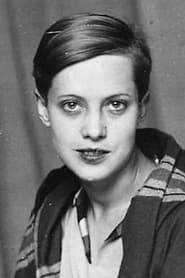
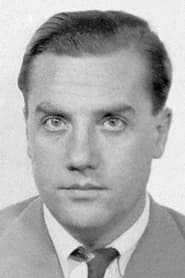
- The female lead, Simone Mareuil, committed suicide by self-immolation in 1954; the male lead, Pierre Batcheff, died of a drug overdose in 1932.
Awards & recognition
- National Film Registry (Library of Congress) - Inducted in 1994 for its cultural significance
- Online Film & Television Association (OFTA) Film Hall of Fame
Memorable scenes
- The slicing of the eyeball with a straight razor, synchronized with a cloud passing the moon.
- The man dragging two grand pianos containing dead donkeys and two bewildered priests.
- Ants swarming out of a hole in the center of a man's palm.
- A man poking a severed hand in the middle of a busy street with a cane.
- The final shot of the couple 'in the springtime' buried in the sand, unmoving.
Influenced by
- The writings of Sigmund Freud
- Marquis de Sade
- The Surrealist Manifesto by André Breton
- The dreams of Salvador Dalí and Luis Buñuel
This film influenced
- Spellbound (1945)
- Eraserhead (1977)
- Blue Velvet (1986)
- The Discreet Charm of the Bourgeoisie (1972)
- Meshes of the Afternoon (1943)
Where else to watch
- YouTube (Public Domain)
- The Criterion Channel
- BFI Player
- Kanopy
- Museum of Modern Art (MoMA) Archives
Famous quotes
Once upon a time... (Opening Title Card)
Eight years later... (Title Card used to disrupt temporal logic)
In the spring... (Title Card)
Around three in the morning... (Title Card)