Marval
Actor
- Active
- 1928-1930
Films 1
About Marval
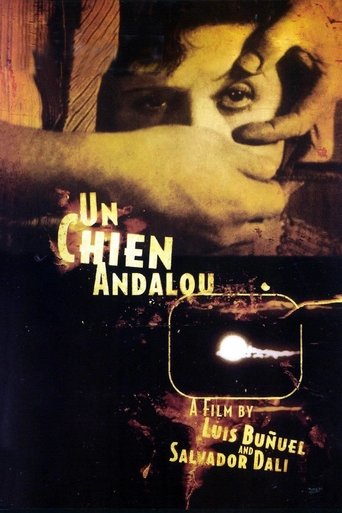
Marval was a figure primarily associated with the avant-garde and surrealist film movement in late 1920s Paris. While his screen appearances were limited, he is immortalized in cinema history for his contribution to the seminal surrealist short 'Un Chien Andalou' (1929), directed by Luis Buñuel and Salvador Dalí. In this landmark production, Marval portrayed one of the seminarists, notably appearing in the scene where he is dragged along with pianos and rotting donkeys, a role he reportedly took over from Dalí himself for certain shots. Beyond his brief time in front of the camera, Marval served a critical behind-the-scenes role as the production manager for 'Un Chien Andalou,' ensuring the logistical execution of Buñuel's radical vision. His involvement with the surrealist circle also extended to Buñuel's follow-up masterpiece, 'L'Âge d'Or' (1930), where he is credited among the cast. Marval's career represents the fluid nature of early independent filmmaking, where production staff frequently stepped into roles to support the experimental projects of their peers. Despite the lack of a traditional Hollywood-style filmography, his presence in two of the most influential films of the 20th century cements his place in the annals of classic cinema.
More about Marval
On screen
Marval's acting was characterized by the stylized, almost somnambulistic requirements of surrealist cinema, where performers functioned more as living icons or 'objects' within a dreamscape rather than traditional dramatic actors.
Impact on culture
Marval's contribution to 'Un Chien Andalou' places him at the center of one of the most significant cultural shifts in film history. The film's rejection of narrative logic and its embrace of the subconscious influenced everything from Hitchcock's dream sequences to modern music videos. As both an actor and the production manager, Marval helped facilitate the transition of surrealism from the canvas and the page onto the silver screen, impacting how audiences perceive visual metaphor and cinematic time.
Lasting legacy
Marval's legacy is inextricably linked to the survival and success of early surrealist film. While many actors of the era sought fame, Marval's work as a production manager and utility actor allowed for the creation of 'Un Chien Andalou' on a shoestring budget. He remains a person of interest for film historians studying the collaborative nature of the Parisian avant-garde and the technical challenges of early independent experimental cinema.
Who they inspired
He influenced the 'guerrilla' style of filmmaking, where crew members often filled acting gaps to maintain the momentum of low-budget independent productions.
Off screen
Little is recorded of Marval's life outside of his professional association with the French avant-garde. He was part of the bohemian artistic community in Paris during the interwar period, working closely with figures like Luis Buñuel and Salvador Dalí.
Career milestones
- Served as the Production Manager for the landmark surrealist film 'Un Chien Andalou' (1929)
- Portrayed a seminarist in 'Un Chien Andalou', replacing Salvador Dalí in specific shots
- Appeared in Luis Buñuel's controversial follow-up 'L'Âge d'Or' (1930)
- Collaborated with Jean Renoir in the 1928 production 'Le Tournoi dans la cité'
- Integral member of the early Parisian surrealist filmmaking circle
Iconic roles
- Seminarist in 'Un Chien Andalou' (1929)
Must-see films
- Un Chien Andalou (1929)
- L'Âge d'Or (1930)
- Le Tournoi dans la cité (1928)
Special recognition
- Recognized in film history as a key contributor to the birth of Surrealist Cinema
Worked often with
- Luis Buñuel
- Salvador Dalí
- Jaume Miravitlles
- Albert Duverger
Studios
- Independent (Surrealist Group)
- Studio des Ursulines
Did you know?
- Marval was actually the production manager for 'Un Chien Andalou' and only acted out of necessity.
- He replaced Salvador Dalí in the role of the seminarist for the second shot of that character.
- He is one of the few individuals to have worked on both of Buñuel's primary French surrealist films ('Un Chien Andalou' and 'L'Âge d'Or').
- His name is often omitted from modern commercial credits but remains in historical production records.
- He worked with Jean Renoir, one of the greatest directors in French history, early in his career on 'Le Tournoi'.
Questions and answers
Who was Marval?
Marval was a French actor and production manager active in the late 1920s. He is best known for his work with director Luis Buñuel on the seminal surrealist film 'Un Chien Andalou'.
What role did Marval play in 'Un Chien Andalou'?
Marval played one of the seminarists who is dragged across the floor. He also served as the film's production manager, handling the day-to-day logistics of the shoot.
Did Marval work with Salvador Dalí?
Yes, Marval worked closely with Dalí during the production of 'Un Chien Andalou' and even replaced Dalí in certain shots where the artist was originally supposed to appear as a seminarist.
What other films did Marval appear in?
In addition to 'Un Chien Andalou' (1929), Marval appeared in Luis Buñuel's 'L'Âge d'Or' (1930) and Jean Renoir's 'Le Tournoi dans la cité' (1928).
What was Marval's contribution to film history?
Marval is significant for being a key facilitator of the Surrealist movement in cinema. His dual role as a technician and performer helped bridge the gap between radical artistic theory and practical filmmaking.