Jaume Miravitlles
Actor
- Born
- February 18, 1906, Figueres, Spain
- Died
- November 10, 1988
- Active
- 1929-1939 (Cinema); 1922-1988 (Political/Literary)
- Birth name
- Jaume Miravitlles i Navarra
Films 1
About Jaume Miravitlles
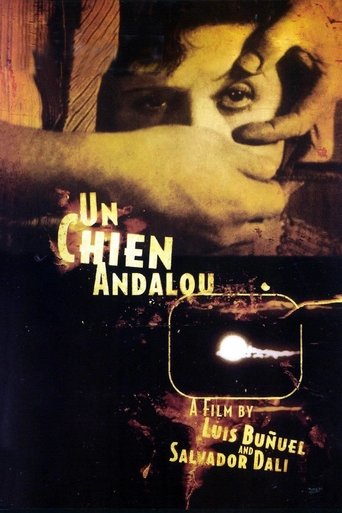
Jaume Miravitlles i Navarra, often known by the nickname 'Met', was a prominent Catalan intellectual, politician, and writer who made a brief but indelible mark on cinema history through his association with the Surrealist movement. Born in Figueres in 1906, he was a childhood friend of Salvador Dalí, with whom he collaborated on early artistic ventures like the magazine 'Studium'. During the 1920s, Miravitlles' political activism against the Primo de Rivera dictatorship led to his exile in Paris, where he immersed himself in the avant-garde circles of the time. It was during this period that he appeared as an actor in Luis Buñuel and Salvador Dalí's seminal surrealist short 'Un Chien Andalou' (1929), famously portraying one of the seminarians dragged behind a piano. He also made a brief appearance in their follow-up film, 'L'Âge d'Or' (1930). Beyond his acting, Miravitlles was a pivotal figure in the Spanish Civil War, serving as the Commissary for Propaganda for the Generalitat of Catalonia, where he utilized film as a powerful tool for the Republican cause. He later spent decades in exile in Mexico and the United States before returning to Catalonia in 1962, where he continued his prolific career as a journalist and author until his death in 1988.
More about Jaume Miravitlles
On screen
Miravitlles' acting was characterized by the 'model' approach favored by early surrealists, where the performer functioned more as a visual element or symbol within a dreamscape rather than a traditional dramatic actor. In 'Un Chien Andalou', his performance is physical and absurdist, contributing to the film's jarring, non-linear narrative through exaggerated characterization.
Impact on culture
Jaume Miravitlles played a crucial role in the intersection of avant-garde art and political mass communication. By appearing in 'Un Chien Andalou', he became a permanent fixture in the history of Surrealism, representing the movement's early collaborative spirit. More significantly, his work during the Spanish Civil War revolutionized the use of cinema and graphic arts for state propaganda, creating a visual legacy for the Republican cause that remains a subject of study for historians of both film and politics.
Lasting legacy
His legacy is twofold: as a participant in the most famous short film ever made and as the architect of Catalonia's wartime cultural identity. He is remembered as a man who brought 'good taste' to revolution, using his connections in the art world to ensure that political messaging was aesthetically sophisticated. His memoirs provide a vital first-hand account of the 20th century's most turbulent decades.
Who they inspired
He influenced the development of documentary film in Spain through the creation of Laya Films, which served as a training ground for filmmakers. His approach to propaganda—emphasizing high production values and international appeal—influenced how future political movements utilized media.
Off screen
Miravitlles was born into a merchant family in Figueres. His early life was defined by his close friendships with intellectual giants like Salvador Dalí and the Xirau brothers. He spent a significant portion of his life in exile due to his political convictions, living in Paris, North Africa, Mexico, and New York City. He was known for his charismatic personality and his ability to bridge the worlds of art and high-stakes politics.
Education
Studied Engineering at the Industrial School of Barcelona and later completed his studies in Paris during his exile.
Career milestones
- Appeared as a seminarian in the landmark surrealist film Un Chien Andalou (1929)
- Founded the film production company Laya Films in 1936 to produce Republican propaganda
- Served as the Commissary for Propaganda for the Government of Catalonia during the Spanish Civil War
- Organized the Popular Olympics in Barcelona in 1936 as a protest against the Berlin Olympics
- Won the Josep Pla Award for narrative in 1979 for 'Gent que he conegut'
- Authored numerous books on politics, geography, and his personal memoirs
Iconic roles
- The Fat Seminarian in Un Chien Andalou (1929)
Must-see films
- Un Chien Andalou (1929)
- L'Âge d'Or (1930)
Awards
- Josep Pla Award (1979) for 'Gent que he conegut' (People I Have Known)
Special recognition
- Recognized as 'The Smile of Catalonia' by André Malraux
- Subject of the biographical portrait 'El somriure de Catalunya' by Mark Planellas-Witzsch
Worked often with
- Salvador Dalí (Childhood friend and collaborator)
- Luis Buñuel (Director)
- André Malraux (Writer and political ally)
- Lluís Companys (President of Catalonia)
Studios
- Laya Films (Founder)
- Catalònia Films (Founder)
Family
- Information regarding specific spouse names and dates is not widely documented in primary cinematic records.
Did you know?
- In the famous piano-dragging scene of 'Un Chien Andalou', Miravitlles is one of the two seminarians tied to the pianos; the other was played by Salvador Dalí.
- He was nicknamed 'Met', a common Catalan diminutive for Jaume.
- André Malraux famously dubbed him 'the smile of Catalonia' because of his optimistic and diplomatic nature.
- He was the secretary of the committee that organized the 1936 Popular Olympics, which were cancelled on the day they were set to begin due to the outbreak of the Spanish Civil War.
- During his exile in New York, he worked as a journalist and was a frequent contributor to Spanish-language publications.
- He wrote under the pseudonym 'Spectator' for various Catalan newspapers after his return from exile.
In their own words
The film [Un Chien Andalou] was a revolutionary act, a way to break the windows of the bourgeois mind.
Propaganda is not just about shouting; it is about making the truth beautiful enough to be believed.
Questions and answers
Who was Jaume Miravitlles?
Jaume Miravitlles was a Catalan politician, writer, and occasional actor best known for his role in the 1929 surrealist film 'Un Chien Andalou' and for leading the propaganda efforts of the Catalan government during the Spanish Civil War.
What role did Jaume Miravitlles play in Un Chien Andalou?
He played one of the 'fat seminarians' who is seen being dragged across a room tied to a grand piano that also carries rotting donkey carcasses.
What was Jaume Miravitlles' contribution to cinema beyond acting?
He founded Laya Films, a production company that created dozens of documentaries and newsreels during the Spanish Civil War, essentially professionalizing the use of film for political communication in Catalonia.
Was Jaume Miravitlles related to Salvador Dalí?
They were not related by blood, but they were very close childhood friends from Figueres and collaborated on several artistic projects during their youth and early adulthood.
When did Jaume Miravitlles die?
He passed away on November 10, 1988, in Barcelona, Spain, at the age of 82.