Pierre Batcheff
Actor
- Born
- June 23, 1901, Yekaterinoslav, Russian Empire (now Dnipro, Ukraine)
- Died
- April 13, 1932
- Active
- 1923-1932
- Birth name
- Benjamin Batcheff
Films 2
About Pierre Batcheff
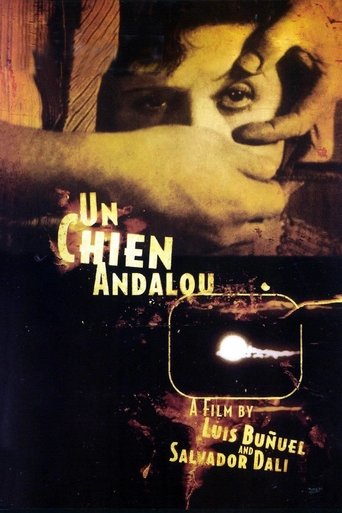
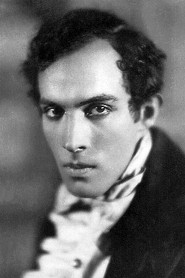
Pierre Batcheff, born Benjamin Batcheff, was a prominent French actor of Russian-Jewish descent who became a central figure in the avant-garde and mainstream French cinema of the 1920s. After spending his early childhood in Geneva, he moved to Paris in 1921 where he quickly transitioned from stage performance to the burgeoning film industry. He rose to fame as a 'jeune premier' (young leading man), possessing a sensitive and melancholic screen presence that captured the disillusionment of the post-WWI generation. His career reached its zenith when he was cast by Luis Buñuel and Salvador Dalí as the protagonist in the surrealist masterpiece 'Un Chien Andalou' (1929), a role that immortalized him in film history. Despite his success in both experimental and commercial films, Batcheff struggled with the transition to sound cinema and personal demons. His life came to a tragic and premature end in 1932 when he died of a drug overdose, leaving behind a body of work that remains a cornerstone of early 20th-century cinematic art.
More about Pierre Batcheff
On screen
Batcheff was known for a restrained, naturalistic acting style that contrasted with the exaggerated theatricality common in the early silent era. He possessed a 'photogenic' quality that Jean Epstein highly valued, characterized by an expressive face capable of conveying deep internal psychological states with minimal movement. His performances often carried a sense of poetic melancholy, vulnerability, and modern anxiety, making him the ideal vessel for the dream-logic of surrealist cinema.
Impact on culture
Pierre Batcheff's impact on culture is primarily tied to his role in 'Un Chien Andalou', a film that redefined the possibilities of visual storytelling and remains the most famous surrealist film ever made. His image—specifically the scene involving the razor and the eye—has become an iconic symbol of modernism and the subversion of traditional narrative. He represented a new type of European masculinity on screen: intellectual, fragile, and haunted, which influenced the 'poetic realism' movement that followed in French cinema.
Lasting legacy
Batcheff's legacy is that of a tragic icon of the silent screen. While his career was cut short at age 30, he is remembered as one of the few actors who could bridge the gap between commercial popularity and high-art experimentation. He is a fixture in film studies curricula worldwide due to his association with the Surrealist movement and his work with Jean Epstein. His tragic death is often cited alongside that of his co-star Simone Mareuil (who also committed suicide) as part of the 'curse' of 'Un Chien Andalou'.
Who they inspired
His naturalistic approach to screen acting influenced subsequent generations of French actors, moving away from the Delsarte method toward a more psychological realism. His collaboration with the surrealists helped legitimize film as a medium for serious artistic and philosophical exploration.
Off screen
Batcheff was married to Denise Tual (née Batcheff), who was a prominent film editor and producer. He was deeply integrated into the Parisian intellectual and artistic circles of the 1920s, associating with surrealists and the cinematic elite. Despite his professional success, he suffered from severe depression and substance abuse issues, which were exacerbated by the pressures of the industry's transition to sound and the political climate of the era.
Education
He received his early education in Geneva, Switzerland, before moving to Paris to pursue a career in the arts, where he studied drama and worked in various theatrical productions.
Career milestones
- Starring in the seminal surrealist film 'Un Chien Andalou' in 1929
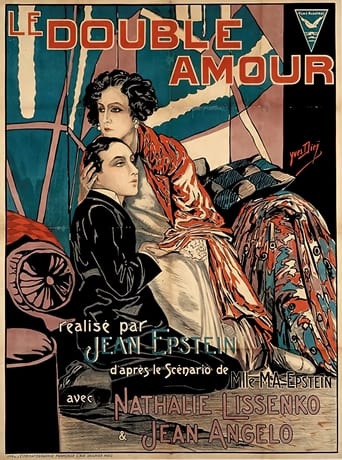
- Collaborating with director Jean Epstein in 'The Double Love' (1925)
- Portraying General Hoche in Abel Gance's epic 'Napoléon' (1927)
- Establishing himself as one of the most popular leading men in French silent cinema
- Co-writing the screenplay for 'Baroud' (1932) with Rex Ingram
Iconic roles
- The Protagonist in 'Un Chien Andalou' (1929)
- General Lazare Hoche in 'Napoléon' (1927)
- Robert de Tavannes in 'The Island of Love' (1928)
- André in 'The Two Wishes' (1928)
Must-see films
- Un Chien Andalou (1929)
- Napoléon (1927)
- The Double Love (1925)
- Feu! (1927)
- Monte Cristo (1929)
- Baroud (1932)
Special recognition
- Recognized as a pioneer of the French Avant-Garde
- Subject of numerous retrospectives at the Cinémathèque Française
Worked often with
- Jean Epstein (Director)
- Luis Buñuel (Director)
- Abel Gance (Director)
- Rex Ingram (Director)
- Denise Tual (Editor/Wife)
Studios
- Films Albatros
- Société des Cinéromans
Family
- Denise Tual (1930-1932)
Did you know?
- He was of Russian-Jewish origin and his family fled to Switzerland to escape political unrest.
- Batcheff died of an overdose of Veronal, a barbiturate, in a Paris hotel.
- Both lead actors of 'Un Chien Andalou' (Batcheff and Simone Mareuil) eventually committed suicide.
- He was a talented writer and co-directed/wrote the film 'Baroud' with Rex Ingram shortly before his death.
- He was considered the 'face' of the French avant-garde in the late 1920s.
- His wife, Denise Tual, later became a very influential figure in the French film industry as a producer.
- He spoke several languages, which helped him navigate the international film scene in Europe.
In their own words
Cinema is the only art where time can be sculpted and dreams can be made visible.
The camera does not just record; it interprets the soul of the actor.
Questions and answers
Who was Pierre Batcheff?
Pierre Batcheff was a famous French actor of the silent film era, best known for his leading role in the surrealist film 'Un Chien Andalou'. He was a major star in France during the 1920s, known for his sensitive and modern acting style.
What films is Pierre Batcheff best known for?
He is most famous for 'Un Chien Andalou' (1929), directed by Luis Buñuel and Salvador Dalí. He also appeared in Abel Gance's 'Napoléon' (1927) and several films by the avant-garde director Jean Epstein.
When was Pierre Batcheff born and when did he die?
He was born on June 23, 1901, in Yekaterinoslav, Russian Empire, and died on April 13, 1932, in Paris, France, at the age of 30.
What was Pierre Batcheff's acting style?
Batcheff was known for a subtle, internal, and naturalistic style that avoided the over-the-top gestures of early silent cinema. He was praised for his 'photogenic' qualities and his ability to convey complex emotions through his eyes and facial expressions.
How did Pierre Batcheff die?
Batcheff died of a drug overdose from Veronal in 1932. His death is often viewed as a tragic end to a brilliant career that was struggling to adapt to the new era of sound films.
Was Pierre Batcheff involved in filmmaking beyond acting?
Yes, toward the end of his life he became interested in the technical side of film. He co-wrote and worked as an assistant director on the film 'Baroud' (1932) with the famous director Rex Ingram.