Robert Hommet
Actor
- Born
- April 22, 1909, Saint-Germain-en-Laye, France
- Died
- March 10, 1958
- Active
- 1929-1954
Films 1
About Robert Hommet
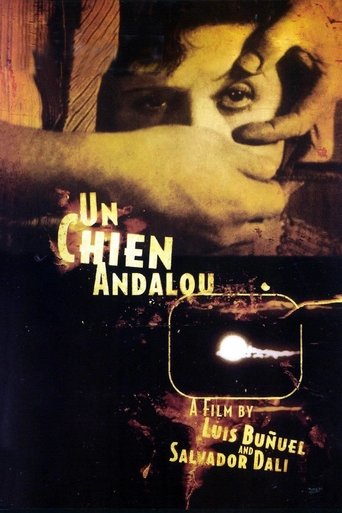
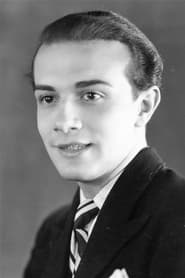
Robert Hommet was a French actor whose career spanned the transition from silent films to the mid-20th century, though he is immortalized in cinema history for a single, brief appearance in one of the most significant works of the avant-garde. Born in Saint-Germain-en-Laye in 1909, Hommet was handpicked by director Luis Buñuel for the role of the 'Third Young Man' (the lover on the beach) in the surrealist masterpiece 'Un Chien Andalou' (1929). Buñuel famously described Hommet in a letter to co-creator Salvador Dalí as the ideal 'young, strong, blonde, square-jawed' figure who exuded a sense of 'elegant health' that contrasted with the film's darker, more grotesque imagery. Following this iconic debut, Hommet continued to work steadily in French cinema throughout the 1930s and 1940s, often appearing in supporting roles in dramas and comedies such as 'La dernière berceuse' (1931) and 'Le Secret d'une mère' (1952). He maintained a presence in the industry for over two decades, eventually appearing in Sacha Guitry's star-studded historical epic 'Si Versailles m'était conté...' (1954). Hommet passed away in Paris in 1958, leaving behind a filmography that bridges the gap between radical surrealism and traditional French studio production.
More about Robert Hommet
On screen
Hommet was often cast for his physical presence and 'Aryan' aesthetic, which Luis Buñuel specifically sought to represent a conventional, healthy contrast to the surrealist decay in his work. His style was characterized by the poised, formal delivery typical of early French sound cinema, transitioning from the expressive physicality of the silent era to the more restrained, character-driven performances of the 1940s.
Impact on culture
Robert Hommet's image is etched into the collective memory of cinephiles as the man on the beach in the final sequence of 'Un Chien Andalou.' His presence represents the 'Spring' segment of the film, providing a visual resolution to the disjointed narrative. As part of the first film to be officially welcomed into the Surrealist movement by André Breton, Hommet's performance helped define the visual language of avant-garde cinema, where the actor's physical appearance was used as a symbolic tool rather than just a narrative vessel.
Lasting legacy
While he had a lengthy career in mainstream French cinema, Hommet's legacy is inextricably linked to the birth of Surrealism in film. He remains a subject of study for film historians analyzing the casting choices of Luis Buñuel and Salvador Dalí. His transition from the radical avant-garde to mainstream historical epics like 'Si Versailles m'était conté...' illustrates the diverse opportunities available to actors during the formative years of European sound cinema.
Who they inspired
His 'healthy' and 'square-jawed' look influenced the way surrealist directors chose to cast 'normal' characters to heighten the impact of bizarre or disturbing events by contrast.
Off screen
Details regarding Hommet's private life remain scarce, as he was a professional character actor who avoided the tabloid culture of the era. He spent the majority of his life and career in Paris, where he was a fixture of the French film industry during the Golden Age of French cinema.
Education
Trained in the French theatrical tradition before entering the film industry in the late 1920s.
Career milestones
- Cast as the 'Third Young Man' in the seminal surrealist film 'Un Chien Andalou' (1929)
- Appeared in the early French talkie 'La dernière berceuse' (1931)
- Played the role of Allan Stone in 'Les Vacances du diable' (1931)
- Portrayed Doctor Dumont in 'Le Secret d'une mère' (1952)
- Featured as the Count de Langeais in Sacha Guitry's 'Si Versailles m'était conté...' (1954)
Iconic roles
- Third Young Man / The Lover on the Beach in 'Un Chien Andalou'
- Henri in 'La dernière berceuse'
- Count de Langeais in 'Si Versailles m'était conté...'
Must-see films
- Un Chien Andalou (1929)
- La dernière berceuse (1931)
- Les Vacances du diable (1931)
- Si Versailles m'était conté... (1954)
Special recognition
- Recognized in the canon of Surrealist cinema for his contribution to the movement's most famous film.
Worked often with
- Luis Buñuel
- Sacha Guitry
- Simone Mareuil
Studios
- Les Grands Films Classiques
- Paramount (French productions)
Did you know?
- Luis Buñuel specifically requested Hommet for 'Un Chien Andalou' because he wanted someone who looked 'German' and 'oozing elegant health.'
- He appears in the final shot of 'Un Chien Andalou,' where his character and the female lead are shown buried in sand.
- Despite his association with the avant-garde, he spent most of his career in conventional French dramas.
- His career survived the difficult transition from silent film to 'talkies' in France.
- He worked with the legendary director Sacha Guitry toward the end of his career.
In their own words
In a 1929 letter regarding Hommet, Buñuel wrote: '[He is] the young, strong, blonde, square-jawed, German, oozing elegant health.'
Questions and answers
Who was Robert Hommet?
Robert Hommet was a French actor best known for his role in the 1929 surrealist short film 'Un Chien Andalou,' directed by Luis Buñuel and Salvador Dalí.
What is Robert Hommet's most famous film?
His most famous work is undoubtedly 'Un Chien Andalou' (1929), though he also appeared in notable films like 'Si Versailles m'était conté...' (1954) and 'La dernière berceuse' (1931).
When was Robert Hommet born and when did he die?
Robert Hommet was born on April 22, 1909, in Saint-Germain-en-Laye, France, and passed away on March 10, 1958, in Paris.
What role did Robert Hommet play in 'Un Chien Andalou'?
He played the 'Third Young Man,' often referred to as the lover on the beach, who appears in the film's final sequence.
Why did Luis Buñuel cast Robert Hommet?
Buñuel cast him because of his strong, healthy, and 'square-jawed' appearance, which served as a visual contrast to the more disturbing and surreal elements of the film.