Juan Esplandiu
Actor
- Born
- June 24, 1901, Madrid, Spain
- Died
- December 3, 1978
- Active
- 1929-1930 (Film); 1918-1978 (Art)
- Birth name
- Juan Esplandiú Peña
Films 1
About Juan Esplandiu
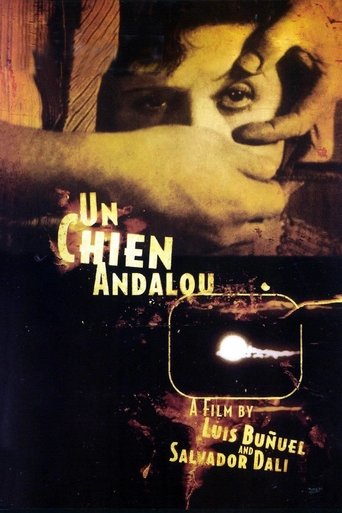
Juan Esplandiú Peña was a multifaceted Spanish artist who, while primarily celebrated as a painter and illustrator, played a distinctive role in the early surrealist cinema movement. Born in Madrid in 1901, he studied at the Real Academia de Bellas Artes de San Fernando under Cecilio Pla before moving to Paris in 1925 on a scholarship. In the vibrant Parisian avant-garde scene, he became close friends with fellow Spaniards Luis Buñuel and Salvador Dalí, leading to his participation in their groundbreaking cinematic experiments. He is most notably recognized in film history for his appearance in the seminal surrealist short 'Un Chien Andalou' (1929) and later as a bandit in 'L'Âge d'Or' (1930). Following his brief but significant foray into film, Esplandiú returned to Spain where he dedicated himself to capturing the urban landscapes of Madrid through watercolors and sketches. Throughout the mid-20th century, he became one of the most beloved 'madrileñista' painters, chronicling the city's evolution through the Civil War and the post-war era. His artistic career spanned over five decades, during which he received numerous national honors for his contributions to Spanish visual arts.
More about Juan Esplandiu
On screen
Esplandiú's acting was characterized by the non-professional, 'mannequin-like' quality favored by surrealist directors Luis Buñuel and Salvador Dalí. Rather than traditional dramatic expression, his presence in film was used to evoke specific visual archetypes—such as the rugged bandit or the mysterious urban figure—fitting the dream-logic and anti-narrative structure of the avant-garde movement.
Impact on culture
Juan Esplandiú serves as a vital link between the Spanish visual arts and the birth of surrealist cinema. His involvement in 'Un Chien Andalou' and 'L'Âge d'Or' places him at the heart of one of the most influential movements in film history, helping to bridge the gap between traditional painting and the 'new' medium of the moving image. In Spain, he is culturally significant for his 'madrileñismo,' having documented the soul of Madrid through thousands of drawings and watercolors that preserved the city's atmosphere for future generations.
Lasting legacy
His legacy is twofold: in the world of cinema, he remains a permanent fixture of the surrealist canon due to his collaborations with Buñuel; in the world of art, he is remembered as the preeminent chronicler of 20th-century Madrid. His works are held in major Spanish institutions, and his name is synonymous with the 'Escuela de Madrid' style of landscape and urban painting.
Who they inspired
He influenced the 'Escuela de Vallecas' and other post-war Spanish artists through his use of light and atmospheric perspective. His transition from the radical avant-garde of 1920s Paris to a more lyrical, representational style in Spain provided a model for how artists could navigate the political and social upheavals of the mid-century.
Off screen
Esplandiú was born on Juan de Mena street in Madrid to a Catalan father and a mother from Soria. He was a central figure in the Spanish intellectual scene, frequently attending the famous tertulias (social gatherings) at the Café Gijón alongside artists like Cristino Mallo and writers like Camilo José Cela. He remained in Madrid during the Spanish Civil War, an experience that deeply influenced the nostalgic and lyrical tone of his later works.
Education
Real Academia de Bellas Artes de San Fernando, Madrid
Career milestones
- Participated in the foundational surrealist film 'Un Chien Andalou' (1929)
- Cast as a bandit in the controversial surrealist feature 'L'Âge d'Or' (1930)
- Awarded the Gold Medal in Paris (1925) for his artistic work
- Won the Spanish National Painting Prize (Premio Nacional de Pintura) in 1957
- Designed the sets for Manuel de Falla's 'El retablo de maese Pedro' in Amsterdam (1926)
- Became a prominent member of the 'Escuela de Madrid' and the 'Café Gijón' literary circle
Iconic roles
- Bandit in 'L'Âge d'Or' (1930)
- Supporting figure in 'Un Chien Andalou' (1929)
Must-see films
- Un Chien Andalou (1929)
- L'Âge d'Or (1930)
Awards
- Gold Medal of Paris (1925)
- National Painting Prize (Premio Nacional de Pintura), Spain (1957)
- Medal of the Círculo de Bellas Artes
Special recognition
- Scholarship to the Monasterio de El Paular (1924)
- Pensionado (Scholarship) of the Ministry of Public Instruction in Paris (1925-1931)
- Subject of the commemorative book 'Una ciudad y un pintor: Juan Esplandiú' (1954)
Worked often with
- Luis Buñuel (Director)
- Salvador Dalí (Artist/Writer)
- Pancho Cossío (Painter)
- Pedro Flores (Painter/Actor)
Studios
- Independent Avant-Garde (Paris)
- Studio des Ursulines
Did you know?
- He was part of the 'Generation of '27' social and artistic circles in Paris.
- Despite his fame as a painter, his film credits are often cited in surrealist retrospectives worldwide.
- He won the National Painting Prize for a work titled 'Carnaval en Recoletos'.
- He was a close friend of the writer Camilo José Cela, who wrote about his art.
- His paintings of the Puerta del Sol are considered definitive depictions of that Madrid landmark.
- He collaborated on the set designs for avant-garde theater before appearing on screen.
- He lived in Paris for six years during the height of the Surrealist movement.
In their own words
Madrid is not just a city; it is a light that changes every hour, and my job is to catch it before it disappears.
Questions and answers
Who was Juan Esplandiu?
Juan Esplandiu (also known as Juan Esplandiú Peña) was a renowned Spanish painter and illustrator who also appeared as an actor in the first surrealist films directed by Luis Buñuel and Salvador Dalí.
What films is Juan Esplandiu best known for?
He is best known for his roles in the landmark surrealist films 'Un Chien Andalou' (1929) and 'L'Âge d'Or' (1930).
When was Juan Esplandiu born and when did he die?
He was born on June 24, 1901, in Madrid, Spain, and passed away in the same city on December 3, 1978.
What awards did Juan Esplandiu win?
His most prestigious award was the Spanish National Painting Prize (Premio Nacional de Pintura) in 1957, following an earlier Gold Medal in Paris in 1925.
What was Juan Esplandiu's artistic style?
In film, he participated in the surrealist avant-garde; in his primary career as a painter, he was known for a lyrical, 'madrileñista' style that captured the landscapes and urban life of Madrid with great sensitivity.