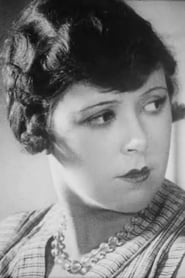
Simone Mareuil
Actor
- Born
- August 25, 1903, Périgueux, Dordogne, France
- Died
- October 24, 1954
- Active
- 1921-1940
- Birth name
- Marie Louise Simone Vacher
Films 1
About Simone Mareuil
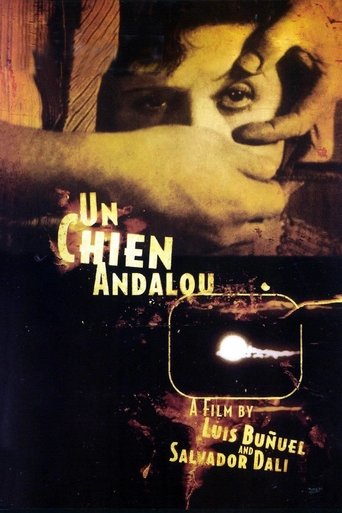
Simone Mareuil was a French actress whose career spanned the transition from silent films to early talkies, though she remains eternally immortalized for a single, haunting image in cinematic history. Born Marie Louise Simone Vacher in Périgueux, she moved to Paris in the early 1920s and began her career as an extra at Gaumont Studios under the guidance of Paul Caroux. Her most significant professional milestone occurred in 1929 when she was cast as the female lead in Luis Buñuel and Salvador Dalí's surrealist masterpiece 'Un Chien Andalou', featuring the infamous eye-slashing sequence. Despite the film's revolutionary success, Mareuil's subsequent career consisted mostly of secondary roles in French productions throughout the 1930s. She married actor Philippe Hersent in 1940, but the onset of World War II and personal tragedies led to a decline in her professional life. Following the war, she suffered from severe depression exacerbated by the deaths of her father and brother, as well as a crumbling marriage. Her life came to a tragic end in 1954 when she committed suicide by self-immolation in a public square in her hometown.
More about Simone Mareuil
On screen
Mareuil was known for her expressive, wide-eyed presence which perfectly suited the dreamlike and often jarring requirements of Surrealist cinema. In 'Un Chien Andalou', her performance is characterized by a mix of passivity and sudden emotional shifts, embodying the 'objet d'art' quality desired by Buñuel and Dalí. In her later traditional roles, she adapted to the more naturalistic demands of early French talkies, often playing refined or ingenue characters.
Impact on culture
Simone Mareuil's face is one of the most recognizable in the history of avant-garde cinema due to the 'eye-slashing' scene in 'Un Chien Andalou', an image that redefined the boundaries of visual shock and cinematic metaphor. She became an icon of the Surrealist movement, representing the subversion of traditional feminine roles in film. Her contribution helped establish the 'dream-logic' performance style that would influence experimental filmmakers for decades.
Lasting legacy
While she did not achieve the mainstream stardom of some of her contemporaries, Mareuil's legacy is firmly secured in the annals of film theory and art history. She is remembered as the 'Surrealist Muse' whose tragic end mirrored the dark, unsettling themes of the films that made her famous. Her work continues to be screened in museums and film schools worldwide as a primary example of 1920s radical cinema.
Who they inspired
Her performance in 'Un Chien Andalou' influenced the way actors approached non-linear and symbolic narratives, moving away from theatrical melodrama toward a more psychological and atmospheric presence.
Off screen
Mareuil was the daughter of François Vacher, a captain in the 50th Infantry Regiment, and Marie Marguerite Soulet. She had a brother named Raymond. Her personal life was marked by the hardships of World War II and the subsequent loss of her close family members, which led to a terminal decline in her mental health.
Education
Studied acting and gained practical experience as an extra and supporting player at Gaumont Studios in Paris.
Career milestones
- Cast as the lead female in the seminal surrealist film 'Un Chien Andalou' (1929)
- Early career start at Gaumont Studios in 1921
- Featured in the major silent production 'Le Juif errant' (1926)
- Collaborated with directors like Luis Buñuel, Jean Benoît-Lévy, and André Berthomieu
- Maintained a steady filmography of over 20 films during the transition to sound cinema
Iconic roles
- The Young Girl in 'Un Chien Andalou' (1929)
- Lucie in 'Peau de pêche' (1929)
- The daughter in 'Le Juif errant' (1926)
Must-see films
- Un Chien Andalou (1929)
- Peau de pêche (1929)
- Le Juif errant (1926)
- La Petite Chocolatière (1927)
- Sur le plancher des vaches (1940)
Special recognition
- Recognized as a key figure in the Surrealist art movement through her film work
- Subject of various retrospective studies on early French avant-garde cinema
Worked often with
- Luis Buñuel (Director)
- Salvador Dalí (Writer/Artist)
- Philippe Hersent (Actor/Husband)
- André Berthomieu (Director)
Studios
- Gaumont Studios
Family
- Philippe Hersent (married June 15, 1940 - divorced c. 1954)
Did you know?
- Both lead actors of 'Un Chien Andalou' (Mareuil and Pierre Batcheff) eventually committed suicide.
- The famous eye-slashing scene did not actually use her eye; a dead calf's eye was used instead.
- She died by self-immolation, dousing herself in gasoline in a public square in Périgueux.
- She was only 25 years old when she filmed her most famous role.
- Her stage name 'Mareuil' was adopted when she began working at Gaumont.
- She appeared in over 20 films, but many of her early silent roles remain uncredited.
Questions and answers
Who was Simone Mareuil?
Simone Mareuil was a French actress best known for her leading role in the 1929 surrealist short film 'Un Chien Andalou', directed by Luis Buñuel and Salvador Dalí.
What happened to the actress in the eye-slashing scene of Un Chien Andalou?
While the scene appears to show Simone Mareuil's eye being slashed, it was actually a special effect using a dead calf's eye. Mareuil herself was unharmed during the filming.
What are Simone Mareuil's most famous films?
Her most famous work is 'Un Chien Andalou' (1929), but she also starred in 'Peau de pêche' (1929), 'Le Juif errant' (1926), and 'Sur le plancher des vaches' (1940).
How did Simone Mareuil die?
Tragically, Simone Mareuil committed suicide by self-immolation in 1954 in Périgueux, France, following a period of severe depression.
Was Simone Mareuil married?
Yes, she was married to the actor Philippe Hersent from 1940 until shortly before her death in 1954.