Films
1 film
About Cesare Moltini
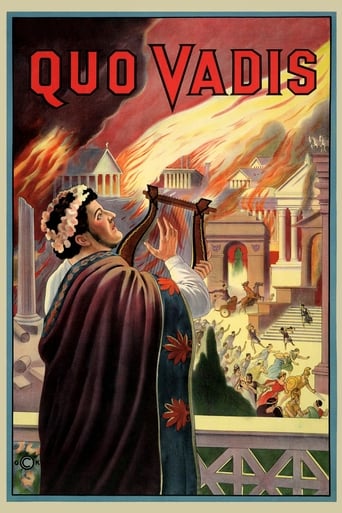
Cesare Moltini appears once in this catalog: Quo Vadis? (1913). His most notable work was in the 1913 Italian epic film 'Quo Vadis?', directed by Enrico Guazzoni, which was one of the first true epic films in cinema history. Moltini was part of the large ensemble cast that brought this ambitious adaptation of Henryk Sienkiewicz's novel to life during a period when Italian cinema was producing some of the most spectacular and technically advanced films in the world. His career appears to have been extremely brief, with records indicating he was only active in 1913. Like many actors from this very early period of cinema, detailed records of his life and career are scarce, as the film industry was still in its infancy and documentation was not as comprehensive as it would become in later decades. His contribution to 'Quo Vadis?' places him among the pioneers who helped establish the foundations of epic filmmaking.
The Craft
Milestones
- Appeared in the landmark 1913 epic film 'Quo Vadis?'
Best Known For
Iconic Roles
Must-See Films
Working Relationships
Worked Often With
Why They Matter
Impact on Culture
Cesare Moltini's contribution to cinema, while small, is part of the larger significance of 'Quo Vadis?' (1913) in film history. The film was groundbreaking for its time, featuring massive sets, thousands of extras, and sophisticated special effects that helped establish the epic film genre. As a participant in this landmark production, Moltini was part of a cinematic milestone that demonstrated the artistic and commercial potential of feature-length films. The success of 'Quo Vadis?' helped establish Italian cinema as a major force in the global film industry during the 1910s and influenced countless subsequent epic productions.
Lasting Legacy
Cesare Moltini's legacy is tied to his participation in. While his individual contribution may have been small, he was part of a production that helped define the possibilities of cinema as an art form. 'Quo Vadis?' (1913) remains a significant reference point for film historians studying the development of the epic genre and the technical innovations of early cinema. His name, preserved in the film's cast records, represents the many anonymous actors who contributed to cinema's foundational works.
Who They Inspired
Due to the extremely brief nature of his recorded career and the scarcity of documentation, there is no evidence of Cesare Moltini directly influencing other actors or filmmakers. His influence is primarily as part of the collective effort that created an influential early film that would inspire future generations of filmmakers in the epic genre.
Off Screen
Very little is documented about Cesare Moltini's personal life, which is typical for actors from this very early period of cinema when personal details of supporting cast members were rarely recorded or preserved.
Did You Know?
- Appeared in 'Quo Vadis?' (1913), one of the earliest epic films ever made
- The film was a massive Italian production featuring thousands of extras and elaborate sets
- His entire known film career consisted of a single year: 1913
- The film he appeared in was based on the Nobel Prize-winning novel by Henryk Sienkiewicz
- The 1913 'Quo Vadis?' was a major international success and helped establish the epic film genre
- Like many early cinema actors, his specific role in the film is not well documented
- The film was remade multiple times, most famously in 1951 by MGM
- He was part of Italian cinema's golden period before World War I
- The original film ran over two hours, exceptionally long for its time
Frequently Asked Questions
Who was Cesare Moltini?
Screen credits include the landmark 1913 epic 'Quo Vadis?'. His career was extremely brief, with records showing he was only active in 1913, making him one of the many early cinema pioneers whose contributions were limited but historically significant.
What films is Cesare Moltini best known for?
Titles linked here include Quo Vadis? (1913).
When was Cesare Moltini born and when did he die?
Unfortunately, detailed biographical information about Cesare Moltini, including his birth and death dates, has not been preserved in historical records. This is common for many supporting actors from the very early period of cinema.
What awards did Cesare Moltini win?
There are no records of Cesare Moltini receiving any awards or nominations. The formal award systems for cinema, such as the Academy Awards, were not established until many years after his brief career in 1913.
What was Cesare Moltini's acting style?
Specific details about Cesare Moltini's acting style are not documented in historical records. However, actors in this period of Italian cinema typically used the theatrical, exaggerated acting style common in silent films to convey emotions without dialogue.
Why is 'Quo Vadis?' (1913) historically significant?
The 1913 'Quo Vadis?' was revolutionary for its time, featuring massive sets, thousands of extras, and sophisticated special effects. It helped establish the epic film genre and demonstrated cinema's potential as a serious artistic medium, influencing countless future productions.