Clara Schønfeld
Actor
- Active
- 1925-1925
Films 2
About Clara Schønfeld
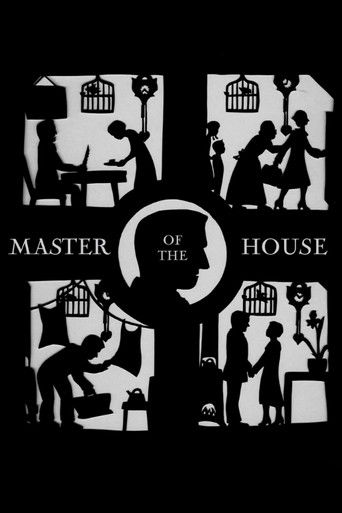
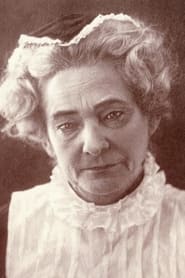
Clara Schønfeld is a little-documented Danish silent-era screen performer whose known film career is associated with only a small number of surviving credits, most notably Carl Theodor Dreyer's Master of the House (1925). Because the historical record on her is sparse, her biography is difficult to reconstruct in detail, and many standard reference works for silent cinema do not preserve extensive personal information about her life beyond her screen work. She appears to have been active at the height of Denmark's influential silent film period, when Scandinavian cinema was making a major artistic impact on international film style. Her participation in Master of the House places her within one of the most important landmarks of silent domestic drama and one of Dreyer's most enduringly studied films. Beyond this credit, there is no widely verified evidence of a long film career, major public life, or later celebrity profile. Her surviving legacy is therefore tied less to an individually documented star persona than to her presence in a canonical work of silent cinema. In film history terms, she represents the many early performers whose contributions are remembered through the films they helped bring to life, even when their personal histories remain largely unrecorded.
More about Clara Schønfeld
On screen
No detailed contemporary critical description of Clara Schønfeld's individual acting style is widely preserved. Based on her presence in a Dreyer film, her performance would have been shaped by the restrained, expressive, and psychologically grounded conventions favored in late silent Scandinavian cinema. Performances in this tradition typically relied on subtle gesture, naturalistic demeanor, and carefully modulated facial expression rather than broad theatrical display. However, without more surviving credits or reviews naming her specifically, any deeper characterization of her style would be speculative.
In film history
Clara Schønfeld's cultural impact is inseparable from the importance of the film in which she appeared rather than from a widely documented star biography. Master of the House is a cornerstone of silent cinema and a key work in the international reputation of Carl Theodor Dreyer, so every cast member connected with it forms part of a historically significant ensemble. Her presence in such a film places her within the broader cultural history of Scandinavian silent filmmaking, a movement admired for its realism, emotional precision, and influence on later art cinema. Even if her name is not widely known to general audiences, she contributes to the screen memory and historical texture of one of the era's canonical works.
Later reputation
Her lasting legacy is that of a silent-era performer preserved through a single major surviving credit in a landmark film. For historians, this kind of legacy is important because it reminds us that classic cinema was built not only by famous auteurs and stars but also by lesser-documented supporting performers whose work remains embedded in the film text itself. Clara Schønfeld's name endures wherever Master of the House is studied, restored, screened, or written about, linking her permanently to one of the defining achievements of Danish silent cinema. In that sense, her legacy is archival, historical, and filmological: she is remembered through the preservation and continued appreciation of the film she helped realize.
Influence
There is no verifiable evidence that Clara Schønfeld directly influenced later actors or filmmakers in a documented, personal sense. Her influence is best understood indirectly, through the continued study of Master of the House and the performance traditions of early Scandinavian cinema. By participating in a film that has remained central to discussions of silent-era acting and Dreyer's realism, she became part of a model later scholars and performers study for naturalistic screen expression. Her broader influence is therefore cumulative and historical rather than personal or celebrity-driven.
Off screen
Very little verifiable information survives about Clara Schønfeld's personal life. Standard reference sources do not consistently provide details about her family, marriages, education, or later life, and no well-documented public biography is readily available from commonly cited classic-film sources. As a result, her private life remains largely unknown to film historians and database researchers. This scarcity of information is not unusual for silent-era supporting performers, especially those who did not transition into a highly publicized star career or later sound-era visibility.
Credits
- Appeared in Carl Theodor Dreyer's Master of the House (1925), one of the most celebrated silent films in Danish cinema.
- Participated in a production that remains a key text in studies of domestic realism, gender relations, and silent-era performance.
- Represents the early Scandinavian screen artists whose work contributed to the international prestige of Nordic silent cinema.
Roles
- Cast member in Master of the House (1925)
Films
- Master of the House (1925)
Collaborators
Notes
- Clara Schønfeld is primarily known from a single major surviving screen credit rather than from a large filmography.
- Her credited work places her in the silent era, before the widespread transition to sound cinema.
- She appeared in a Carl Theodor Dreyer film, which gives her a connection to one of the most respected directors in world cinema.
- Because her documented career is so limited, she is often of interest mainly to researchers of early Danish film rather than general audiences.
- Her name appears with a Danish-style special character, which can make archival searching more difficult in some databases.
- She is an example of how many silent-era actors remain historically visible through film credits even when their biographies are poorly preserved.
Questions
Who was Clara Schønfeld?
Clara Schønfeld was a Danish silent-era actor known primarily for appearing in Master of the House (1925). Surviving historical information about her is very limited, so she is best understood through her contribution to an important classic film rather than through a detailed public biography.
What films is Clara Schønfeld best known for?
She is best known for Master of the House (1925), Carl Theodor Dreyer's celebrated silent domestic drama. At present, that is the principal surviving credit commonly associated with her in classic-cinema references.
When was Clara Schønfeld born and when did she die?
Her birth and death dates are not reliably documented in the available classic-cinema record, so they should be treated as unknown. The same applies to her place of birth and later life details, which are not clearly preserved in standard references.
What awards did Clara Schønfeld win?
No awards or official honors are currently verified for Clara Schønfeld in the historical record available for classic cinema research. Her significance comes from her participation in an important film rather than from a documented awards career.
What was Clara Schønfeld's acting style?
A precise individual style description is not well documented, but her work would have belonged to the restrained, expressive, and naturalistic performance traditions associated with late silent Scandinavian cinema. In a Dreyer film, that usually meant carefully controlled gesture and subtle facial expression rather than melodramatic exaggeration.
What is Clara Schønfeld's legacy in film history?
Her legacy is tied to the preservation and ongoing study of Master of the House, one of the great films of the silent era. She stands as part of the historical record of Danish cinema, representing the many performers whose work survives on screen even when their personal biographies do not.