Master of the House
"null"
Plot
Victor Frandsen is a domineering husband and father who rules his household with smug self-importance, criticizing his wife Ida and treating the family’s daily labor as though it were beneath him. While Ida quietly carries the burden of the home, Victor’s habit of complaining, moralizing, and asserting authority grows more intolerable, especially as his behavior is contrasted with her patience and competence. When Ida’s long-suffering endurance finally reaches its limit, the women in Victor’s life enlist an older family servant, Mads, and begin a subtle but devastating campaign to force him to experience the very domestic work he has scorned. Through a sequence of humiliations and forced self-awareness, Victor is brought to recognize Ida’s value and his own ingratitude, leading to a profound reversal in the household’s power dynamic and a reconciliation grounded in respect rather than control.
About the Production
Made in 1925 during Carl Theodor Dreyer’s early European period, Master of the House was a Scandinavian production associated with both Danish and German film interests, reflecting the transnational nature of silent-era financing and distribution. The film was adapted from Svend Rindom’s play Den store Magt and became one of Dreyer’s most accessible and popular works because it combines social satire, domestic realism, and a broadly appealing comedy-drama structure. Although it is a silent film, Dreyer’s careful visual emphasis on gestures, household spaces, and moral humiliation gives the work a striking psychological precision that anticipates his later masterpieces. Contemporary materials indicate the film was shot in Copenhagen and built around detailed interior settings that foreground the home as both a practical workplace and a battlefield of gender roles.
Historical Background
The film was made in 1925, in the late silent era, when Scandinavian cinema was no longer in its early international ascendency but still retained artistic prestige through filmmakers such as Carl Theodor Dreyer. Europe was still emerging from the social and economic disruptions of World War I, and debates about gender roles, labor, and modern family life were increasingly visible in public culture. In that environment, Master of the House stands out as a domestic comedy that uses everyday household conflict to dramatize shifting ideas about marriage, authority, and the recognition of women’s labor. Its setting and concerns also reflect the interwar middle-class home as a site of both emotional expectation and economic work, making the film resonate well beyond its immediate period. Historically, it matters because it shows Dreyer in a more broadly accessible register while still handling social critique with remarkable seriousness and finesse.
Why This Film Matters
Master of the House has endured as one of the most celebrated silent films about marriage because it treats domestic labor as culturally meaningful and morally central. Its depiction of a husband forced to confront the invisible work done by his wife has made it a recurring reference point in discussions of gender equity, emotional labor, and the politics of the household. The film is also important within Dreyer’s body of work because it demonstrates that his cinematic intelligence was not limited to religious or tragic subject matter; he could also create a humane, witty, and accessible social comedy without sacrificing depth. For many viewers and scholars, it remains a strikingly modern film because its critique of patriarchal complacency feels contemporary, and because its ending insists that love in marriage must be grounded in mutual respect rather than dominance.
Making Of
Master of the House was conceived at a moment when Dreyer was working in a commercially minded mode while still refining the formal discipline that would define his later films. Adapting Svend Rindom’s stage work gave him a strong narrative engine, but he transformed the material from straightforward domestic comedy into a precise study of behavior, routine, and power within a family. The film’s humor depends heavily on timing, framing, and performance detail, meaning that the production had to sustain a delicate balance between satire and sympathy so that Victor would remain absurd rather than merely hateful. Dreyer’s approach to domestic interiors turns the home into a tightly controlled space, and the film’s visual design supports the dramatic idea that every room, utensil, and chore participates in the argument about authority and gratitude.
Visual Style
The cinematography emphasizes enclosed domestic spaces, using interior staging to turn the home into a visual map of authority and resistance. Dreyer’s direction favors clear compositions and carefully observed gestures, allowing the audience to read the changing power dynamics through blocking, posture, and spatial relationships. The film’s visual style is relatively restrained compared with expressionist melodrama, but that restraint is part of its strength: ordinary rooms, stairs, doorways, and kitchen spaces become dramatic instruments. The camera and mise-en-scène work together to make domestic routine feel both comic and oppressive, with close attention to the physical labor of cooking, cleaning, and organizing the household.
Innovations
The film’s chief achievement lies not in spectacle but in control: Dreyer uses silent-era visual storytelling to make routine domestic actions carry dramatic and comic weight. Its precision in staging household labor, repeated actions, and small humiliations gives it a near-mechanical elegance, especially as Victor’s ignorance is exposed through a series of escalating domestic reversals. The film also demonstrates Dreyer’s ability to modulate tone so that satire never overwhelms emotional sincerity. In that sense, its technical distinction is the sophisticated integration of performance, mise-en-scène, and editing to transform a family dispute into a formally exact social comedy.
Music
As a silent film, Master of the House was originally exhibited with live musical accompaniment, which would have varied by venue and performance tradition. No single original score is universally established as definitive for all surviving presentations, though modern restorations and screenings often use newly prepared accompaniments tailored to silent-cinema exhibition. The film’s emotional rhythm is therefore partly dependent on the musical context of each screening, a common feature of silent-era works. Where restored prints are shown today, curated scores typically emphasize the comic timing as well as the underlying emotional reconciliation in the final movement.
Famous Quotes
Du skal ære din hustru
Master of the House
Memorable Scenes
- Victor’s increasingly absurd attempts to supervise the household as the women quietly outmaneuver him.
- The sequence in which Victor is forced into domestic tasks he has always dismissed, turning his confidence into embarrassment.
- The final emotional reconciliation in which he comes to understand Ida’s sacrifice and the value of her work.
Did You Know?
- Master of the House is widely regarded as Carl Theodor Dreyer’s warmest and most overtly comic film, especially unusual within a career more often associated with austerity and spiritual severity.
- The film is based on the Danish play Den store Magt by Svend Rindom, whose domestic premise Dreyer reshaped into a more visually expressive and emotionally nuanced screen drama.
- The story’s central role reversal was admired for its progressive treatment of housework, presenting domestic labor as real work rather than invisible feminine duty.
- The film was produced during the silent era but survives as a remarkably modern-feeling comedy of manners, with rhythm and staging that still play effectively for contemporary audiences.
- It has often been cited as one of the finest portrayals of marriage in early cinema because it builds humor from social observation rather than broad slapstick alone.
- Despite its lightness, the film is frequently discussed by scholars as an important statement about gender inequity and emotional labor within the home.
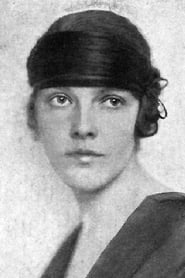
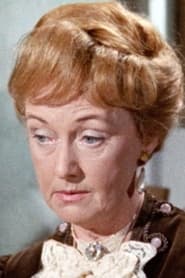
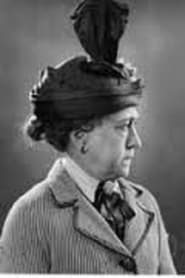
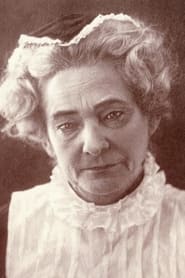
- The cast includes Astrid Holm as Ida, whose performance is central to the film’s emotional balance, and Johannes Meyer as Victor, whose authoritarian bluster gradually collapses into shame and self-knowledge.
- Karin Nellemose appears as the daughter Sigrid, helping anchor the film’s generational perspective on family life.
- The movie has remained a staple of silent-cinema retrospectives and Dreyer retrospectives because it shows another side of his artistry beyond martyrdom and transcendence.
- The English-language title Master of the House is the standard international title, but the film is also known in Danish as Du skal ære din hustru, a title that directly evokes the moral lesson at the center of the story.
What Critics Said
At the time of its release, the film was generally well received for its wit, craftsmanship, and unusually perceptive treatment of domestic life, and it helped broaden Dreyer’s reputation beyond more solemn dramatic work. Critics and later scholars have praised the film’s ability to blend comedy with moral seriousness, noting how the performances and visual design turn a simple premise into a layered social commentary. In retrospect, it is often ranked among Dreyer’s most approachable and most beloved works, admired for its tonal control and for Astrid Holm’s central performance. Modern criticism frequently highlights the film as one of the strongest early cinematic statements about the burdens of housework and the necessity of reciprocal respect in marriage.
What Audiences Thought
Contemporary audiences were receptive to the film’s blend of satire and sentiment, and its domestic premise made it broadly legible to viewers who might not have been drawn to more austere art films. Its comedy arises from recognizable marital tensions, which likely helped it travel well in international circulation despite its specifically Danish cultural texture. Over time, audiences have continued to respond to its humor, its emotional honesty, and the satisfaction of seeing Victor’s arrogance dismantled piece by piece. Silent-film audiences today often find it remarkably fresh because its situation comedy, character dynamics, and social critique remain easy to understand and still feel relevant.
Film Connections
Influenced By
- Svend Rindom's play Den store Magt
- Nordic stage comedy traditions
- Silent-era domestic melodramas and social comedies
This Film Influenced
- Later domestic comedies that center on role reversal and household labor
- Films and television stories about overbearing husbands forced to appreciate domestic work
- Silent-film restorations and retrospectives that revived interest in comedy within Dreyer's filmography
You Might Also Like
More Drama Films
View allMore from Carl Theodor Dreyer
View allFilm Restoration
The film is preserved and is available in restored form through archival and home-video releases; it is not considered lost.