

Our Hospitality
"McKay falls for a woman from a murderous clan"
Keys: Space play/pause · ←/→ 10s · F fullscreen · M mute · </> speed
About this film
A young man falls for a young woman on his trip home; unbeknownst to him, her family has vowed to kill every member of his family.
Cast & crew
More films like this

More Comedy films
View all →






More from Buster Keaton
View all →

More about this film
About the production
Release dateNovember 11, 1923
Budget$115,000
Box officeApproximately $500,000 (successful for its time)
ProductionBuster Keaton Productions, Metro Pictures Corporation
Filmed inTruckee, California, Lake Tahoe, California, Los Angeles, California, San Bernardino Mountains, California
The waterfall sequence was filmed at the Truckee River and involved extremely dangerous stunts. Keaton performed many of his own stunts including the famous scene where he hangs from a log over the waterfall. The production used a custom-built replica of a 1830s steam locomotive for the opening scenes. The film's period-accurate costumes and sets were meticulously researched to represent the 1830s Appalachian setting.
Themes
Family feuds and inherited conflictsThe power of love to overcome hatredSouthern hospitality versus Northern aggressionThe absurdity of holding grudgesCivilization versus frontier justice
Themes & topics
family feudwaterfall rescuetrain journeysouthern hospitalityromancedangerous stuntsinheritancemountain settingsilent comedyphysical comedy
Historical background
Made during the studio era of 1923, Our Hospitality reached audiences through theatrical programs, fairground booths, or specialized distribution channels typical of its generation. A young man falls for a young woman on his trip home; unbeknownst to him, her family has vowed to kill every member of. Historians now read such works for what they reveal about production methods, national taste, and the expanding vocabulary of screen narrative.
Why this film matters
Archivists and programmers still screen Our Hospitality when tracing how popular entertainment evolved. Its subject—a young man falls for a young woman on his trip home; unbeknownst to him, her family has vowed to—gives later viewers tangible evidence of what drew crowds in the silent period. Home video, restorations, and festival sidebars keep the title circulating among students of film history.
Making of
The production of 'Our Hospitality' was particularly challenging due to its ambitious outdoor sequences and dangerous stunts. Keaton and his team spent weeks scouting locations in California that could pass for 1830s Appalachia. The famous waterfall sequence required extensive planning and safety measures, though Keaton still insisted on performing the most dangerous elements himself. The custom-built steam locomotive used in the opening scenes was a major expense but crucial for the film's period authenticity. The relationship between Buster Keaton and Natalie Talmadge was already showing signs of strain during filming, though they maintained professional chemistry on screen. Joe Roberts, who had been Keaton's regular antagonist in several films, was in poor health during production but delivered a powerful performance as the Canfield patriarch.
What critics said
Original trade coverage treated Our Hospitality as routine program filler rather than a landmark production—typical of steady studio output. Later criticism emphasizes preservation, stylistic comparison with contemporaries, and whatever cast or crew names later gained prominence. Contemporary writing is mostly historical: assessing completeness, influence, and place in a director's or studio's catalog.
Did you know?
- Natalie Talmadge, who plays Virginia, was Buster Keaton's real-life wife at the time. This was their second film together.
- The waterfall rescue scene was so dangerous that the insurance company initially refused to cover it. Keaton performed the stunt himself, hanging from a log over the actual waterfall.
- The film is loosely based on the real-life Hatfield-McCoy feud that occurred in the late 19th century between families in West Virginia and Kentucky.
- The train sequence features a historically accurate replica of an early 1830s steam locomotive, built specifically for the film.
- Joe Roberts, who plays the patriarch of the Canfield family, died shortly after completing this film, making it one of his final performances.
- The film's title was originally going to 'The Hospitality' but was changed to 'Our Hospitality' for marketing purposes.
- Keaton considered this one of his favorite films among his own works because it balanced comedy with genuine drama and romance.
- The waterfall sequence took three weeks to film and required multiple camera setups to capture the various angles of the dangerous stunt.
- The film was preserved by the Library of Congress in the National Film Registry in 1995 for its cultural, historical, and aesthetic significance.
- Keaton's character's full name is William McKay, but he's called Willie throughout the film.
Awards & recognition
- National Board of Review - Top Ten Films of 1923
- Library of Congress National Film Registry (inducted 1995)
Visual style
The cinematography by Elgin Lessley and Devereaux Jennings was groundbreaking for its time, particularly in the outdoor sequences. The waterfall scene employed multiple cameras to capture the stunt from various angles, a technique that was relatively innovative in 1923. The train sequences utilized tracking shots that followed the locomotive with remarkable smoothness, creating a sense of movement and scale that enhanced the film's epic feel. The interior scenes in the Canfield home used natural lighting from windows to create a realistic period atmosphere. The cinematography effectively balanced wide shots that showcased the dangerous landscapes with close-ups that captured Keaton's famously expressive face, creating a visual rhythm that supported both the comedic and dramatic elements.
Innovations
The film's most significant technical achievement was the execution of the waterfall rescue sequence, which required innovative camera rigging and stunt coordination. The production team developed special safety equipment that was invisible on camera but allowed Keaton to perform the dangerous hanging stunt with reduced risk. The custom-built steam locomotive represented a major technical accomplishment, as it was fully functional and historically accurate. The film also employed sophisticated editing techniques, particularly in the action sequences, where cross-cutting between different characters and locations created tension and narrative complexity. The use of location shooting in natural settings, rather than relying entirely on studio sets, was relatively ambitious for the time and contributed to the film's visual authenticity.
Music
As a silent film, 'Our Hospitality' was originally accompanied by live musical performances in theaters. The typical score would have included popular songs of the era, classical pieces, and original compositions tailored to the on-screen action. Modern restorations have featured newly commissioned scores by composers such as Robert Israel and Carl Davis, who created music that reflects the film's blend of comedy, romance, and danger. The waterfall sequences typically feature dramatic, percussive music to heighten the tension, while the romantic moments are accompanied by softer, melodic themes. The train scenes often incorporate rhythmic, mechanical music that mimics the motion of the locomotive.
Famous quotes
Intertitle: 'Born in the mountains of Kentucky, 1830. The Canfields and McKays had been feuding for so long, nobody remembered how it started.'
Intertitle: 'The Canfields had sworn to kill every McKay on sight, but they were bound by Southern hospitality.'
Intertitle: 'Willie McKay, returning to his ancestral home after twenty years in New York.'
Intertitle: 'A guest in the house of his enemies.'
Intertitle: 'The Canfields wouldn't kill him while he was their guest, but they were getting impatient.'
Memorable scenes
- The opening train sequence where Willie meets Virginia, featuring the historically accurate steam locomotive and romantic interplay between the characters.
- The dinner scene where Willie tries to remain a guest in the Canfield home while the family members subtly try to get him to leave so they can kill him.
- The iconic waterfall rescue sequence where Willie saves Virginia's brother from going over the falls, culminating in his own dangerous plunge while hanging from a log.
- The chase scene through the mountain terrain where Willie uses his wits and physical agility to escape the Canfield brothers.
- The final reconciliation scene where the feuding families come together after witnessing Willie's bravery.
What audiences thought
Audiences in 1923 embraced 'Our Hospitality' enthusiastically, making it one of Keaton's most commercially successful films. The combination of romance, danger, and comedy appealed to a broad demographic, from young adults to families. The waterfall sequence became a talking point among moviegoers, with many returning to theaters specifically to rewatch that scene. The film's success helped establish Keaton as one of the three giants of silent comedy alongside Charlie Chaplin and Harold Lloyd. Modern audiences rediscovering the film through revival screenings and home video continue to be impressed by its technical achievements and timeless humor, with many noting how well the physical comedy translates across generations.
Film connections
Influenced by
- The Hatfield-McCoy feud (historical event)
- Shakespeare's Romeo and Juliet (family feud theme)
- Mark Twain's writings on Southern culture
- D.W. Griffith's The Birth of a Nation (for period detail)
- Harold Lloyd's safety last (for stunt inspiration)
This film influenced
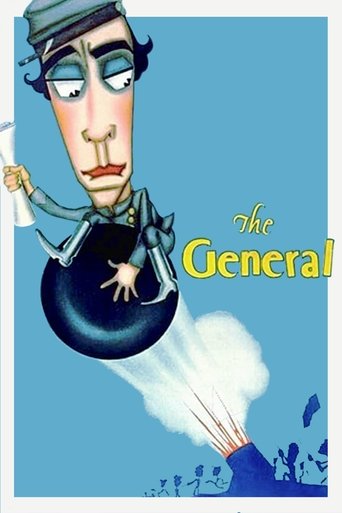
- The General (1926) - Keaton's own later work
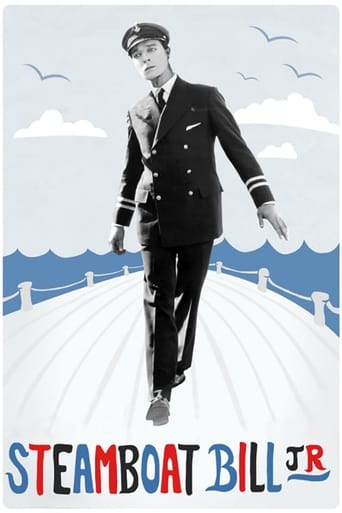
- Steamboat Bill, Jr. (1928) - for stunt sequences
- Jackie Chan's action comedies (for physical comedy integration)
- The Princess Bride (1987) - for blend of comedy and romance
- O Brother, Where Art Thou? (2000) - for period comedy elements
Film restoration
The film is well-preserved with multiple surviving copies in various archives. The Library of Congress maintains a complete 35mm print, and the film has been digitally restored by several organizations including the Cohen Film Collection. The restoration process has cleaned up damage and stabilized the image while preserving the original cinematography. The film was selected for preservation in the United States National Film Registry by the Library of Congress in 1995, recognizing its cultural, historical, and aesthetic significance. Several versions exist with different musical scores, but the visual content remains consistent across all preserved copies.
Where to watch
- The Criterion Collection (Blu-ray/DVD)
- Kino Lorber (Blu-ray/DVD)
- The Criterion Channel (streaming)
- YouTube (official uploads)
- Amazon Prime Video (various editions)
- Film Movement Plus (streaming)
- Turner Classic Movies (occasional broadcasts)
- MUBI (streaming)