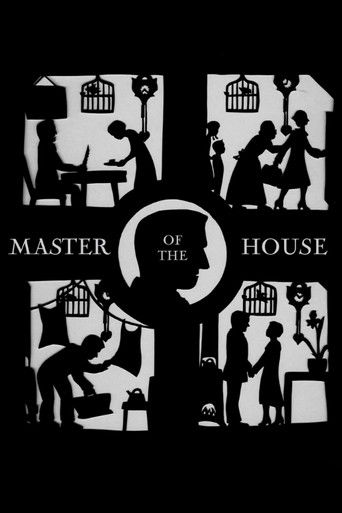

Petrine Sonne
Actor
- Active
- 1925-1925
Films 1
About Petrine Sonne
Petrine Sonne was a Danish actress of the silent-film era, best remembered today for appearing in Carl Theodor Dreyer's 1925 masterpiece Master of the House (Du skal ære din hustru). She belonged to the generation of Scandinavian performers who worked in a film culture shaped by stage tradition, restrained screen acting, and the expressive visual storytelling of silent cinema. Available records about her life are limited, and detailed biographical information such as her birth and death dates, family background, and later career is not well documented in widely accessible film reference sources. What is clear is that her screen work places her within one of the most important artistic movements of the 1920s in European cinema, where Danish filmmaking briefly exerted major international influence. Her surviving film credit in Master of the House associates her with Dreyer's humane, domestic drama, which became one of the most admired Scandinavian films of the silent era. Because her filmography appears to be extremely small or incompletely preserved, she is best understood as a minor but historically significant participant in early Danish cinema rather than a star with an extensive surviving body of work.
More about Petrine Sonne
On screen
No detailed contemporary critical description of Petrine Sonne's individual acting style appears to be widely preserved, but as a performer in a Dreyer film she would have been expected to work in the restrained, psychologically grounded mode characteristic of Scandinavian silent cinema. Performances in this tradition generally emphasized natural gesture, expressive facial detail, and carefully calibrated physical movement over broad theatrical display. Her screen presence is therefore best understood in the context of ensemble realism and domestic observation rather than star-centered melodramatic exhibitionism.
In film history
Petrine Sonne's cultural importance lies less in celebrity status than in her connection to one of the canonical works of silent cinema. Master of the House is regularly cited in film history for its sensitive depiction of marriage, authority, and domestic labor, and every credited performer in the film becomes part of that enduring legacy. Even a modest or briefly documented screen career can matter greatly when attached to a film that survives as a touchstone for scholars, programmers, and cinephiles. Sonne therefore occupies a place in cultural memory as one of the many performers whose work helped shape the texture of early Danish realism. Her presence also reminds modern audiences that film history is built not only by directors and stars, but by the full ensemble of actors whose performances give classic films their emotional force.
Later reputation
Petrine Sonne's legacy is tied primarily to preservation through association: she remains visible because Master of the House has endured as one of the most admired silent films from Denmark. In film-history terms, that makes her part of the supporting cast of European cinema's formative period, when subtle acting and domestic stories were being refined into an art form. Although she does not appear to have left behind a broad documented filmography or a widely publicized star persona, her contribution is still meaningful within the historical record of Dreyer's work. For modern databases and archives, she represents the category of performer whose name survives because a single important film survived and continued to be studied. Her lasting legacy is therefore archival and historical, but nonetheless real: she is part of the living chain of artists who made silent cinema one of the foundational periods of world film.
Influence
There is no evidence that Petrine Sonne directly influenced major later performers in the way a star or celebrity acting teacher might, but her work contributes to the broader influence of Danish silent-film performance style. The controlled, psychologically attentive acting seen in films like Master of the House helped establish standards for screen naturalism that later filmmakers and actors continued to value. By participating in Dreyer's cinema, she became part of a tradition that influenced art-film acting across Europe and beyond, especially in the use of understatement and emotional precision. Her indirect influence is therefore historical and aesthetic rather than personal or traceable to specific protégés.
Off screen
Reliable public information about Petrine Sonne's personal life is scarce. Widely available film reference material does not clearly document her marriages, children, or later private life, and she does not appear to have been a public figure whose biography was extensively recorded in major international film histories. As a result, most discussions of her today focus almost entirely on her film credit in Master of the House rather than on personal background. Any fuller reconstruction of her life would likely require access to Danish archival sources, contemporary trade papers, or local civil records.
Credits
- Appeared in Carl Theodor Dreyer's Master of the House (1925), one of the landmark films of Scandinavian silent cinema
- Participated in Denmark's influential silent-film culture during the mid-1920s
- Is associated with a film that has remained a major reference point in studies of Dreyer and domestic melodrama
- Represents the often-overlooked supporting performers whose work helped define the realism and emotional nuance of silent-era Danish filmmaking
Roles
- Cast member in Master of the House (1925)
Films
- Master of the House (1925)
Collaborators
Studios
- Danish silent-film production circles
Notes
- Petrine Sonne is most closely associated with a single surviving classic film, Master of the House (1925).
- Her credited work places her within Carl Theodor Dreyer's body of early masterpieces.
- She belongs to the important but often under-documented group of silent-era supporting players.
- Because her biographical record is sparse, she is primarily studied through film credit and archival reference rather than personal publicity.
- Master of the House is often discussed for its humane and domestic realism, making every cast member part of a highly regarded ensemble.
- Her career illustrates how many silent-era performers remain partially lost to history even when the films themselves survive.
- She is a representative figure of Danish cinema's international prestige in the 1920s.
Questions
Who was Petrine Sonne?
Petrine Sonne was a Danish silent-film actress best known for appearing in Carl Theodor Dreyer's Master of the House (1925). Her surviving public record is limited, but she is part of the historically important generation of performers active in Denmark's celebrated silent-era cinema.
What films is Petrine Sonne best known for?
She is best known for Master of the House (1925), the Carl Theodor Dreyer film that remains her most significant and widely documented screen credit. No other major surviving film credits are firmly established in widely accessible reference sources.
When was Petrine Sonne born and when did she die?
Her birth and death dates are not reliably documented in the readily available mainstream film reference record. Likewise, her exact birthplace has not been clearly preserved in commonly accessible sources.
What awards did Petrine Sonne win?
No awards or nominations are currently documented for Petrine Sonne in the standard public film references available for this period. Like many silent-era supporting players, her historical visibility comes from film preservation rather than awards recognition.
What was Petrine Sonne's acting style?
There is no detailed critical profile preserved specifically for her, but as a performer in a Dreyer film she would have worked within the restrained, naturalistic style associated with Scandinavian silent cinema. That style emphasized subtle expression, believable movement, and emotional clarity rather than broad theatrical gestures.
What is Petrine Sonne's legacy in film history?
Her legacy is tied to Master of the House, one of the great surviving films of the silent era and a cornerstone of Dreyer's reputation. She stands as part of the ensemble of performers whose work helped define the emotional realism of Danish silent cinema.