
The Doll
"He buys a lifelike doll to dodge marriage—and meets the maker's daughter."
Keys: Space play/pause · ←/→ 10s · F fullscreen · M mute · </> speed
About this film
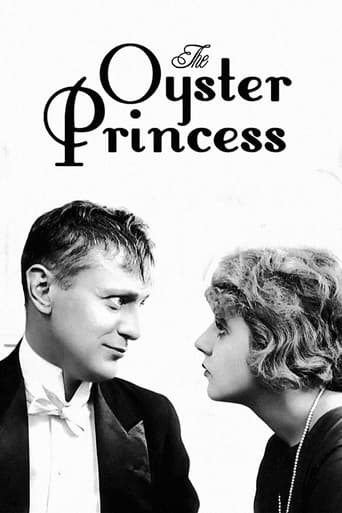
Inheritance requires marriage young man who must get married in order to inherit a fortune. He opts to purchase a remarkably lifelike doll and marry it instead, not realizing that the doll is actually the dollmaker’s flesh-and-blood daughter in disguise.
Cast & crew
More films like this
More Comedy films
View all →







More from Ernst Lubitsch
View all →
More about this film
About the production
Release dateOctober 3, 1919
ProductionProjektions-AG Union (PAGU)
Filmed inBerlin, Germany
The film was based on the operetta 'La Poupée' by Edmond Audran, which itself was adapted from a tale by E.T.A. Hoffmann. Ernst Lubitsch employed innovative special effects for the doll sequences, including stop-motion techniques and elaborate mechanical props. The production design featured highly stylized, expressionistic sets that contrasted with the film's light-hearted tone. Ossi Oswalda's performance required her to mimic mechanical movements convincingly while maintaining the illusion of being a doll come to life.
Themes
Appearance vs. RealityFreedom of ChoiceLove and MarriageTechnology and HumanitySocial Convention
Themes & topics
arranged marriagedolldisguiseinheritancecomedy of errorsromancefantasymistaken identitymechanical dolllove
Historical background
Released around 1919, The Doll emerged while exhibitors were still defining how longer narratives could hold nickelodeon audiences.
Why this film matters
Archivists and festival programmers revisit The Doll (1919) because it documents performance styles and craft choices that later mainstream releases refined or replaced.
Making of
Ernst Lubitsch's direction of 'The Doll' showcased his emerging signature style of visual wit and sophisticated comedy. The production faced significant technical challenges in creating believable doll sequences, with the special effects team having to invent new techniques for the period. Ossi Oswalda had to undergo extensive training to perfect the mechanical movements required for her role as the living doll. The film's elaborate sets were designed by Kurt Richter and featured a blend of expressionistic and whimsical elements. Lubitsch worked closely with cinematographer Theodor Sparkuhl to achieve the film's distinctive visual style, using innovative camera angles and lighting techniques. The production was completed in just a few weeks, typical of the rapid production schedules of German cinema at the time.
What critics said
Modern retrospectives screen The Doll for craft context: performances, pacing, and camera choices that illustrate 1919 norms more than revolutionary leaps.
Did you know?
- The film was one of Ernst Lubitsch's last German productions before he moved to Hollywood in 1922
- Ossi Oswalda was known as the 'German Mary Pickford' and was Lubitsch's favorite leading lady
- The doll sequences were achieved through a combination of mechanical props and clever editing tricks
- The film's original German title was 'Die Puppe'
- Lubitsch remade the story in 1925 as 'Kiss Me Again' with different cast
- The film was considered lost for decades before a print was discovered and restored
- The expressionistic set design influenced the visual style of many later German comedies
- The film's success helped establish Lubitsch's international reputation excelled in sophisticated comedy
- The mechanical doll scenes required multiple takes due to the complexity of the special effects
- The film premiered during the early Weimar Republic period, reflecting the era's fascination with technology and automation
Visual style
The cinematography by Theodor Sparkuhl featured innovative techniques for the period, including creative use of lighting to enhance the film's fantastical elements. The camera work employed dynamic angles and movements that were relatively advanced for 1919, particularly in the doll workshop sequences. The visual style blended expressionistic influences with the more naturalistic approach needed for comedy. Sparkuhl used soft focus techniques to create dreamlike effects in the fantasy sequences while maintaining clarity for the comedic moments. The film's visual language helped establish the sophisticated aesthetic that would become associated with Lubitsch's later Hollywood work.
Innovations
The film featured pioneering special effects for its mechanical doll sequences, combining practical effects, stop-motion techniques, and clever editing. The production team created elaborate mechanical props that could convincingly simulate doll movements. The film's set design incorporated movable elements and trap doors to enhance the magical realism of the story. The editing techniques used to create the illusion of the doll coming to life were particularly innovative for the period. The film demonstrated early mastery of continuity editing and visual storytelling techniques that would become standard in cinema.
Music
As a silent film, 'The Doll' was originally accompanied by live musical performance, typically a piano or small orchestra in theaters. The score would have been compiled from existing classical pieces and popular music of the era, with specific musical cues matched to the on-screen action. Modern restorations have featured newly composed scores by contemporary musicians specializing in silent film accompaniment. The musical style would have ranged from whimsical and light during comedic scenes to more romantic themes for the love story elements. The absence of recorded dialogue allowed for greater emphasis on visual storytelling and musical interpretation.
Famous quotes
A doll is better than a wife - she doesn't talk back and never grows old
In this world, everyone is wearing a mask. The trick is finding the person behind it
Love is the most mechanical of all human emotions - it follows its own rules
Memorable scenes
- The opening sequence in the dollmaker's workshop, where the mechanical dolls come to life with jerky, synchronized movements
- Ossi's transformation from living girl to mechanical doll, achieved through subtle changes in movement and expression
- The wedding ceremony where the Baron attempts to marry what he believes is a doll, leading to increasingly awkward and hilarious situations
- The reveal scene where Ossi's true identity is discovered, combining surprise with genuine emotional impact
What audiences thought
The Doll was a commercial success in Germany upon its release, appealing to audiences seeking light entertainment during the difficult post-war period. Contemporary audiences particularly enjoyed the film's fantasy elements and the comedic performance of Ossi Oswalda. The film's popularity helped establish Oswalda as a major star of German cinema and contributed to Lubitsch's growing reputation. Modern audiences, through screenings of restored versions, have rediscovered the film's charm and technical sophistication, with it now being regarded as a classic of silent cinema.
Film connections
Influenced by
- La Poupée (operetta by Edmond Audran)
- Works of E.T.A. Hoffmann
- German Expressionist cinema
- Commedia dell'arte traditions
This film influenced
- Kiss Me Again (1925)
- The Doll (1922 Russian version)
- Modern Times (1936)
- Blade Runner (1982)
- Her (2013)
Film restoration
The film was believed lost for many years before a complete print was discovered and restored. The restored version has been preserved by several film archives including the Museum of Modern Art and the Deutsche Kinemathek. The restoration work has returned the film to near-original quality, allowing modern audiences to appreciate its visual artistry and technical achievements.
Where to watch
- The Criterion Collection
- Kino Lorber DVD releases
- Mubi streaming service
- Film archives and museums
- YouTube (some public domain versions)