

Leaves from Satan's Book
"1921 film by Carl Theodor Dreyer"
Keys: Space play/pause · ←/→ 10s · F fullscreen · M mute · </> speed
About this film
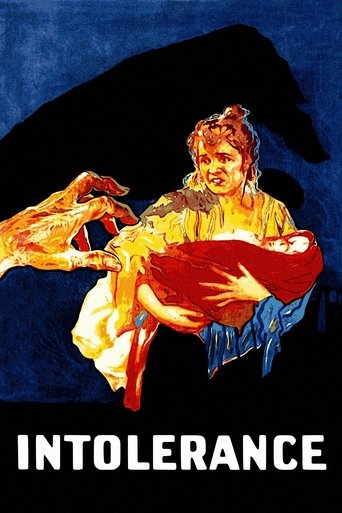
Structured much like D.W. Griffith's Intolerance with its episodic nature while evoking F. The film ran 157 minutes, but sources list the DVD's running time at 121 minutes. Troy Howarth states "If not for the presence of Satan, wouldn't warrant inclusion in a study of the horror genre; in truth it's more of a quaint pageant play than a horror film..The cast emotes to a degree too theatrical for even silent cinema."
Cast & crew
More films like this
More Drama films
View all →







More from Carl Theodor Dreyer
View all →
More about this film
About the production
Release dateOctober 24, 1921 (Denmark)
Box officeUnknown
ProductionNordisk Film
Filmed inCopenhagen, Denmark, Studio settings in Denmark
This was Carl Theodor Dreyer's third feature film and his most ambitious production to date. The film required elaborate sets and costumes for four different historical periods. Dreyer insisted on historical accuracy in costumes and settings, working closely with art directors to create authentic environments. The production faced challenges in creating convincing period pieces on a limited budget, leading to creative solutions in set design and cinematography.
Themes
The nature of evilDivine providence vs. free willBetrayal and redemptionThe persistence of evil throughout historyHuman weakness and temptation
Themes & topics
anthologyhistorical dramareligious themesSatanbetrayalSpanish InquisitionFrench RevolutionFinnish Civil WarJesus ChristMarie Antoinettetemptationredemptionsilent film
Historical background
Leaves from Satan's Book (1921) circulated in the silent era. The film is structured much like D.W. Contemporary trade papers and later preservation notes document its place among nickelodeon and cinema-club programs.
Why this film matters
Leaves from Satan's Book remains accessible to researchers and viewers as a screen title in museum, archive, and streaming collections. This was only the third film directed by Dreyer, who later went on to create such classics as Vampyr (1932) and The Passion of Joan of Arc (1928).
Making of
The production of 'Leaves from Satan's Book' was a monumental undertaking for the Danish film industry in 1921. Director Carl Theodor Dreyer, only 33 years old at the time, was given unprecedented creative control and a substantial budget. The film required the construction of four distinct historical worlds, from ancient Jerusalem to revolutionary France. Dreyer worked closely with cinematographer George Schnéevoigt to develop innovative camera techniques, including complex tracking shots that were rare in silent cinema. The casting of Helge Nissen as Satan was a deliberate choice by Dreyer, who wanted a mature, dignified actor rather than a stereotypical villain. Nissen underwent extensive makeup transformations for each historical period. The Spanish Inquisition sequence proved particularly challenging to film, as Dreyer insisted on authentic torture chamber recreations that shocked some crew members. The French Revolution scenes involved hundreds of extras and required meticulous choreography to capture the chaos of the period.
What critics said
Retrospective writing highlights Leaves from Satan's Book for its craft and historical interest. This was only the third film directed by Dreyer, who later went on to create such classics as Vampyr (1932) and The Passion of Joan of Arc (1928).
Did you know?
- The film was originally intended to have seven episodes, but was reduced to four due to budget constraints and production difficulties.
- Helge Nissen, who plays Satan, was one of Denmark's most respected stage actors and was 54 years old when he took on this role.
- The film was considered lost for decades until a complete print was discovered in the Danish Film Archive in the 1980s.
- Dreyer was heavily influenced by D.W. Griffith's 'Intolerance' (1916) in his approach to telling multiple historical stories.
- The Finnish Civil War segment was particularly controversial in Finland due to its recent and sensitive nature at the time of release.
- The film's original Danish title 'Blade af Satans Bog' translates literally to 'Pages from Satan's Book'.
- Dreyer used innovative tracking shots and mobile camera techniques that were advanced for the time.
- The film was among the costliest Danish productions of its era, costing approximately 1 million Danish kroner.
- Despite its artistic merits, the film was a commercial failure in Denmark, leading to Dreyer's temporary departure from Nordisk Film.
- The intertitles were written by renowned Danish poet and author Sophus Michaëlis.
Awards & recognition
- No major awards were given to this film upon its release
Visual style
The cinematography by George Schnéevoigt was revolutionary for its time, employing advanced techniques that would influence European cinema for years to come. Schnéevoigt used extensive tracking shots and mobile camera movements to create dynamic visual narratives, particularly in the crowd scenes during the French Revolution sequence. The film employed sophisticated lighting techniques to create dramatic contrasts between light and shadow, symbolizing the eternal struggle between good and evil. Each historical period was given a distinct visual aesthetic: the biblical sequences used soft, ethereal lighting; the Inquisition scenes featured harsh, stark contrasts; the Revolution segments utilized chaotic, handheld camera work; and the Finnish Civil War employed naturalistic, documentary-style photography. The film's visual vocabulary helped establish Dreyer's signature style of using composition and lighting to convey psychological and spiritual states.
Innovations
The film pioneered several technical innovations that would influence cinema for decades. Dreyer and his team developed advanced techniques for historical reconstruction, creating detailed period sets that set new standards for authenticity in historical films. The production employed sophisticated makeup and prosthetic techniques to age Helge Nissen appropriately for each historical period. The film's use of cross-cutting between different time periods to create thematic parallels was groundbreaking and influenced later epic films. The crowd scenes in the French Revolution segment featured some of the most complex choreography and staging of the era, requiring coordination of hundreds of extras. The film's preservation and restoration in the 1980s also pioneered new techniques for reconstructing damaged silent films from multiple sources.
Music
As a silent film, 'Leaves from Satan's Book' would have been accompanied by live musical performance during its original theatrical run. The score would have varied by theater and location, typically featuring a combination of classical pieces and original compositions. For the film's restoration and modern screenings, various composers have created new scores, including notable versions by Gillian B. Anderson and Timothy Brock. The original Danish premiere likely featured orchestral accompaniment with pieces ranging from Gregorian chants for the biblical sequences to dramatic Romantic compositions for the revolutionary scenes. The film's rhythmic editing and visual pacing suggest careful consideration of musical accompaniment during its creation.
Famous quotes
(Intertitle) 'I am Satan, the eternal rebel against God's tyranny'
(Intertitle) 'In every age, I find willing hands to do my work'
(Intertitle) 'Betrayal is the oldest sin, yet always fresh'
(Intertitle) 'Even in revolution, God's hand guides the chaos'
(Intertitle) 'Evil exists only because good allows it to serve a greater purpose'
Memorable scenes
- The Last Supper sequence where Satan tempts Judas with silver, using innovative lighting to create an otherworldly atmosphere
- The Spanish Inquisition torture chamber scenes, which were shockingly realistic for their time
- The storming of the Bastille sequence with hundreds of extras and dynamic camera movement
- The final confrontation between Satan and the divine presence, where Dreyer used double exposure techniques to create a spiritual effect
- The transition scenes between episodes, where Satan transforms to match each historical period
What audiences thought
The film was not a commercial success upon its initial release, largely due to its length and challenging themes. Danish audiences found the film's religious content and historical scope demanding compared to more conventional entertainment of the era. However, the film developed a cult following among intellectuals and cinema enthusiasts who appreciated its artistic merits. The Finnish Civil War segment proved particularly divisive among Finnish audiences, given the recent and painful nature of those events. In subsequent decades, as the film was rediscovered and restored, it has found appreciation among art house audiences and film students who recognize its historical importance and artistic achievements.
Film connections
Influenced by
- D.W. Griffith's 'Intolerance' (1916)
- Danish literary tradition
- Biblical stories
- Historical chronicles
- Religious allegory
- Expressionist cinema
This film influenced
- Dreyer's later films including 'The Passion of Joan of Arc'
- Historical anthology films
- Religious epics
- Finnish historical dramas
- Danish art cinema
Film restoration
The film was considered partially lost for decades but was restored in the 1980s by the Danish Film Institute. A complete version was reconstructed from multiple sources including Danish and international prints. The restored version runs 146 minutes and represents the most complete version of Dreyer's original vision. The restoration involved digital cleaning and color tinting based on original distribution materials. The film is now preserved in the Danish Film Archive and has been released on Blu-ray by Criterion Collection with extensive special features.
Where to watch
- The Criterion Collection Blu-ray/DVD release
- Streaming on The Criterion Channel
- Available on some specialty streaming services specializing in classic cinema
- Occasionally screened at film festivals and cinematheques
- Digital copies available through some educational film archives