Johannes Nielsen
Actor
- Active
- 1925-1925
Films 1
About Johannes Nielsen
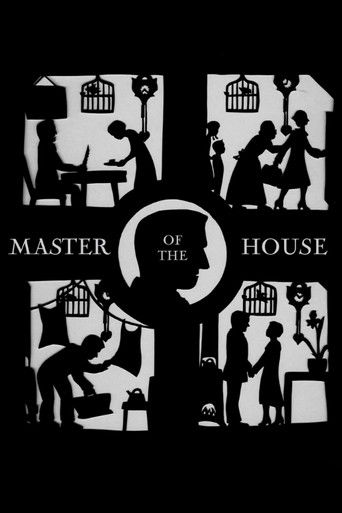
Johannes Nielsen is a very obscure silent-era screen performer whose documented film career, as far as currently verifiable evidence shows, is limited to an appearance in Carl Theodor Dreyer's 1925 masterpiece Master of the House (Du skal ære din hustru). Because he appears in only a tiny surviving film footprint under this exact name, very little biographical information has been reliably preserved in standard film references. He is best understood as a minor figure in early Danish cinema rather than a major star, and there is no widely confirmed record of a broader acting career, stage background, or later work in sound film. His association with Master of the House is nevertheless historically important, since the film is one of Dreyer's most admired silent features and a landmark in Scandinavian cinema. Beyond this single credited or identifiable screen appearance, the historical record does not presently provide dependable details about his life, training, family, or later years. As a result, any fuller biography would require archival research in Danish theater, municipal, or studio records beyond the commonly accessible filmographies. In movie-database contexts, he should be treated as a documented but extremely little-known actor from the silent era whose significance derives primarily from his participation in a canonical film.
More about Johannes Nielsen
On screen
No reliable contemporary reviews or surviving performance documentation specifically describe Johannes Nielsen's individual acting style. Given his association with a Dreyer silent film, his work would likely have relied on the restrained, visually expressive techniques typical of Scandinavian silent cinema rather than the more exaggerated mannerisms associated with earlier melodramatic traditions. However, because no detailed biographical or critical record survives for him as a performer, any specific characterization of his style would be speculative.
In film history
Johannes Nielsen's cultural impact is tied almost entirely to his presence in Master of the House, a film now recognized as a cornerstone of silent cinema and one of Carl Theodor Dreyer's major achievements. Even performers with very limited surviving screen work can become historically significant when attached to canonical films that continue to be studied, restored, and screened worldwide. In that sense, Nielsen contributes to the textured ensemble performance that helps make the film durable as both social comedy and domestic drama. His name also serves as an example of the many underdocumented actors who participated in early European cinema and whose careers are often visible only through surviving credits and production records.
Later reputation
Nielsen's legacy is primarily archival and film-historical rather than star-based. He represents the many minor or semi-identified performers whose work survives inside major silent films even when their personal histories do not. For scholars and database users, his presence in Master of the House makes him part of the film's enduring cultural memory, and his credited participation ensures that his name remains linked to one of the great films of the 1920s. His limited documentation also highlights the fragility of early cinema recordkeeping and the importance of preserving cast information for historical accuracy.
Influence
There is no evidence that Johannes Nielsen directly influenced later performers in a documented or traceable way. His importance is indirect: by appearing in a film of high aesthetic and historical status, he became part of the performance tradition associated with Dreyer's cinema and Scandinavian silent film realism. In broader terms, the preserved record of his role helps reinforce the historical map of early Danish screen acting, even if his individual artistic influence cannot be specifically established.
Off screen
No dependable public information is currently available about Johannes Nielsen's personal life, including his upbringing, marriages, children, occupation outside acting, or later years. Unlike major screen figures of the silent era, he does not appear to have left a substantial published trail in standard biographical sources. His life story remains largely undocumented in accessible film history references, and any claims about his family or private affairs would be conjectural.
Credits
- Appeared in Carl Theodor Dreyer's acclaimed silent film Master of the House (1925)
- Participated in one of the most celebrated works of early Danish and Scandinavian cinema
- Is part of the historical cast of a film often cited in studies of domestic realism and silent-era performance
Roles
- Role in Master of the House (1925)
Films
- Master of the House (1925)
Collaborators
Notes
- Johannes Nielsen is known in film records almost exclusively for his involvement in Master of the House (1925).
- He appears to be a very obscure silent-era actor with no widely preserved biographical profile in standard reference sources.
- His surviving filmography, as commonly compiled, suggests an extremely limited or at least extremely poorly documented screen career.
- Master of the House is a major Carl Theodor Dreyer film, so even small cast members benefit from association with a canonical work.
- Because he shares a common Scandinavian name, care must be taken not to confuse him with unrelated modern or non-film figures of the same name.
- His record is a good example of how many early film performers remain historically visible mainly through cast listings rather than full biographies.
Questions
Who was Johannes Nielsen?
Johannes Nielsen was a Danish silent-era actor best known for appearing in Master of the House (1925), one of Carl Theodor Dreyer's most celebrated films. He is an obscure historical figure whose surviving screen credit is limited, making him better known to film historians than to the general public.
What films is Johannes Nielsen best known for?
He is best known for Master of the House (1925). At present, that is the only widely verifiable film associated with him in commonly accessible film records.
When was Johannes Nielsen born and when did he die?
No reliable birth or death dates are currently available for Johannes Nielsen in standard accessible film references. His exact lifespan remains unconfirmed in the public record.
What awards did Johannes Nielsen win?
No awards or nominations are currently documented for Johannes Nielsen. His historical importance comes from his participation in a landmark silent film rather than from a widely recorded awards career.
What was Johannes Nielsen's acting style?
There is no detailed critical description specifically focused on his individual acting style. Since he worked in a 1920s silent film directed by Dreyer, his performance would likely have fit the restrained visual expressiveness typical of Scandinavian silent cinema, but that remains an informed generalization rather than a documented fact.
What is Johannes Nielsen's legacy in film history?
His legacy lies in his connection to Master of the House, a film that remains highly regarded in world cinema. Even though his personal biography is poorly documented, his name survives as part of the historical record of a major silent-era production.