
The President
"Later, he falls in love with a lowly governess, impregnates her, and does not marry her."
Keys: Space play/pause · ←/→ 10s · F fullscreen · M mute · </> speed
About this film
By his father’s deathbed, a young man agrees to never marry below his station. Later, he falls in love with a lowly governess, impregnates her, and does not marry her. Many years later, as the President of the court of his town, he finds himself having to rule on his illegitimate Præsidenten (The President) is a 1919 Danish silent film by Carl Theodor Dreyer.
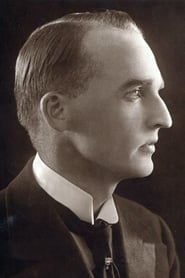
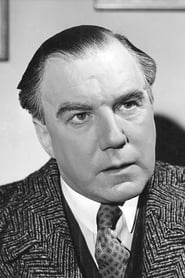
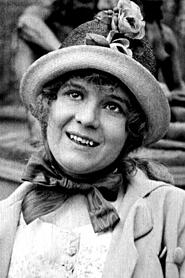
Cast & crew
More films like this
More Drama films
View all →







More from Carl Theodor Dreyer
View all →

More about this film
About the production
Release dateSeptember 1, 1919 (Denmark)
Box officeUnknown - limited distribution records from 1919
ProductionNordisk Film, Dansk Film Co.
Filmed inCopenhagen, Denmark, Studio locations in Denmark
This was Carl Theodor Dreyer's feature film debut, adapted from the novel 'The President' by Karl Emil Franzos. The production faced challenges typical of the silent era, including the need for elaborate period costumes and sets to depict the 19th-century setting. Dreyer's meticulous attention to detail and his innovative use of close-ups were already apparent in this early work, though the studio initially resisted some of his more experimental techniques. The film was shot during the final months of World War I, which affected resource availability and distribution prospects.
Themes
Social hypocrisy and class prejudiceThe conflict between personal desire and social obligationThe consequences of rigid moral codesFather-child relationships and their psychological impactThe destructive nature of social conformity
Themes & topics
illegitimate childinfanticideclass differencesdeathbed promisesocial hypocrisycourt trialmoral dilemmagovernessunwed motherjudgefamily secretsocial statustragedyguiltredemption
Historical background
Made in 1919, in Denmark, under Carl Theodor Dreyer, The President belongs to silent filmmaking amid the silent era's rapid stylistic experiments. Præsidenten (The President) is a 1919 Danish silent film by Carl Theodor Dreyer.
Why this film matters
Within silent history, Carl Theodor Dreyer's name attaches to the work; surviving prints help researchers study silent-era craft; 1919 silent film by Carl Theodor Dreyer.
Making of
The production of 'The President' marked Carl Theodor Dreyer's transition from journalism and screenwriting to directing. Dreyer, who had previously worked as a journalist and written screenplays for other directors, fought for creative control on this project. He insisted on extensive rehearsals with his actors, particularly Halvard Hoff, who played the lead role. Dreyer's meticulous approach to performance was revolutionary for the time, as he sought naturalistic acting rather than the exaggerated gestures common in silent cinema. The film's production was hampered by post-war shortages, but Dreyer's determination to create a serious artistic work never wavered. His use of location shooting combined with studio work demonstrated a sophisticated understanding of cinematic space that was ahead of its time.
What critics said
Contemporary reviews of The President are sparse in open sources; later catalog entries chiefly summarize plot and credits.
Did you know?
- This was Carl Theodor Dreyer's directorial debut for a feature-length film, though he had made several short films previously
- The original Danish title 'Præsidenten' refers to the protagonist's position as court president, not head of state
- Considered quite controversial in 1919 for its frank treatment of illegitimacy and infanticide
- Dreyer was only 31 years old when he directed this film, already showing the distinctive style that would define his later masterpieces
- The novel adaptation was unusual for Danish cinema at the time, which typically favored original screenplays
- Only incomplete versions of the film survive today, with some scenes lost to time
- The film's themes of social hypocrisy and rigid class structures would recur throughout Dreyer's career
- Contemporary critics noted Dreyer's innovative use of lighting and shadow to create psychological depth
- The production marked the beginning of Dreyer's collaboration with cinematographer George Schnéevoigt
- The film's release coincided with the aftermath of World War I, when European cinema was undergoing significant artistic transformation
Awards & recognition
- No major awards were given to Danish films in 1919, as the Danish film award system had not yet been established
Visual style
The cinematography by George Schnéevoigt demonstrates remarkable sophistication for 1919, featuring innovative use of lighting and shadow to create psychological atmosphere. Dreyer and Schnéevoigt employed chiaroscuro techniques to emphasize moral ambiguity and emotional conflict. The film makes effective use of close-ups to capture internal psychological states, a technique that was still relatively rare in Danish cinema at the time. The camera work shows careful composition and an understanding of visual metaphor, with architectural spaces often reflecting characters' emotional states. The contrast between opulent upper-class settings and humble working-class environments is rendered with visual clarity that reinforces the film's social commentary. The surviving footage reveals a mastery of visual storytelling that would become more pronounced in Dreyer's later works.
Innovations
Demonstrated several technical achievements that were ahead of their time in 1919. Dreyer's use of multiple camera angles and varied shot lengths created a dynamic visual rhythm uncommon in Danish cinema of the period. The film's lighting techniques, particularly the use of shadow to suggest psychological states, represented a sophisticated understanding of cinematographic possibilities. The production design successfully created convincing period atmosphere within the constraints of early studio facilities. The editing shows a sophisticated understanding of narrative pacing and emotional rhythm. Perhaps most significantly, the film demonstrates an early mastery of the cinematic close-up as a tool for psychological revelation rather than mere spectacle. These technical innovations would influence the development of Scandinavian cinema and contribute to the international reputation of Danish film production.
Music
As a silent film, 'The President' would have been accompanied by live musical performance during its original theatrical run. Typical Danish cinemas of the era employed pianists or small orchestras to provide musical accompaniment, often using compiled scores rather than original compositions. The music would have been carefully synchronized with the film's emotional beats and dramatic moments. Modern restorations and screenings typically feature newly commissioned scores by contemporary composers specializing in silent film accompaniment. These modern scores often attempt to capture the film's psychological tension and moral complexity while respecting the historical context of the original period. The absence of recorded sound places greater emphasis on visual storytelling and acting, which Dreyer handles with remarkable sophistication.
Famous quotes
A promise made at death's bedside binds the living more tightly than any chains forged in life.
In the courts of men, justice wears the blindfold of social convention.
The laws we create to protect society often become the prisons that destroy our humanity.
A father's sin becomes his daughter's burden, and his judgment her sentence.
In a world ruled by appearances, truth becomes the most dangerous rebellion.
Memorable scenes
- The deathbed scene where the young man makes his fateful promise to his dying father, establishing the moral framework that will destroy multiple lives
- The passionate yet doomed love scenes between the aristocrat and the governess, filmed with remarkable intimacy for the period
- The courtroom sequence where the President realizes he is judging his own illegitimate daughter, captured through increasingly tight close-ups that emphasize his psychological torment
- The final confrontation between father and daughter, where social masks fall away to reveal raw human emotion beneath layers of convention and guilt
What audiences thought
Initial audience reception in 1919 was mixed, with some viewers finding the film's moral complexity challenging compared to more straightforward melodramas of the era. However, educated audiences and the growing middle class appreciated the film's literary qualities and sophisticated approach to social issues. The controversial themes of illegitimacy and infanticide generated discussion and debate in Danish society. Over time, as Dreyer's reputation grew, the film gained retrospective appreciation among cinema enthusiasts. Modern audiences viewing restored versions often express surprise at the film's contemporary relevance and emotional power, particularly its critique of social hypocrisy. The film has found new life through screenings at classic film festivals and specialized cinema venues dedicated to preserving silent film heritage.
Film connections
Influenced by
- Literary realism of the 19th century
- Danish literary tradition of social critique
- German Expressionist cinema (emerging movement)
- Victorian melodrama
- Ibsen's dramatic works
- Russian literary tradition of moral complexity
- Early Scandinavian film school
This film influenced
- Dreyer's subsequent works including 'Master of the House' (1925)
- Other Danish social dramas of the 1920s
- Scandinavian films dealing with social issues
- European art cinema exploring moral ambiguity
- Films examining class conflict and social hypocrisy
Film restoration
Survives only in incomplete form, with some scenes lost to time. The Danish Film Institute holds the remaining footage, which has been partially restored. Various versions exist in different archives, with some containing different combinations of surviving scenes. The film represents a tragic example of silent era film loss, though enough material survives to convey Dreyer's artistic vision. Restoration efforts continue, with film historians hoping to discover missing footage in international archives. The incomplete nature of the surviving print makes complete restoration impossible, but what remains provides crucial insight into Dreyer's early development as a filmmaker.
Where to watch
- The Danish Film Institute archives (for research purposes)
- Specialized classic film festivals occasionally screen restored versions
- Some European art house cinemas with silent film programming
- Occasionally available through specialized streaming services dedicated to classic cinema
- Film studies departments at universities with extensive film archives
- Museum screenings dedicated to Scandinavian cinema history
- Not currently available on mainstream streaming platforms due to its rarity and preservation status