German Khovanov
Actor
Born: June 6, 1912 in Strelna, Saint Petersburg Governorate, Russian Empire Died: July 12, 1984 Active: 1935-1983 Birth Name: German Dmitrievich Khovanov
Films
1 film
About German Khovanov
German Dmitrievich Khovanov — Soviet stage and film actor whose several decades of the mid-20th century. Born in the settlement of Strelna near Saint Petersburg, he initially pursued a technical path, working as a topographer and technician on the White Sea–Baltic Canal before following his passion for the arts. He received his formal training at the prestigious Leningrad Bolshoi Drama Theatre (BDT) studio, graduating in 1935 and joining the main troupe shortly thereafter. After a brief period performing in Rostov-on-Don, he returned to Leningrad in 1940 to join the Leningrad State Theater of the Lenin Komsomol (now the Baltic House Festival Theatre), where he remained a cornerstone of the ensemble until his retirement in 1979. Khovanov was known for his versatility, transitioning seamlessly between heroic Soviet archetypes and grounded, everyday characters in both theater and cinema. His film career, which began in the 1930s, saw him collaborate with major Soviet directors, often portraying authoritative figures, military officers, or intellectual professionals.
The Craft
On Screen
Khovanov was celebrated for his restrained, intellectual acting style, often characterized by a deep psychological grounding and a resonant, pleasant vocal delivery. He excelled at portraying 'men of duty'—procurators, military officers, and scientists—bringing a sense of quiet authority and moral integrity to these roles. His stage background at the BDT and Lenkom theaters instilled in him a rigorous commitment to the Stanislavski system, allowing him to find the human core even in highly formalized Soviet heroic narratives.
Milestones
- Graduated from the Leningrad Bolshoi Drama Theatre (BDT) studio in 1935
- Became a leading actor at the Leningrad State Theater of the Lenin Komsomol in 1940
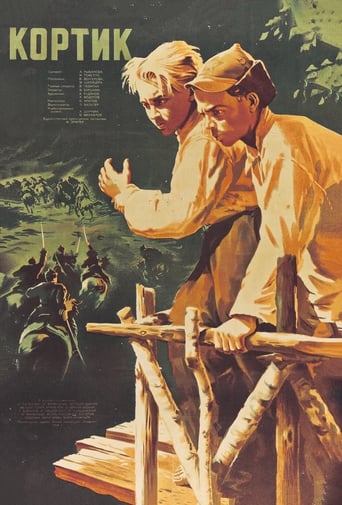
- Portrayed the Chekist Sviridov in the classic adventure film 'The Cutlass' (1954)
- Appeared in the acclaimed drama 'Unfinished Story' (1955) alongside Sergey Bondarchuk
- Awarded the Medal 'For the Defence of Leningrad' for his contributions during WWII
- Honored with the Medal 'For Valiant Labour in the Great Patriotic War 1941–1945'
Best Known For
Iconic Roles
Must-See Films
Accolades
Won
- Medal 'For the Defence of Leningrad'
- Medal 'For Valiant Labour in the Great Patriotic War 1941–1945'
- Medal 'In Commemoration of the 250th Anniversary of Leningrad'
- Medal 'Veteran of Labour'
- Jubilee Medal 'In Commemoration of the 100th Anniversary of the Birth of Vladimir Ilyich Lenin'
Special Recognition
- Recognized as a veteran of the Leningrad State Theater of the Lenin Komsomol
- Featured in the '100th Anniversary of the Philharmonia' historical archives
Working Relationships
Worked Often With
Studios
Why They Matter
Impact on Culture
German Khovanov represented the 'golden standard' of the Leningrad theatrical school, bridging the gap between the pre-revolutionary intellectual tradition and the Soviet cinematic era. His performance in 'The Cutlass' (Kortik) remains a touchstone for generations of Soviet and Russian viewers who grew up with the film as a staple of youth adventure cinema. By portraying authority figures with nuance and humanity rather than as flat propaganda caricatures, he helped elevate the quality of Soviet social realist drama during the 1950s and 60s.
Lasting Legacy
Khovanov's legacy is preserved through his extensive filmography at Lenfilm and his nearly 40-year tenure at the Baltic House (Lenkom) Theatre. He is remembered as a quintessential 'Leningrad actor'—a term denoting a specific blend of refinement, professional discipline, and understated power. His son's work in book restoration at the Academy of Sciences further reflected the family's deep-rooted connection to Russian cultural preservation.
Who They Inspired
His restrained acting style influenced younger generations of Leningrad stage actors who sought to move away from over-the-top theatricality toward a more cinematic, psychological realism. He was a model of the 'actor-intellectual,' proving that a career in state-sponsored cinema could be maintained with personal dignity and artistic integrity.
Off Screen
Khovanov was known as a man of high culture and intellect who possessed a vast personal library and a deep love for literature. He was an accomplished guitar player and had a talent for writing poetry, often performing songs in his films. He was married twice; his second wife was Anna Nikolaevna Luzina (1914–1988), a fellow actress at the Leningrad Lenkom Theater. The couple had one son, Boris (1945–2001), who worked as a book restoration specialist. Khovanov spent his final years in the artistic community of Komarovo, where he eventually passed away.
Education
41st Unified Labour School (formerly Petrischule) in Leningrad (1930); Leningrad Bolshoi Drama Theatre Studio (1931–1935)
Family
- Anna Nikolaevna Luzina (married until 1984)
Did You Know?
- Before becoming an actor, he worked as a technician on the construction of the White Sea–Baltic Canal.
- He was a skilled guitarist and performed the song in the film 'Unfinished Story'.
- He graduated from the famous Petrischule, one of Russia's oldest educational institutions.
- Khovanov lived in the famous 'House of Specialists' on Novo-Alexandrovskaya Street in Leningrad.
- He died while vacationing in the famous writers' and artists' retreat of Komarovo.
- His son Boris was named in honor of the family's literary interests and worked in the Library of the Academy of Sciences.
- He was a dedicated bibliophile with.
In Their Own Words
The theater is not just a job; it is a way of preserving the soul in difficult times. (Attributed context: regarding his years during the Siege of Leningrad)
A small role is a large responsibility to the truth. (Context: regarding his frequent character roles in major films)
Frequently Asked Questions
Who was German Khovanov?
Prominent Soviet theater and film with credits in this catalog.
What films is German Khovanov best known for?
Titles linked here include The Cutlass (1954), Unfinished Story (1955).
When was German Khovanov born and when did he die?
Born June 6, 1912; died July 12, 1984.
What awards did German Khovanov win?
He was a decorated veteran of the home front, receiving the Medal 'For the Defence of Leningrad' and the Medal 'For Valiant Labour' for his service during World War II.
What was German Khovanov's acting style?
He was known for an intellectual and restrained approach to acting, characterized by psychological depth and a distinctive, resonant voice.
Was German Khovanov involved in the Siege of Leningrad?
Yes, he remained in the city during the war, performing for troops and citizens, for which he was later awarded the Medal 'For the Defence of Leningrad'.