
Films
2 films
About Olga Petrova-Zvantseva
Olga Petrova-Zvantseva was one of the actresses of Russian cinema during the silent era, active during the crucial formative years of 1911-1912. She worked primarily with the Khanzhonkov film studio, which was instrumental in establishing the Russian film industry. Her career, though brief, coincided with the birth of feature filmmaking in Russia, making her one of the first professional film actresses in the country. Olga appears in two historically significant films that helped establish Russian cinema as a serious artistic medium. Her work in 'Defence of Sevastopol' (1911) placed her at the forefront of Russian epic filmmaking, while her role in 'The Departure of a Great Old Man' (1912) demonstrated the emerging Russian cinema's literary ambitions. Though her film career was short-lived, she contributed to establishing the foundation for Russian film acting during its nascent stage. Her performances helped demonstrate that cinema could handle both historical epics and intimate biographical subjects with equal artistic merit.
The Craft
On Screen
As an early silent film actress, Petrova-Zvantseva likely employed the exaggerated gestural style typical of the period, using expressive body language and facial expressions to convey emotion without dialogue. Her work in both historical epic and biographical genres suggests versatility in her acting approach.
Milestones
- Appeared in 'Defence of Sevastopol' (1911), one of Russia's first feature films
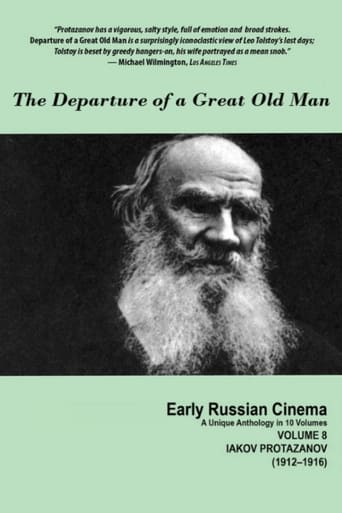
- Starred in 'The Departure of a Great Old Man' (1912), an early biographical film about Tolstoy
- Worked with Russian film studios during cinema's formative years
- Contributed to establishing Russian film acting techniques in the silent era
Best Known For
Iconic Roles
Must-See Films
Working Relationships
Worked Often With
Studios
Why They Matter
Impact on Culture
Olga Petrova-Zvantseva's work represents a crucial moment in the development of Russian cinema, appearing in films that helped establish Russia as a significant filmmaking nation. Her participation in 'Defence of Sevastopol' contributed to the early tradition of Russian epic cinema that would later influence filmmakers like Sergei Eisenstein. Her role in 'The Departure of a Great Old Man' was part of Russia's early exploration of literary adaptation, a genre that would become central to Russian film identity. As one of the first professional film actresses in Russia, she helped establish acting conventions for the new medium of cinema.
Lasting Legacy
Though her career was brief and limited biographical information survives, Olga Petrova-Zvantseva's legacy endures through her participation in two foundational films of Russian cinema. Her work represents the transition from theatrical acting to film acting techniques during cinema's earliest years. These films are studied by film historians as examples of early Russian cinematic achievements, ensuring that her contributions, though largely anonymous, remain part of film history.
Who They Inspired
As an early pioneer, Petrova-Zvantseva's work influenced subsequent generations of Russian film actors by helping establish the vocabulary of silent film performance in Russian cinema. Her films demonstrated that Russian cinema could compete with European productions in both scope and artistic ambition.
Off Screen
Very little is documented about Petrova-Zvantseva's personal life, which was common for early film actors whose biographical details were often not preserved in historical records.
Did You Know?
- Appeared in Russia's first feature film 'Defence of Sevastopol' (1911)
- Worked during the very beginning of professional Russian cinema
- Her films were produced by Alexander Khanzhonkov, a pioneer of Russian film industry
- 'The Departure of a Great Old Man' was about Leo Tolstoy's final days
- Both of her known films survive as important historical documents of early Russian cinema
- Her active years covered only two years but included two historically significant productions
- She was part of the first generation of professional film actors in Russia
- Her films were made before the Bolshevik Revolution, during the Tsarist era
Frequently Asked Questions
Who was Olga Petrova-Zvantseva?
Russian actress from the silent era who was active in 1911-1912. She appeared in two of Russia's earliest and most historically significant feature films, making her one of the first professional film actresses in Russian cinema history.
What films is Olga Petrova-Zvantseva best known for?
Titles linked here include Defence of Sevastopol (1911), The Departure of a Great Old Man (1912).
When was Olga Petrova-Zvantseva born and when did she die?
Unfortunately, specific birth and death dates for Olga Petrova-Zvantseva are not documented in historical records, which was common for many early film actors. She was active during the years 1911-1912 in the Russian Empire.
What awards did Olga Petrova-Zvantseva win?
No awards or formal recognitions for Olga Petrova-Zvantseva are documented. During the very early years of cinema (1911-1912), formal award systems for film achievements had not yet been established, particularly in Russia.
What was Olga Petrova-Zvantseva's acting style?
As an early silent film actress, she likely employed the expressive gestural style typical of the period, using exaggerated body language and facial expressions to convey emotions without dialogue. Her work in both historical epic and biographical genres suggests she was versatile in her approach to different types of roles.